Kyra Elizabeth Devore
Bag of BonesKyra Elizabeth Devore is the daughter of Mattie Devore and Lance Devore, and the child whose safety and care become the human center of the novel’s custody struggle and supernatural danger. Her story moves from a frightened runaway on a summer road to a bereaved child who trusts Mike Noonan as a father figure; that bond ultimately gives him a reason to resist the force that would claim her.
Identity and Family
Kyra’s parents met at a Tuesday-night softball game at Warrington's Lodge. Mattie was bringing a keg of beer to the field on a handcart when it bogged down in mud, and Lance got up from the bench to help her. Within three weeks they were inseparable and Mattie was pregnant; they married ten weeks after meeting. Thirty-seven months later, Lance was dead. The compressed sequence of courtship, pregnancy, marriage, and bereavement establishes the short-lived family life that precedes Kyra’s childhood with her mother.
Her full name is Kyra Elizabeth Devore. Mattie explains that Kyra is the best the child can yet manage when she says her own name as “Kia”; Mattie chose it from a baby-name book while pregnant and says it comes from Greek and means ladylike. The discrepancy between the formal name and the child’s pronunciation marks her as very young, while her mother’s account ties her identity to the pregnancy and family that shaped her beginnings.
The Road and Her First Meeting with Mike
Kyra first enters Mike’s life when she runs away from Mattie, hoping to spend the Fourth of July at the beach and go to her white grandmother if her mother is angry. Mike encounters her in a bathing suit and carries her away from the white line on the road. Mattie comes after her in a Jeep Scout, driving in a crouch and in such haste that the scene makes clear how frightened she was when she realized her daughter had disappeared.
The episode shifts from danger to the ordinary intimacy of a mother comforting a child. Mattie tells Kyra that roads are dangerous and that little children can be run over; she calls her the most precious little thing in the world. Kyra cries and repeats that she has been bad. Mike, meanwhile, is struck by the name: Jo and he had planned to give that name to a daughter, had they had one. Mattie’s explanation of the name makes the moment more than a coincidence for him, but Kyra remains, in the scene itself, a small child being comforted after a frightening escape.
When Mike later visits the family’s trailer, Kyra is initially wary. She jumps from the swingset, runs to Mattie, and hides behind her mother, showing a sharp contrast with the fearless child Mike had met on the road. Over the next two hours she warms to him: at twilight she sits on his lap while he reads Cinderella. Her remark that the glass slipper would cut Cinderella’s foot shows her attentive, practical response to the story. The visit also changes Mike’s assumptions about the household; the trailer contains works by Edward Hopper and Vincent van Gogh, details that unsettle his casual expectations about Mattie’s home and help establish the family as more than an object of outside judgment.
Custody Dispute and the Pressures Around Her
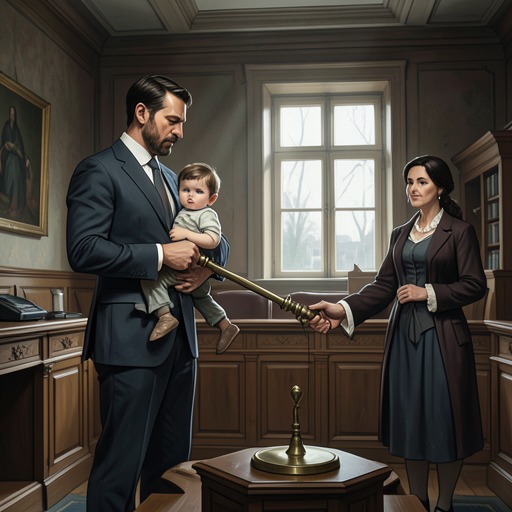
Kyra’s grandfather, Maxwell Devore, seeks control of her custody. A court-appointed guardian ad litem, Elmer Durgin, serves in the legal process intended to protect her interests and is to take Mike’s deposition about what he knows of her welfare. John Storrow explains to Mike that a guardian ad litem advises the court about a child’s interests, and that judges commonly give such advice substantial weight. The appointment therefore places a powerful intermediary between Kyra and the competing adults seeking to determine her future.
Mattie regards Durgin as aligned with her father-in-law and connects him to Richard Osgood, Maxwell’s real-estate associate. She also describes the deputy who serves Mike with the subpoena, George Footman, as part of the same circle of pressure. These are Mattie’s allegations and perceptions, not independent findings in the supplied scenes; they show how she understands the process as shaped by Maxwell’s local influence as well as formal court procedure.
Mike tells Mattie that Maxwell can afford numerous lawyers and sympathetic witnesses, while she may receive little support from the court. He also relays Storrow’s warning that assumptions about gender could count against her. The practical stakes are sharpened when Mattie loses her job at the Four Lakes Consolidated Library. The dismissal is called “belt-tightening,” but Mike suspects that Maxwell’s support for the library gives him leverage over its director, Lindy Briggs. Mattie says Storrow had predicted that Maxwell would try to make her appear as vulnerable as possible at the custody hearing, including by leaving her unemployed. Kyra’s welfare is thus entangled with money, employment, legal representation, and the influence of a wealthy family.
The conflict also generates social pressure beyond the courtroom. Bill Dean describes life on the TR as a shared arrangement in which one restless person can unsettle everyone else. He says people are uneasy about Mike’s interest in Mattie, and warns that residents fear Maxwell’s anger because the consequences could reach the community. Mike refuses to stand aside if doing so means letting Maxwell take Kyra without a fight. In this way, the custody case exposes how the local community’s desire to avoid trouble can collide with the needs of a child and her mother.
Storrow advises Mike and Mattie to limit contact at Mattie’s trailer and to assume telephone lines might be tapped. He suggests they speak in public places, including the market, or that Mike visit the library, but insists there should be no more visits to Mattie’s home. Such precautions show how the custody conflict narrows the ordinary spaces in which the adults can meet, while Kyra remains the person whose future makes those encounters necessary.
Loss, Danger, and Protection
After Mattie’s death, Kyra becomes vulnerable to a supernatural threat associated with Sara Tidwell. While Kyra sleeps, the threatening presence urges Mike to take her into the bathroom and drown her. Mike recognizes the urge as something he does not want to obey and drains the tub, refusing to let Kyra become another victim of the history of drowning on the TR. His resistance makes the child’s safety the immediate test of whether the haunting can turn grief and inherited violence into a new act of harm.
The confrontation continues at Mattie’s grave. The entity, speaking through the Green Lady, declares that it wants Kyra because of the blood she shares with a man who harmed it. Mike answers that Kyra had nothing to do with what that man did and refuses to surrender her. The distinction is central: the supernatural force treats the child as an extension of past wrongdoing, while Mike insists she is a person separate from the adults’ crimes and grievances. The struggle therefore turns on whether Kyra will be protected as a child in her own right or made to bear the consequences of history.
During the storm, Mattie appears in the water. Kyra calls to her mother and reaches for the figure, but the apparition vanishes, leaving water on the boards. Mike goes out along the wavering dock to The Sunset Bar and takes Kyra into his arms. She is shivering and tells him that Mattie came; he confirms that he saw her. The moment gives Kyra a brief encounter with her dead mother without restoring the family life she has lost. Mike’s embrace provides immediate comfort, but it also points toward the longer responsibility he will assume.
Mike’s Bond with Kyra and Her Future
After Mattie’s death, Mike pursues custody of Kyra through a slow process involving Maine’s court system and the Department of Human Services. He says she has been placed in two foster homes and that Mattie’s aunt, who had wanted nothing to do with her while Mattie was alive, is not willing to take her in. Kyra repeatedly tells judges and Human Services workers that she wants to live with Mike. Her stated preference gives the attachment a practical as well as emotional role in the guardianship proceedings.
Kyra also gives Mike a message that he keeps private: Mattie says he is her little guy now and that he will take care of her. This recollection joins the dead mother’s trust to Kyra’s present dependence on him. Mike is still waiting on the system, but he understands the promise as a responsibility rather than a completed legal outcome.
In the closing account, Mike describes Kyra as the child sleeping down the hall and says that she is his little guy and he is her big guy. The reciprocal language turns their bond into the measure by which he evaluates what matters. Although he cannot restore Mattie or erase the dangers Kyra has faced, he can remain present and attempt to care for her. Kyra’s narrative significance lies in this movement from the object of a custody contest to a child whose expressed wishes and dependence call Mike into a continuing parental role.