Memo-Scriber
Bag of BonesThe Memo-Scriber is a Sanyo dictating machine given to Michael Noonan by his editor, Debra Weinstock, after they completed his first Putnam book. Initially a practical tool for recording speech, it becomes a test instrument at Sara Laughs: set to dictate overnight, it captures a voice calling Michael by name. The recording makes the machine a hinge between ordinary technology and the unexplained presence in the house, while the surrounding investigation places it within a larger story about how hidden histories survive through material evidence.
Identity and Operation
The machine is a professional-quality recorder with a voice-activated feature: it can switch itself on when someone begins speaking and enter pause mode when speech stops. Michael finds it in a cardboard box marked GADGETS in a hot closet in his office. The office itself feels like the workspace of an earlier version of him, with its empty desk, a photograph of Richard Nixon, and a rug made by Jo. Among old paperwork and story fragments, the recorder is a useful surviving object from his working life.
Debra had given it to him at the conclusion of their work on his first book for Putnam. Michael wonders whether the gift was simply a thoughtful choice or an indirect prompt to speak his unformed thoughts while they were fresh, but he cannot determine her intention. Its original function is straightforward: recording speech, including material he might listen to later. In this episode, that dependable function becomes a way to test whether a sound associated with Jo’s office can be documented.
The Overnight Recording
Michael has heard an unexplained noise more than once and considers whether the machine might record it. He has home-dubbed cassette tapes in his car and plans to use one so the recorder can run overnight. He also considers what it would mean if he heard the sobbing child again but the machine failed to start: that absence would not settle the question, but would give him another reason to suspect that the sound did not behave like ordinary speech.
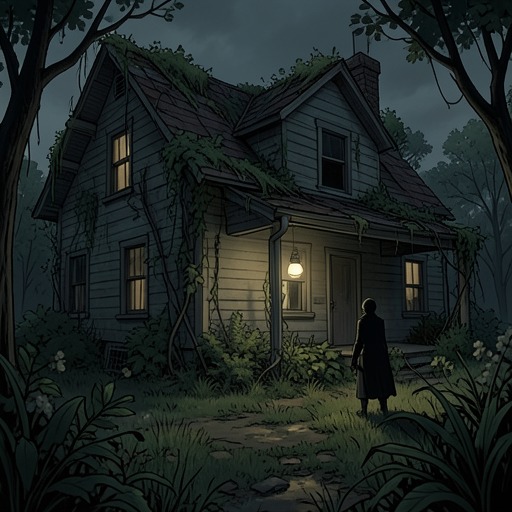
Before going to bed, he places the Memo-Scriber on a table beneath Bunter, the stuffed moose, switches it on, selects dictate mode, inserts a cassette, and resets the counter to zero. He sleeps for eight uninterrupted hours. The next morning, the counter reads 012. The change is small but decisive: something has activated the recorder during the night, when Michael was asleep in another part of the house.
On playback, a voice whispers, “Oh Mike.” The words are mournful and familiar from the earlier sound in Jo’s office, but the recording makes them intelligible. After a faint click and a pause, the voice says the same words again. Then it stops. The recorder does not identify the speaker or explain the phenomenon; it supplies a repeatable trace where Michael had previously had only an experience. He intends to ask Bill Dean what he thinks of the sound, bringing another listener into the attempt to interpret it.
From Recording to Evidence
The Memo-Scriber belongs to a broader pattern in which private records complicate the public account of the past. Jo’s investigation had begun as research for an article about the township around the summerhouse. She read books, spoke with local people, and encouraged them to look for old letters and diaries. Her brother Frank explains that she had initially kept the research from Michael partly because she wanted it to be a surprise, and that she may have stumbled upon the disturbing subject at the heart of it.
The surviving evidence reaches Michael through more than one medium. Ward Hankins finds a November 1993 appointment on Jo’s calendar, identifying a board meeting for Soup Kitchens of Maine in Freeport. Faxed pages from her calendars help Michael ask Bonnie Amudson about the research, though Bonnie recalls Jo showing her photographs and plant samples rather than writing. These fragments establish the investigative trail without resolving all its gaps.
The archive eventually turns up in a different kind of hiding place: a tin box concealed inside a plastic owl. It contains Jo’s steno books, papers, and a photographic negative of her at Sara Laughs. The clippings include an 1865 account concerning Jared Devore and a 1933 newspaper story about the wildfire at Halo Bay. They also preserve racist descriptions of Sara Tidwell and the Red-Tops that present prejudice as genial entertainment. Michael finds that the published town histories omit the harassment and community breakup described in Jo’s notes. Against that background, the recorder’s tape is a more intimate but structurally related document: a machine records what occurred in the house, while Jo’s concealed papers preserve what the town’s official record fails to tell.
Significance
The Memo-Scriber does not solve the haunting by itself. Its evidence is limited to a counter reading and a short recorded voice; Michael still has to decide what those facts mean, and the recording cannot establish who spoke. Yet the device changes the terms of his uncertainty. A sound once tied to memory and atmosphere can be replayed, heard again, and shown to someone else.
That shift echoes the novel’s treatment of archives. Calendars, clippings, handwritten notes, negatives, and recordings do not offer a complete or neutral account; each preserves only a fragment, and important context may have been withheld or erased. The Memo-Scriber’s ordinary, practical purpose thus acquires a second role: it makes a hidden event audible without making it fully explained. Its tape becomes one more piece of evidence in a narrative where the dead and the past persist through traces that surviving people must learn how to read.