Michael Noonan
Bag of BonesMichael Noonan is a novelist whose life is repeatedly measured against his ability to write. His marriage to Johanna and his early career begin together, but her death is followed by a sustained writer’s block that he conceals from people close to him. After returning to Dark Score Lake, he begins to work again, only to find that writing does not immediately restore the imaginative world he once relied on. His first-person narration ties that unfinished recovery to a more urgent change: he comes to regard Kyra as his daughter and accepts responsibility for her safety.
Identity and Background
Michael’s account is told in the first person, so readers encounter his past and his decisions through his own recollections and judgments. He is a professional novelist whose published work includes his first novel, Being Two, and his later book All the Way from the Top. His narration mixes concrete recollection with self-correction: he admits when he has lied to himself or avoided saying what is actually happening. That frankness makes the gap between his public standing and private difficulty part of his characterization.
His career and marriage began at nearly the same time. He completed the first draft of Being Two shortly after he and Johanna became officially engaged, marking the occasion with an opal ring that cost $110—more than he could comfortably afford. He remembers Johanna reading the draft in one evening, curled in her favorite chair with iced tea, while he waited outside and repeatedly checked whether she had finished. His nervous attempt to occupy himself in the garage went badly: he botched a birdhouse kit and nearly injured his left index finger. When Johanna eventually joined him on the back stoop and put a hand on his neck, the scene registered for him as the uncertain, intimate beginning of their life together as readers and partners.
Michael later describes the span of his writing career as almost exactly the span of his marriage. He finished All the Way from the Top about a month after Johanna was declared dead; the novel, about a psychotic killer drawn to high places, appeared in the fall of 1995. Although he has published other novels, he doubts that another Michael Noonan novel will appear in the foreseeable future. His retrospective account thus sets an outwardly successful career against a more private break: he can still be known as a published writer even when he can no longer write.
Bereavement and Concealed Writer’s Block
In August 1994, Johanna left to collect a refill of sinus medicine at a Rite Aid in Derry and planned to buy fish at the nearby supermarket. Michael had finished his writing for the day and offered to go in her place, but she declined. She blew him a kiss and left; the next time he saw her, he was identifying her on a television screen in a private office. This abrupt sequence—an ordinary errand followed by the identification of the dead—becomes one of the defining losses in his account.
Afterward, Michael found a small chocolate shaped like a mouse in Johanna’s purse. He unwrapped and ate it while sitting at the kitchen table with the contents of her red handbag spread before him. He compares the act to taking Communion, then describes breaking down in tears among her tissues, makeup, keys, and half-finished rolls of Certs. The preserved object and the familiar contents of the handbag make grief tangible without making it resolved: an everyday remnant briefly connects him to Johanna, then sharpens the knowledge of her absence.
Michael says he did not experience writer’s block during the marriage or immediately after Johanna’s death. Because he thought of it as a condition of literary types rather than a difficulty that could affect him, he failed to recognize it until it had already taken hold. Its consequences become severe when he tries to write: he cannot get through two paragraphs without his heartbeat accelerating, his breathing becoming difficult, and panic overwhelming his concentration. He compares the experience to being trapped in a sinking submarine. Yet he does not tell his publisher, editor Debra Weinstock, agent Harold Oblowski, or Frank Arlen the truth. When Frank asks whether he is working on a new book, Michael repeatedly says that he is and that it is going well.
Frank had offered to be a brother to Michael for Johanna’s sake, but Michael never accepts that offer in the direct, elemental way Frank may have intended. He phones him every couple of weeks for casual conversation, preserving contact while avoiding the distress he cannot bring himself to disclose. Michael’s insistence that he does not call for help is therefore not simply an abstract trait: he has a specific opportunity for support, and repeatedly chooses a reassuring lie instead. The novel presents his writer’s block as both a practical inability to work and a condition made harder to share.
Return to Dark Score Lake and Responsibility
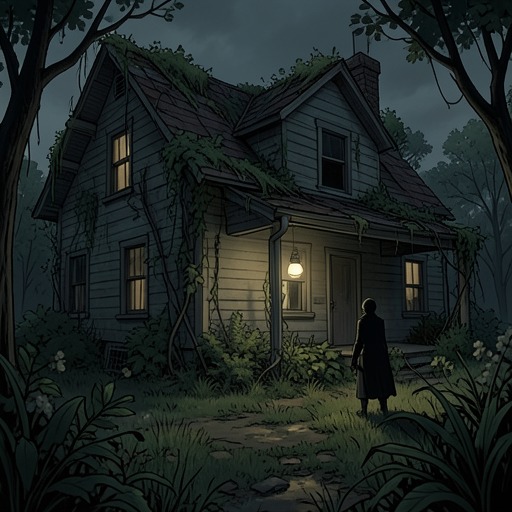
When Michael returns to the area of Dark Score Lake, he understands that his life is in serious disorder and that writing is only one part of it. He describes the trip as a form of self-induced shock therapy, undertaken because he has lost his sense of place and cannot find it again. His fear on the road is physical as well as reflective: his heart pounds, he sweats despite the air conditioning, and he turns off the radio because the music sounds wrong. He rejects the consoling picture of a modern spiritual quest, instead framing himself as someone who feels summoned toward a difficult encounter.
His return draws him into the lives of Mattie and her daughter, Kyra. In conversation with Mattie, Michael admits that he no longer writes and that this is not a chosen retirement. The disclosure surprises him because he is speaking about his inability to work for the first time. He had come intending to persuade Mattie to accept John Storrow as counsel, but the conversation turns instead toward his own hidden difficulty. Mattie’s calm response—asking whether he is retired or suffering from writer’s block—makes the admission possible without the alarm he had expected.
Michael explains his involvement with Mattie and Kyra by recalling that he has eaten Mattie’s food, read Kyra a story, and watched her fall asleep in his lap. He also says he may have saved Kyra’s life by pulling her from the road, though he acknowledges that they can never know for certain what would have happened. Mattie answers that saving someone’s life makes a person responsible for them. Michael’s account links that exchange to his own realization: he can no longer claim that he does nothing that matters, because he has become involved in their lives through concrete acts of care.
This emerging responsibility is complicated by danger and uncertainty. Michael warns Mattie that Bill Dean and Kenny Auster may be aligned with Maxwell Devore, as George Footman and Richard Osgood are, while admitting that he has no satisfactory explanation for the suspicion. He presents it as a feeling that has changed since his return to the TR rather than as established knowledge. The distinction matters: his judgment is becoming more alert to danger, but he does not pretend that intuition supplies proof.
Writing Again, and the Limits of Recovery
Michael eventually retrieves his old IBM Selectric typewriter from Johanna’s studio. He notices the standing water in the bathtub and wonders whether he filled it while sleepwalking or whether something else did, but he proceeds to his office with the typewriter. The move marks a decision to try writing again, not proof that the block has lifted. He is prepared to work even in the heat beneath the office roof, while still admitting that he may not be able to do so.
For a time, the practical signs of work return. Michael sits at the IBM, presses the return key, and begins making a next-note for his manuscript. He writes a planning note about characters and a stop at a vegetable stand, then adds a reminder to call Ted Rosencrief, the retired Navy man who has helped him research earlier books. Michael’s working method is modestly specific: he wants just enough factual detail to write colorfully, not an exhaustive account. After four years of difficulty, the sight of himself working without panic feels remarkable. He recognizes that he has experienced more in five days than in the previous four years, though that rush of life does not make every part of his situation easier.
The return to work remains incomplete. Later, Michael says he has finally entered the writer’s zone but cannot make anything happen there. His steno pad fills with notes and doodles, but the IBM’s page stays blank. The characters he expects to animate the manuscript—including Andy Drake, John Shackleford, Ray Garraty, and Regina Whiting—seem to him to have turned away and fallen silent. A piece of quartz holds the manuscript pages in place, a small physical detail that emphasizes the contrast between a prepared writing desk and an imagination that will not yet move.
Michael recognizes an irony in this failure. For years he escaped the problems of the real world by entering imagined worlds; now reality has become bewildering and dangerous, while the imaginative refuge is closed to him. The absence of panic is a change, but it is not the same as creative recovery. His trajectory therefore resists a simple cure: he can approach the desk, make notes, and at moments work steadily, yet the story itself can remain inaccessible.
Kyra and the Novel’s Larger Stakes
Michael’s relationship with Kyra changes the meaning of his return. During the crisis at Mattie’s trailer, Mattie, gravely wounded, struggles to reach her daughter and urges Michael to get Kyra to safety. Michael remembers the scene with painful clarity rather than allowing himself the comfort of forgetting it. The moment makes the stakes of his attachment unmistakable: Mattie’s attention remains fixed on Kyra even in the midst of her own danger, and Michael is drawn into the obligation to protect the child.
As a violent storm bears down on the area, the house and lake seem to press competing claims on him. The house warns him to mind his own business, but Michael rejects that demand because Kyra is his business and his daughter. He takes a lantern and goes down the hill toward Johanna’s studio. The declaration does not erase the loss that began his story; instead, it shows how grief has become entangled with a new commitment. Kyra is not a replacement for Johanna, and Michael’s decision is not presented as a resolution of his writing problems. It is an assertion of responsibility made under immediate threat.
The novel’s portrayal of Michael is built around contrasts that remain unresolved: a novelist whose work once coincided with marriage, a bereaved man who hides his inability to write, and a person who resists asking for help yet becomes responsible for others. His return to writing is partial, but his return to action is more decisive. By the time he calls Kyra his daughter, the question of whether he can recover his former creative life has been joined by another: whether he will act when someone vulnerable depends on him.