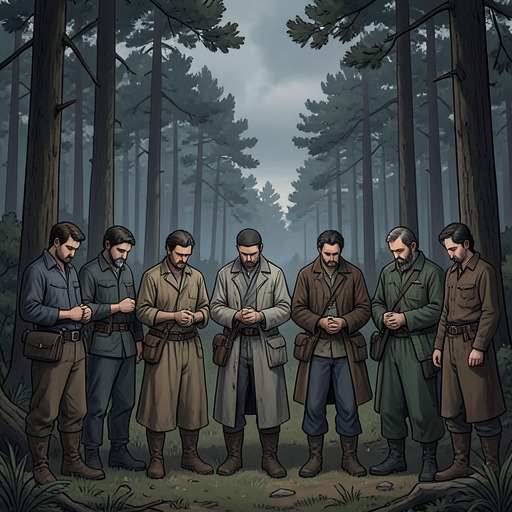
The 1933 TR fire
Bag of BonesThe 1933 TR fire was a major wildfire that charred the eastern and northern sides of the lake, destroyed the former cabins at Tidwell's Meadow, and became the subject of Bill Dean’s grave accusation against Max Devore. Its aftermath marks both a physical destruction of the place where Sara Tidwell and the Red-Tops had lived and the return of a past that the TR’s inhabitants preferred not to discuss.
Background and Setting
At the turn of the century, more than forty Black residents had settled on land beside the lake, bought from Douglas Day with money saved over ten years. The settlers were largely related and included members of the musical group first called The Red-Top Boys and later Sara Tidwell and the Red-Top Boys. Son Tidwell negotiated the purchase on behalf of the extended family.
The settlement provoked protest in town, including a meeting against what opponents described as the arrival of Black people in a horde. Instead of the shantytown locals anticipated, the Tidwells built neat white cabins around a larger building that may have served as a meeting place, rehearsal space, or performance hall. Their band played across western Maine for more than a year, perhaps nearly two, and the family initially managed to live alongside the TR community under its guarded ethic of keeping to oneself and refusing charity.
After playing one or two county fairs in late summer 1901, the family moved on. The cabins remained and generated summer-rental income for the Day family until the 1933 fires consumed them. The fire therefore destroyed a settlement already emptied of its original residents, but one still materially present in the local landscape.
The Fire and Its Human Cost
The blaze affected the east and north sides of the lake. In a newspaper clipping dated July 19, 1933, Mike reads that Fred Dean had been fighting wildfires in the eastern TR with two hundred other men when the wind suddenly shifted toward the north end of the lake, previously thought safe. That area included Halo Bay, a community with a general store and fishing and hunting camps. Fred’s wife, Hilda, and their three-year-old twins, William and Carla, were there while he was away fighting the fire; other wives and children were also in the area.
The clipping’s headline reports that a veteran guide and caretaker could not save his daughter. Its account makes the wind shift the immediate turn in the disaster: a place considered out of danger became threatened, and the fire reached families and settlements beyond the initial fighting ground. The fire’s damage was not confined to the old cabins at Tidwell's Meadow; it also brought death to people in the communities around the lake.
The Accusation Against Max Devore
Bill Dean tells Mike that people died in the 1933 summer fires and that one of the dead was related to him. He then alleges that Max Devore set the fires, calling them Devore’s parting gift to the TR. Bill says the accusation could never be proved. In 1933, he explains, Devore was young, broke, not yet twenty, and had no law in his pocket; Bill warns that the older and more powerful Devore might be capable of worse than pursuing his custody dispute through the courts.
The charge remains an allegation rather than an established finding. Its force in the conversation comes from Bill’s certainty and his warning about Devore’s capacity for violence, not from a documented proof of arson. The fire thus enters the present plot as an unresolved act of destruction: the past supplies a precedent for Mike to fear, while the community’s inability to prove what happened leaves the accusation suspended between local knowledge and official certainty.
Buried History and Racial Memory
The fire’s significance reaches beyond its immediate casualties and physical damage. Bill distinguishes the deaths of local people from the history of Sara and the Red-Tops, calling the musicians wanderers from elsewhere and saying that inquiry into them could hurt people still living. Mike recognizes the racial slur Bill has withheld, making the pause itself evidence of how prejudice persists beneath polite speech.
The surviving newspaper reviews of Sara and the Red-Tops likewise preserve a record of racial condescension: they praise the performers while reducing them to exoticized caricatures. The family’s earlier settlement had been opposed by the town, even as residents later defended the resulting uneasy peace with claims that the newcomers paid their bills, kept to themselves, and did not accept charity. Against that history, the burning cabins are more than a lost rental property. They are the remnant of a community that departed, and their destruction intensifies the story’s question of what the TR remembers, what it conceals, and who bears the cost when its past returns.