
Industry and the Rivers
BarkskinsThis flow traces how logging technology and transportation reshape work, expand extraction, and transfer its human and ecological costs to workers and watersheds.
increasing Bearing strength in each event
 decreasing
Bearing strength in each eventdecreasingThe River Drive
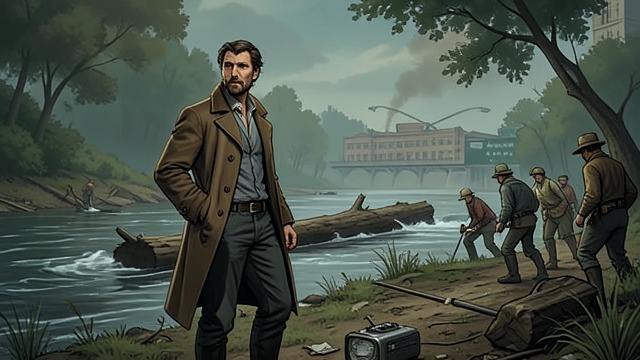
The River Drive
Water as Infrastructure
Logs move downstream on spring freshets, making rivers essential roads and power sources for the timber trade.
Human Risk
Mi’kmaw workers are assigned dangerous river work, where jams, falls, and drowning make transportation an ongoing source of death.
The Kauri Cut
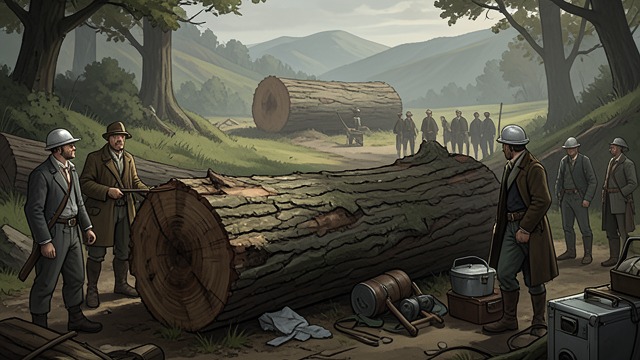
The Kauri Cut
Giants Become Merchandise
New saws and organized labor make it possible to fell immense kauri trees once thought too large to cut.
A Landscape Stripped
Logs feed mills and export markets, while slash and waste remain on the ground and camps move on.
Mechanized Logging
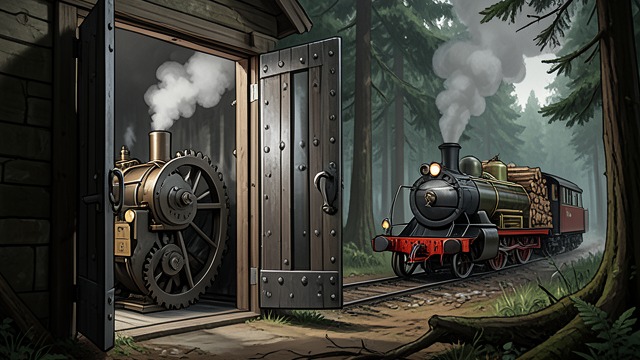
Mechanized Logging
Tools Accelerate
Circular saws, donkey engines, locomotives, and trucks multiply the scale and speed of forest removal.
Risk Changes Shape
Workers move from river hazards to dangerous machinery, cables, and climbing work, but injury and death remain ordinary.
Industrial Aftermath
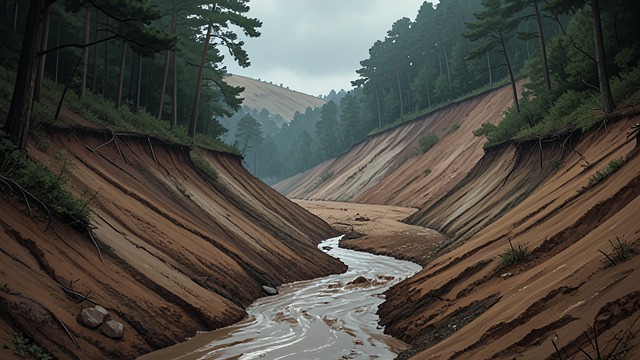
Industrial Aftermath
Damaged Watersheds
Cleared slopes erode, streams carry silt, and forests lose the functions that supported fish and local communities.
Extraction Continues
Companies turn to pulp, plywood, and distant timber supplies rather than treat ecological damage as a stopping point.
The Modern Restoration Work
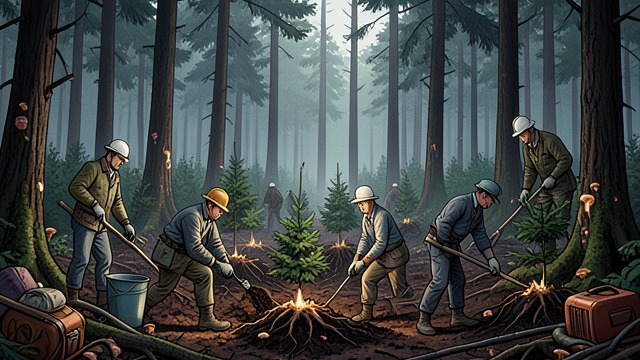
The Modern Restoration Work
From Machines to Seedlings
The Breitsprecher Tree Project pays teams to plant and monitor forests on burned and degraded land.
Knowledge Remains Incomplete
Workers test soils, fungi, and species interactions, recognizing that restoration cannot quickly replace ancient forest complexity.
Eighteenth and nineteenth centuries, before industrial rail transport
Nineteenth century, after Jinot reaches New Zealand
Late nineteenth and early twentieth centuries
Early twentieth century, after extensive clear-cutting
Near the novel’s end
