
The Meaning of Forest
BarkskinsThis flow traces competing understandings of forests as living communities, sacred landscapes, economic resources, and managed crops.
increasing Bearing strength in each event
 decreasing
Bearing strength in each eventdecreasingTrees as Persons
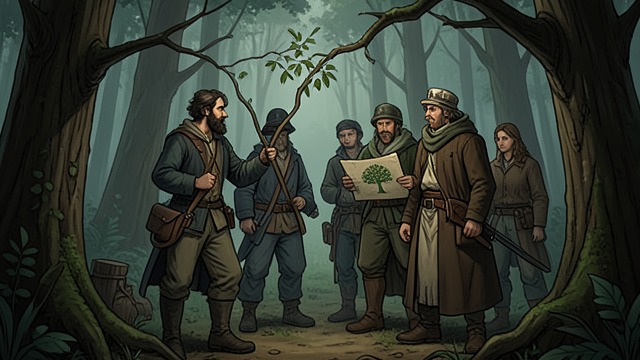
Trees as Persons
A Relational World
Mari teaches that trees provide food, medicine, shelter, and materials within a living network of beings.
A Different Measure
Her worldview contrasts with René’s inherited belief that forest becomes useful only after it is cleared.
The Garden as Memory
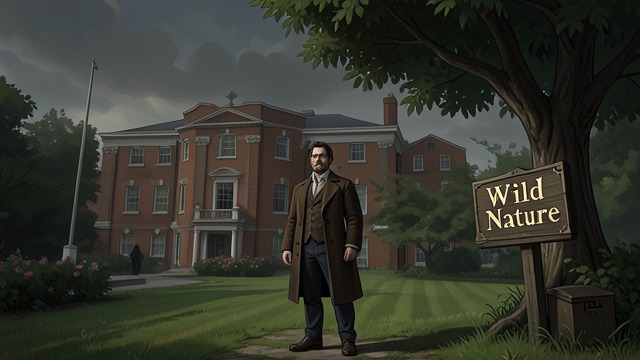
The Garden as Memory
A Designed Wilderness
In Wuqua’s garden, Duquet sees a deliberate evocation of wild nature within a cultivated city setting.
A Warning Ignored
He hears that forests can disappear, but assumes the New World’s scale makes it immune to the same fate.
The Forest of Tāne
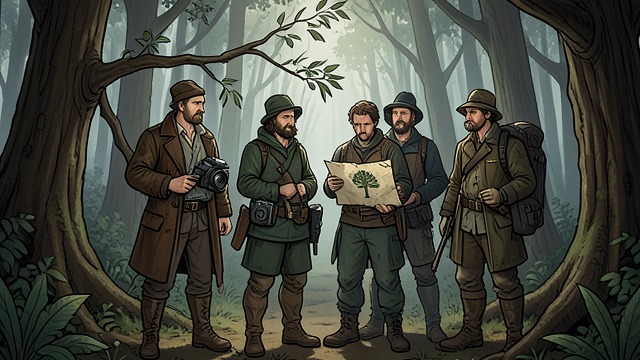
The Forest of Tāne
Sacred Relations
Ahorangi and her family explain Māori ties to trees, gods, food, and community.
A Commercial Misreading
Logging interests value kauri and other trees chiefly for timber, exposing the gap between sacred landscape and export commodity.
The Managed Forest
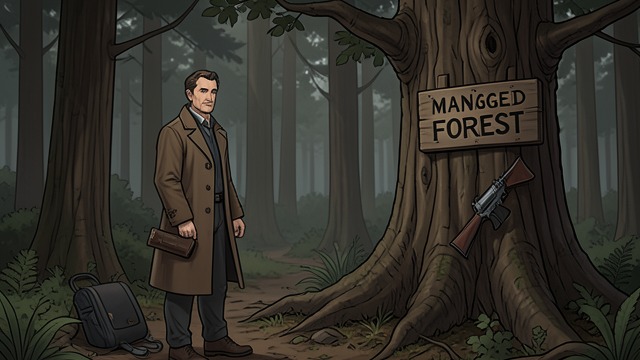
The Managed Forest
A Practical Substitute
Dieter argues that plantations can maintain timber supply and reduce erosion after wild forests are cut.
Charley’s Objection
Charley sees managed stands as impoverished substitutes that cannot reproduce the diversity of a forest living for itself.
The Forest’s Own Recovery
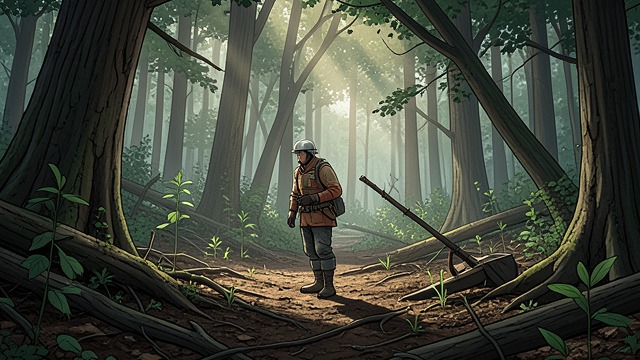
The Forest’s Own Recovery
Restoration Beyond Ownership
Sapatisia frames planting as a contribution to damaged ecosystems, not a promise to reproduce ancient forest quickly.
Mutual Dependence
She argues that forests help humans recover too, while recognizing the limits of human knowledge and control.
Mari’s household years
During Duquet’s China voyage
During Jinot’s New Zealand years
Late nineteenth to early twentieth century
Near the novel’s ending
