
The Many Costs of Progress
BarkskinsThis flow traces how inventions that accelerate extraction also create new hazards, waste, and forms of dependence.
increasing Bearing strength in each event
 decreasing
Bearing strength in each eventdecreasingThe Timber Machine
The Timber Machine
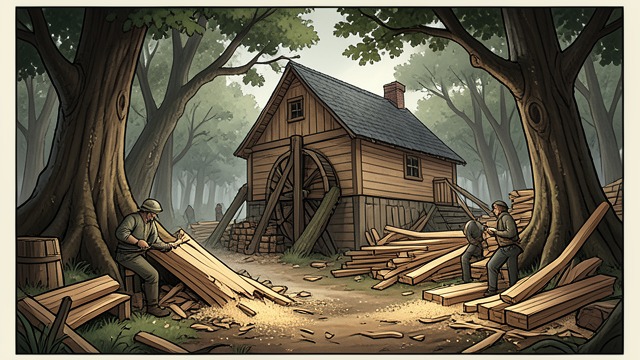
Water-Powered Sawmills
Sawmills turn felled trees into transportable boards, making the forest more profitable and encouraging faster cutting.
New Scale, New Waste
Mechanization increases output but leaves bark, slash, and discarded timber throughout cutover ground.
Circular Saws and Steam
Circular Saws and Steam
Faster Production
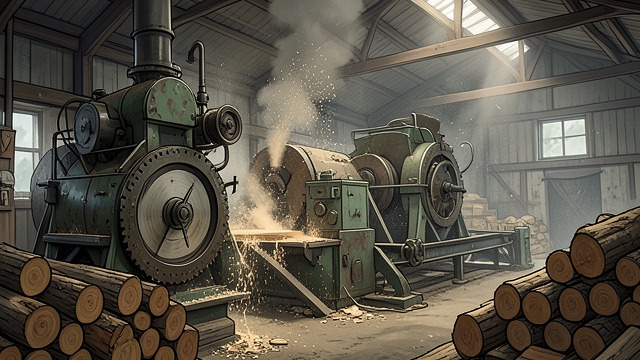
Circular saws and steam engines raise production, allowing mills to approach the pace of logging crews.
Hidden Losses
Wide kerfs, undersized machinery, and piles of sawdust reveal how technical efficiency can still generate enormous waste.
The Donkey Engine
The Donkey Engine
Cable-Hauled Giants
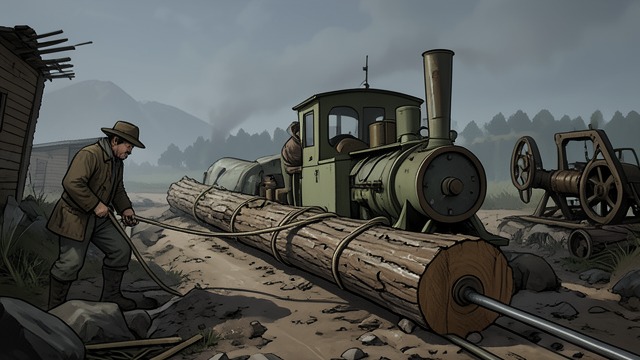
Donkey engines drag massive logs through slash, turning isolated labor into an industrial system of cables and machines.
Human Vulnerability
The same system can snap, crush, or amputate, making workers expendable parts of the machinery they operate.
The Pulp Opportunity
The Pulp Opportunity
Waste Finds a Market
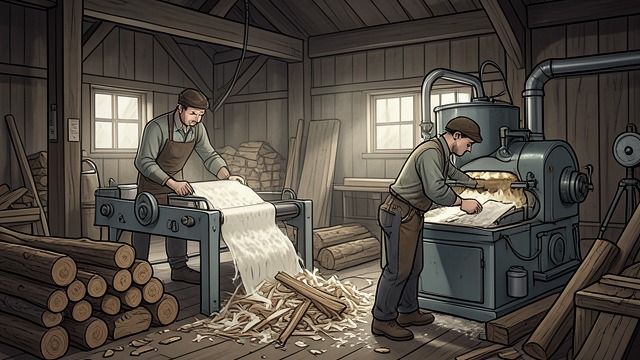
A proposal to make paper from wood pulp turns small logs and mill waste into a new commercial resource.
A New Extraction Path
The innovation supports the nursery’s future but also expands demand for trees and invites industrial growth.
Machines and Restoration
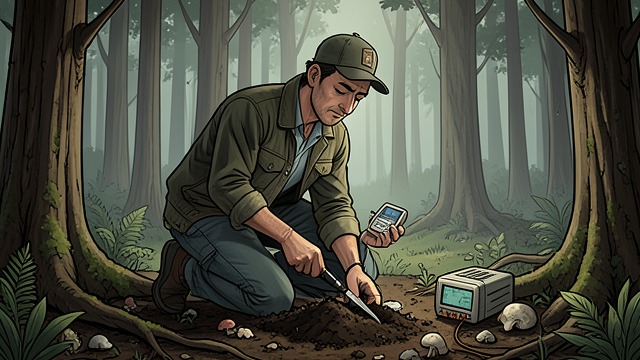
Machines and Restoration
Tools Reconsidered
Modern equipment makes planting and monitoring possible on damaged sites, but it cannot quickly restore ancient diversity.
Knowledge Over Speed
The project’s workers study soil, fungi, and species relations instead of measuring success only by timber volume.
Eighteenth century, during the first mill ventures
Nineteenth century, during Michigan expansion
Early twentieth century, in western logging camps
During Conrad’s nursery planning years
Near the novel’s ending
