
The Story of Forest Restoration
BarkskinsThis flow traces a gradual shift from unrestrained cutting toward deliberate replanting, while emphasizing that restoration cannot recreate lost ancient forests quickly.
increasing Bearing strength in each event
 decreasing
Bearing strength in each eventdecreasingEarly Warnings
Early Warnings
A Historical Comparison
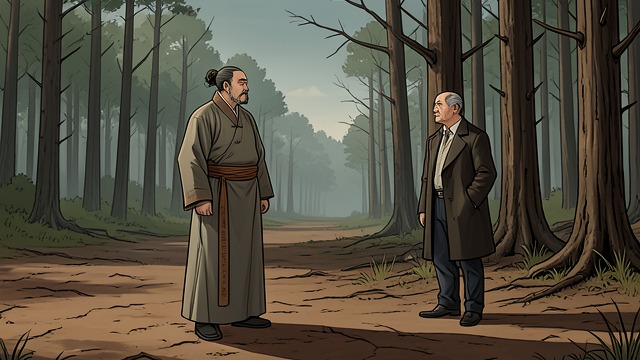
Wuqua explains that forests in China have been reduced by population, agriculture, fuel, and industry.
A Dismissed Lesson
Duquet hears the warning but believes North America’s forests are too vast to suffer the same fate.
The First Management Idea
The First Management Idea
Planting After Cutting
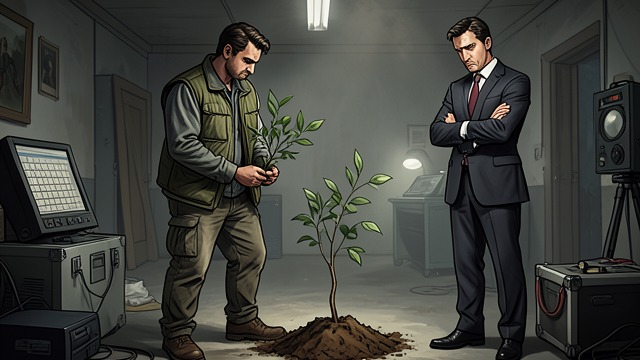
Dieter argues that replanting can preserve future timber and help stabilize soils after logging.
Resistance From the Board
Other owners regard long-term forestry as costly and impractical, preferring immediate cutting and sale.
A Seedling Nursery
A Seedling Nursery
Conrad’s New Direction
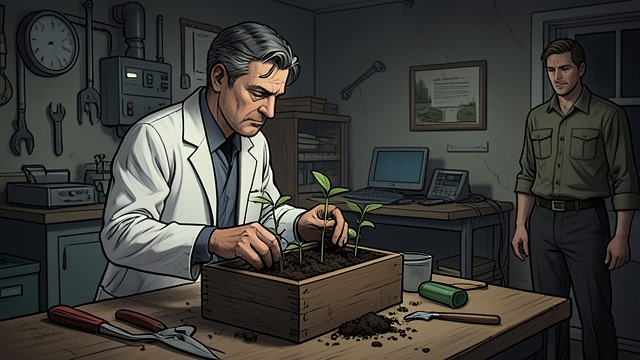
Conrad studies propagation, genetics, and site preparation, transforming Dieter’s small nursery into a research-oriented venture.
Restoration as Expertise
He learns that bare-root seedlings often fail on degraded sites, so nursery work must account for soil and ecological conditions.
Testing the Sites
Testing the Sites
Field Research
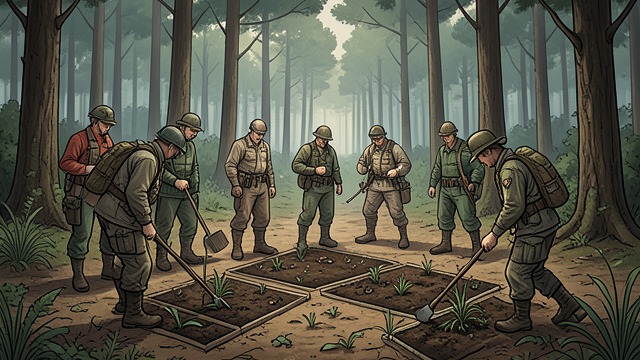
The Breitsprecher Tree Project monitors test plots and studies chlorosis, burned soils, and mycorrhizal fungi.
Restoration in Practice
The team combines planting with observation, recognizing that each site requires different species and care.
Millennial Time
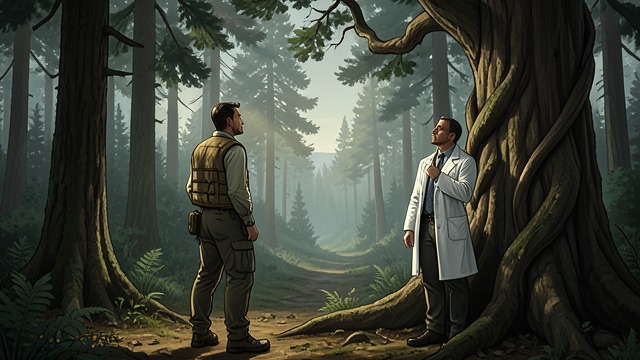
Millennial Time
A Long Horizon
Dieter and Sapatisia emphasize that ancient forests take thousands of years to develop and cannot be replaced within a human lifetime.
A Responsibility Without Reward
Restoration is undertaken for future generations and ecological life, not solely for the benefit of present owners.
During Duquet’s China visit
After Dieter joins the family enterprise
After the company’s decline
Near the novel’s ending
Near the final chapters
