
From Extraction to Restoration
BarkskinsThis flow traces a gradual, incomplete movement from taking forests for profit to restoring damaged land and studying ecological relationships.
increasing Bearing strength in each event
 decreasing
Bearing strength in each eventdecreasingThe First Seedling Idea
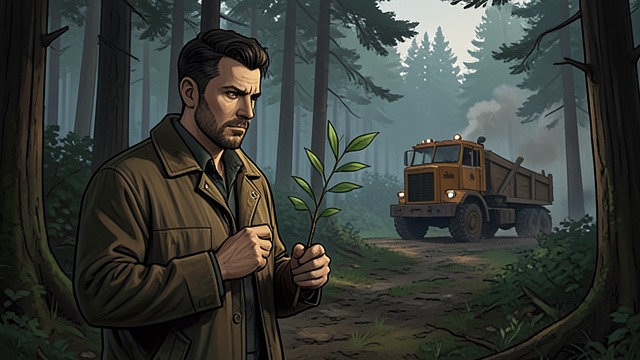
The First Seedling Idea
Replanting as Obligation
Dieter argues that timber companies must replace the trees they cut and plan on a longer time scale.
Limited Influence
His argument wins small conservation measures but cannot overcome the company’s appetite for growth.
Conrad Revives the Nursery
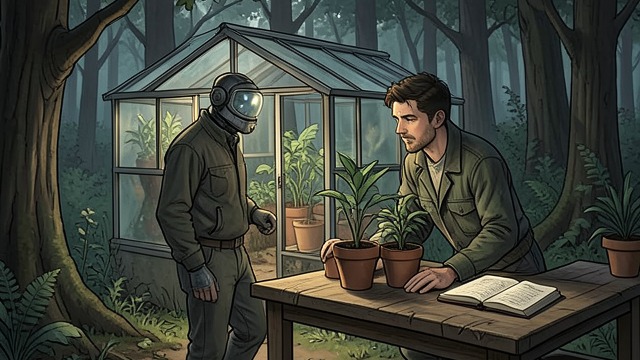
Conrad Revives the Nursery
A New Purpose
Conrad sees the neglected seedling operation as a chance to support forest recovery and studies modern propagation.
Science Meets Practice
He identifies site preparation, species choice, and seedling survival as central problems.
Research and Risk
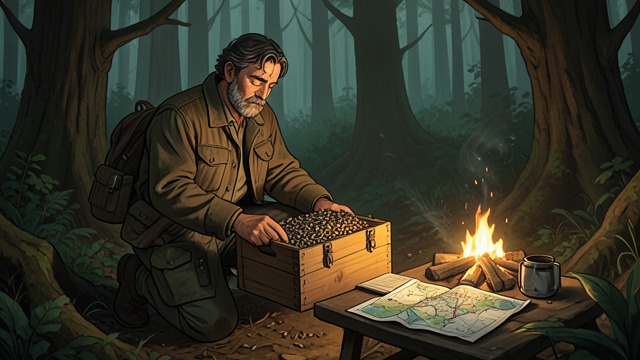
Research and Risk
Experimentation Begins
Conrad develops trials with multiple tree species and investigates seedlings suited to burned and degraded land.
Slow Progress
War interrupts the work, but Conrad returns committed to building a practical restoration program.
The Project Takes Shape
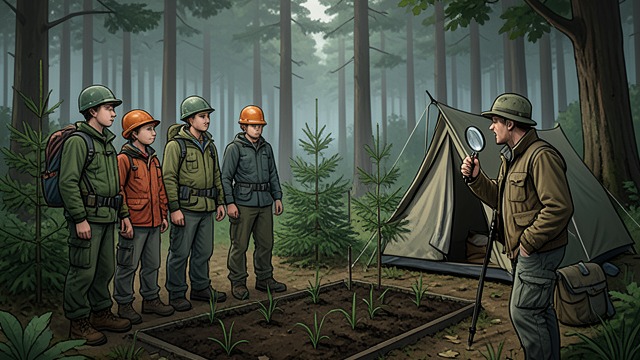
The Project Takes Shape
A Field Team
Sapatisia establishes a restoration program that hires young workers and partners with conservation groups.
Monitoring Beyond Planting
The teams track test plots for years, studying fungi, soils, water, and the condition of seedlings.
A Shared, Unfinished Task
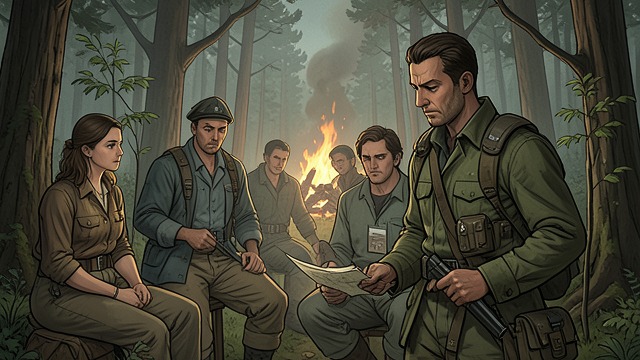
A Shared, Unfinished Task
Work Without Guarantees
Restoration proceeds despite fires, commercial opposition, and incomplete knowledge of ecological systems.
Responsibility Forward
The work matters because future forests cannot be built within the lifetime of those planting them.
During Dieter’s early forestry work
After Conrad returns from military service
After Conrad begins forestry school
Late in the twentieth century
At the close of the novel
