
Lumber Camps as a Social World
BarkskinsThis flow traces the logging camp as a temporary community where danger, hierarchy, food, and companionship shape workers’ lives.
increasing Bearing strength in each event
 decreasing
Bearing strength in each eventdecreasingThe Camp Arrives
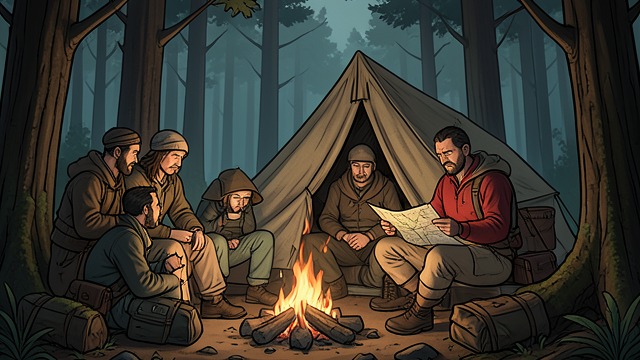
The Camp Arrives
Temporary Shelter
Workers live in crowded, smoky shanties with poor bedding and repetitive food, far from towns and families.
A Brotherhood of Work
Shared hardship creates a rough social order among choppers, cooks, drivers, and foremen.
Food and Power
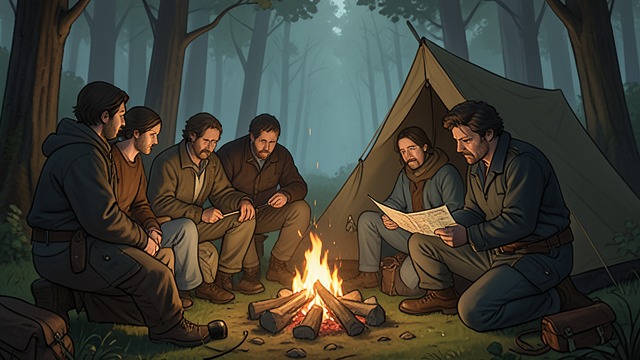
Food and Power
The Cook’s Authority
Food controls morale and status, and bad treatment at meals can provoke violence among workers.
Jinot’s Response
Jinot fights Panette after the cook contaminates his food and learns that camp hierarchy is enforced physically.
Camp Stories and Songs
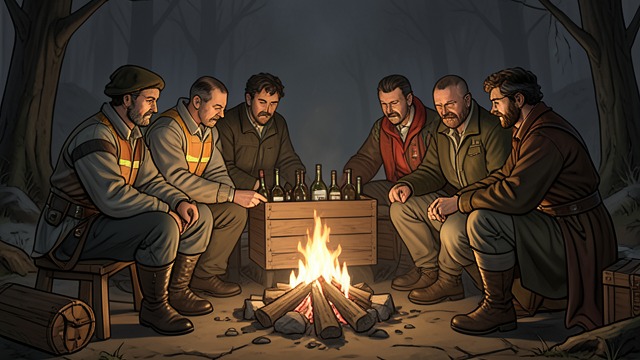
Camp Stories and Songs
Lives Told by the Fire
Workers exchange songs and stories that make distant places, family losses, and past accidents present in the shanty.
Fellowship With Limits
The camp offers companionship but cannot protect its members from injury, exploitation, or death.
Women at the Landing
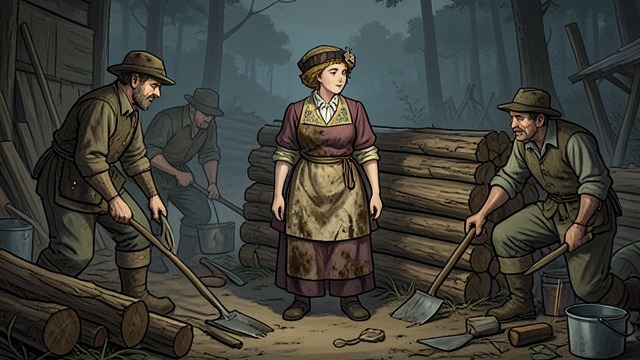
Women at the Landing
Work Beyond Camp Stereotypes
Angélique handles log marking while a camp cook, her father, and brothers work around her.
Authority Earned
Her strength and family protection disrupt the assumption that women cannot function in the logging world.
A Changed Camp Economy
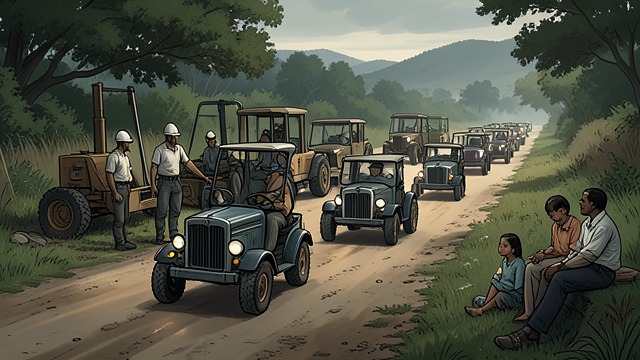
A Changed Camp Economy
Machines Replace Crew Life
Mechanized logging and road access reduce the need for large seasonal camps and river crews.
Workers Dispersed
The old communal world gives way to daily commutes, industrial plants, and more isolated family lives.
In the early lumber-camp era
During Jinot’s first camp seasons
Winter evenings in the camps
During Lavinia’s inspection visit
During the twentieth-century logging era
