
The Environment of Knowledge
BarkskinsThis flow traces what different characters know about forests, how they learn it, and how knowledge is preserved, ignored, or appropriated.
increasing Bearing strength in each event
 decreasing
Bearing strength in each eventdecreasingLearning the Woods
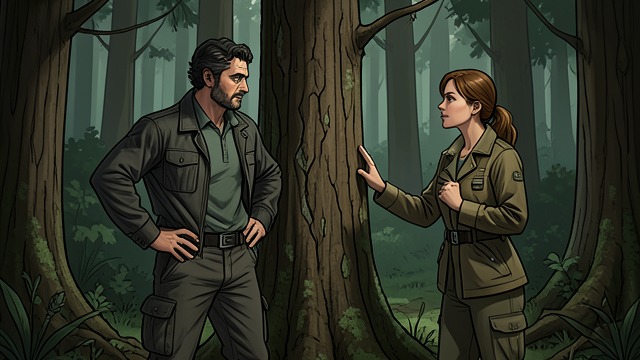
Learning the Woods
Knowledge Through Practice
René learns trees, rivers, weather, and animals through hard work and Mari’s practical instruction.
Two Ways of Knowing
His measured, extractive habits coexist uneasily with her relational understanding of the forest.
A Forest Cataloged
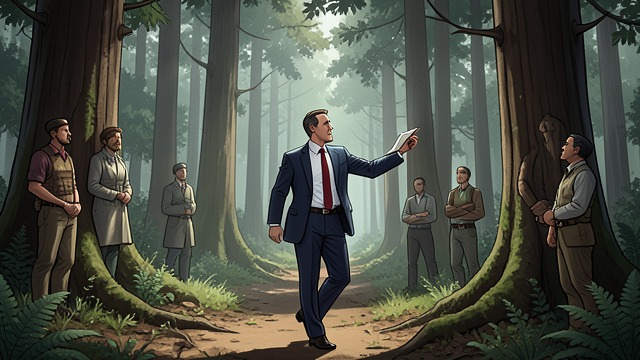
A Forest Cataloged
Commercial Observation
Duquet notices woods by their market uses and asks which species can supply profit and trade.
Knowledge for Extraction
His observations increase business capacity without creating a commitment to sustain the source.
The Forester’s Measurements
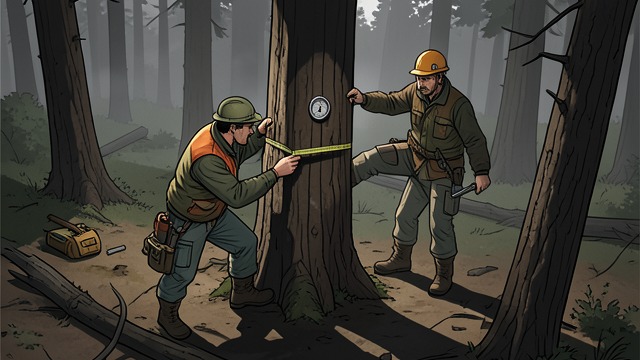
The Forester’s Measurements
Timber Assessed
Armenius and Dieter estimate board feet, species, and access, applying professional forestry knowledge to commercial land.
A Wider View
Dieter’s attention to soil and forest composition gradually exceeds the narrow calculations of timber volume.
Charley’s Notebooks
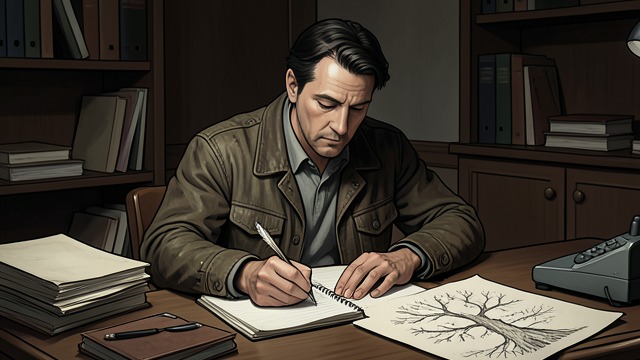
Charley’s Notebooks
Observation Accumulates
Charley records unfamiliar tree species and ecological relations, accepting how little one person can learn.
Knowledge Appropriated
After his death, the company uses the notebooks to support extraction rather than protect the forests he studied.
Field Notes for Repair
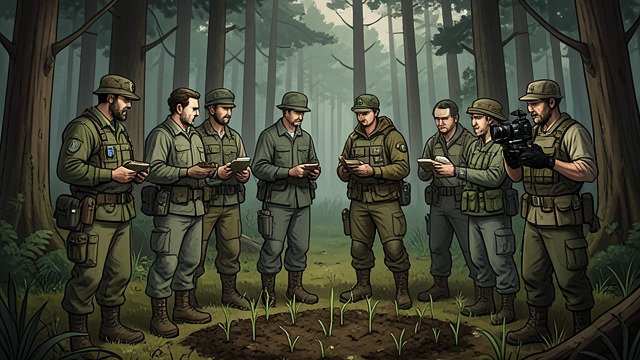
Field Notes for Repair
Shared Observation
The restoration team records soils, species, seedlings, and the effects of planting over time.
Knowledge as Collective Work
The project treats observation as provisional, shared, and necessary for repairing landscapes altered by previous generations.
René’s early years with Mari
During Duquet’s China trade period
During the Michigan land surveys
During Charley’s Amazonian studies
Near the conclusion
