
The Long Decline of Mi’kmaw Land
BarkskinsThis flow follows the escalating loss of Mi’kmaw territory, subsistence, and cultural continuity under colonial settlement and industrial forestry.
increasing Bearing strength in each event
 decreasing
Bearing strength in each eventdecreasingA Land of Abundance
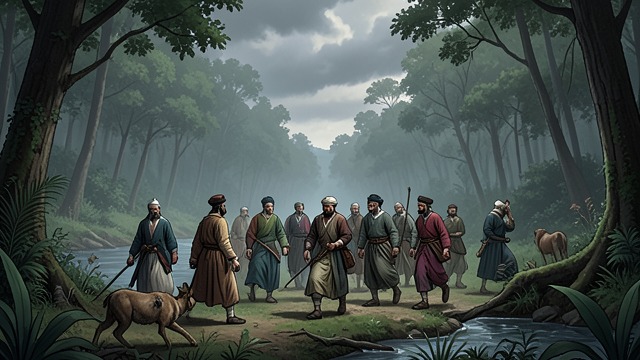
A Land of Abundance
Seasonal Knowledge
Mi’kmaw communities organize life around rivers, animals, plants, and seasonal abundance rather than fixed agricultural property.
Shared Landscapes
Their knowledge sustains hunting, fishing, medicine, and movement across a homeland settlers increasingly claim as empty wilderness.
Disease and Displacement
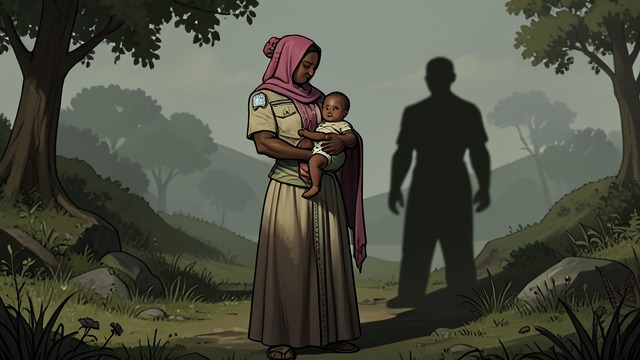
Disease and Displacement
Forced Passage
Mari describes being abducted to France, where smallpox kills her family and many of her people.
A Devastated Community
Her return carries illness into the homeland, linking colonial movement to population loss and lasting grief.
The Settlers’ Expansion
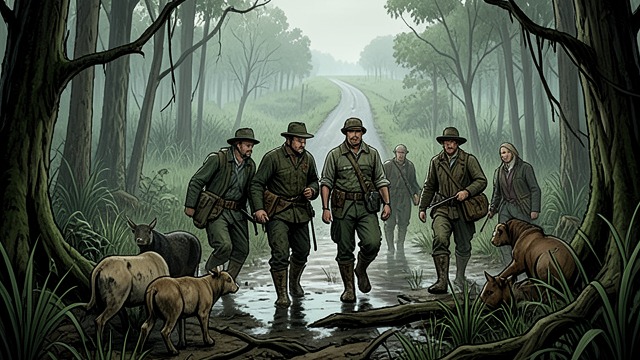
The Settlers’ Expansion
Land Transformed
Settlers drain marshes, establish farms, and introduce livestock that consume plants and compete with Mi’kmaw food sources.
Shrinking Mobility
Fewer beaver, moose, and fish undermine customary livelihoods, while new roads and claims constrain movement.
The Reserve and the Camps
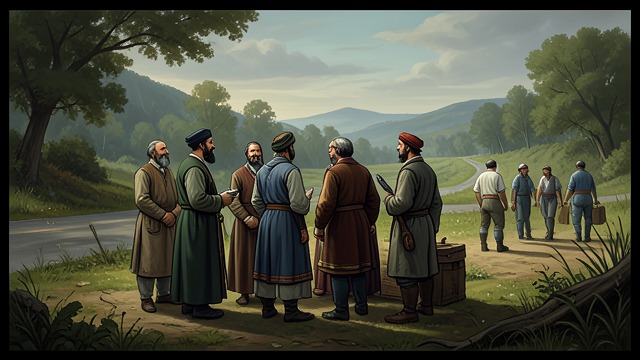
The Reserve and the Camps
Restricted Territory
Mi’kmaw families are confined to shrinking reserves, with rivers, eel grounds, and forests increasingly controlled by settlers.
Wage Labor
Men enter lumber camps for food and cash, adapting to work that further erodes traditional community life.
A Culture Under Pressure
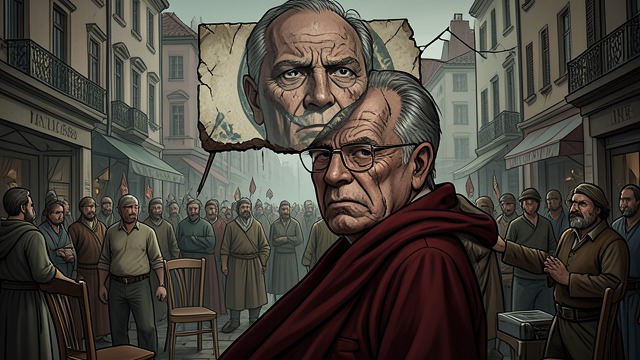
A Culture Under Pressure
Language and Family Harm
Residential schools separate children from their communities and inflict violence, weakening language and intergenerational knowledge.
Renewed Connection
Later generations seek relatives, land, and cultural knowledge, demonstrating persistence without undoing the damage.
Before and during the early French settlement
After Mari’s forced voyage and return
Mid-eighteenth century, as Acadian settlements grow
Nineteenth century, after repeated displacement
Twentieth century, from the residential-school era onward
