Bat-Signal
Batman the Dark Knight Returns 10th Anniversary Edition HardcoverThe Bat-Signal is Gotham City’s most recognizable call for Batman’s intervention: a public device that converts a crisis into a message visible across the city. Its significance lies not only in summoning Bruce Wayne / Batman, but in making his absence legible. Whenever the signal reappears, it tests whether Batman’s retired identity can remain separate from Gotham City’s needs and whether the symbol belongs to one aging man or to the community that continues to invoke him.
Definition and Civic Function
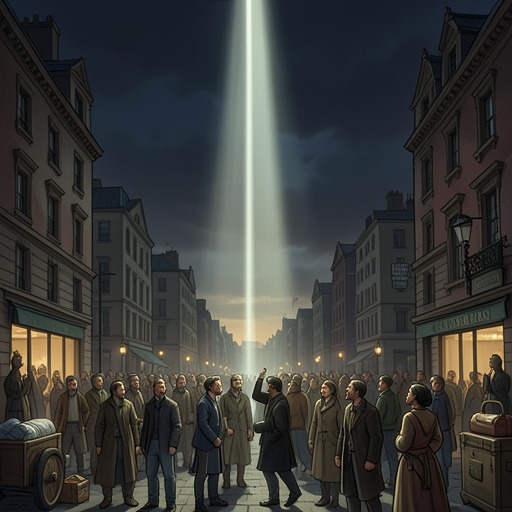
The Bat-Signal operates as both communication technology and civic emblem. It gives Gotham City Police Department a means of calling Batman when ordinary authority is insufficient, while also turning Batman’s presence into a shared public image. The device therefore links institutional power, popular expectation, and vigilante action: the police activate it, the city witnesses it, and Batman is asked to answer.
Its force depends on recognition rather than physical coercion. The signal does not compel Bruce Wayne / Batman to appear, but it creates a moral and symbolic pressure that makes nonresponse meaningful. When Gotham City’s violence and disorder deepen, the illuminated emblem recalls the period when Batman answered such calls regularly, contrasting the city’s continuing emergency with his Batman’s retirement.
Recurrence During Batman’s Return
The Bat-Signal helps frame Bruce Wayne / Batman’s return as a response to a citywide summons rather than a purely private decision. Its reappearance recalls the older partnership between Batman and James Gordon, whose understanding of the signal belongs to an earlier order of Gotham City law enforcement. The device thus carries the weight of a former working relationship even as that relationship has been altered by time, institutional opposition, and Batman’s long absence.
As Batman resumes action against Gotham City’s escalating violence, the Bat-Signal repeatedly marks the distance between public need and official capacity. It belongs to a city that still knows what Batman means, even when authorities question whether his methods remain legitimate. In this setting, the signal is simultaneously a request for help and evidence that conventional systems have failed to supply it.
Crisis, Suppression, and Public Memory
The Bat-Signal’s appearances gain additional force as Gotham City passes through violence, political repression, blackout, and social breakdown. Against those disruptions, the emblem offers visual continuity: a fixed sign that recalls Batman’s earlier role while the surrounding civic order changes. Its recurrence makes the city’s memory active rather than passive, because remembering Batman becomes a way of demanding action in the present.
The signal also participates in the story’s tension between official control and popular allegiance. Authorities may attempt to contain or discredit Batman, yet the image remains intelligible to Gotham City’s residents. Its meaning cannot be confined to the police apparatus that projects it; once recognized, it belongs to a broader public imagination in which Batman represents resistance to disorder and the possibility of collective recovery.
Legacy and Narrative Significance
By the later stages of the story, the Bat-Signal no longer functions merely as equipment used to summon one hero. It becomes a portable sign of continuity between Bruce Wayne / Batman’s former career, his renewed intervention, and the movement he leaves behind. In relation to Batman’s staged death and the subsequent organization of resistance, the signal’s importance shifts from immediate summons to inherited symbol: the call can outlast the man who first answered it.
The object’s recurring presence also gives the narrative a visual structure of return. Each activation reopens the question of whether Batman will answer, while each response confirms that Gotham City and Batman remain bound together. The Bat-Signal therefore condenses the story’s central conflict over retirement, public responsibility, and succession. It is a machine, a summons, and a piece of collective memory at once—an emblem through which Gotham City keeps calling its absent protector back into history.