Batman and Alfred Pennyworth's relationship
Batman the Dark Knight Returns 10th Anniversary Edition HardcoverThe relationship between Bruce Wayne / Batman and Alfred Pennyworth is the emotional and practical continuity running beneath Bruce’s withdrawal from crime-fighting and his eventual return. Alfred’s devotion sustains Bruce through retirement, but it is not passive approval: he recognizes the physical and moral danger of reviving Batman, resists the decision, and ultimately confronts the possibility that his oldest charge may die pursuing a role that has already consumed much of his life.
Identity and Foundation
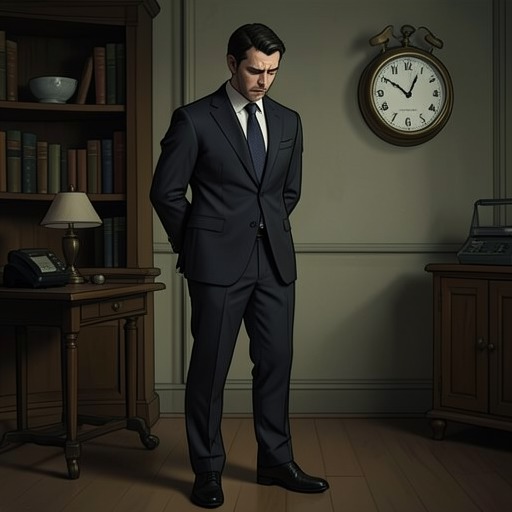
Alfred Pennyworth is bound to Bruce Wayne through a relationship that is simultaneously familial, domestic, and professional. He belongs to the private world of Wayne Manor and the Batcave, where he has remained close to Bruce even after Bruce’s public retirement as Batman. Because Alfred knows the difference between Bruce Wayne’s outward withdrawal and the continued presence of Batman within him, he functions as the principal witness to Bruce’s divided identity.
Alfred’s importance comes partly from duration. He represents the life Bruce has preserved behind the mask: household routine, memory, personal loyalty, and the ordinary human obligations that vigilantism repeatedly displaces. His presence gives Bruce’s mission a human context, preventing Batman from appearing as an isolated symbol detached from age, exhaustion, and attachment.
Retirement and the Return of Batman
During Bruce’s retirement, Alfred remains associated with the quiet life Bruce has chosen—or attempted to choose—after abandoning Batman. The retirement does not resolve Bruce’s relation to crime or responsibility. Instead, it leaves Alfred watching a man whose body and habits still belong to the old struggle. When Bruce returns as Batman amid Gotham City’s worsening violence, Alfred’s response is shaped by intimate knowledge rather than surprise: he understands that the return is a reawakening of Bruce’s central identity, but also a dangerous refusal to accept limitation.
Bruce’s renewed activity transforms the household. The Batcave and the equipment associated with Batman become active again, and Alfred’s role shifts from attendant to anxious participant in a crisis he cannot control. His concern is not merely that Bruce may be injured in one encounter. It is that the return restores the entire cycle of escalation, in which every victory summons a more dangerous enemy and every act of protection increases the demands placed on an aging hero.
The relationship therefore contains a persistent conflict between care and consent. Alfred’s loyalty makes him unwilling to abandon Bruce, yet his loyalty does not erase his judgment. He can recognize the necessity Bruce feels while remaining opposed to the consequences that necessity carries for Bruce’s body, his future, and the people bound to him.
Conflict Over Duty and Age
Alfred acts as a counterforce to Bruce’s belief that continued action is preferable to retirement. Bruce interprets Gotham City’s disorder as a summons; Alfred sees the same decision through the lens of age, accumulated risk, and the possibility of irreversible loss. Their disagreement gives the Batman’s Return a domestic dimension: the public revival of a legend is also a private argument between two people who know exactly what that legend has demanded.
This tension becomes sharper because Alfred has no equivalent transformation of his own. Bruce can put on the Batsuit, reclaim the Batmobile, and re-enter the streets; Alfred remains the person who must watch, prepare, advise, and endure the aftermath. The unequal distribution of danger makes his resistance ethically significant. He is not challenging Bruce’s courage. He is challenging the assumption that courage obliges everyone who loves Bruce to accept his self-destruction.
Yet Alfred’s opposition never becomes simple rejection. His connection to Bruce is sustained through caretaking even when he disapproves of Bruce’s choices. That pattern makes the relationship resemble a bond in which pursuit and withdrawal continually answer each other: Bruce withdraws from ordinary intimacy into Batman’s mission, while Alfred tries to keep responsibility, affection, and practical reality present within the mission’s increasingly severe demands.
The Final Separation
As Bruce’s campaign reaches its most dangerous phase, Alfred’s fear becomes inseparable from the prospect of losing him. The decisive break comes when Alfred leaves Wayne Manor after the accumulated strain of Bruce’s return and the consequences of continuing as Batman. The departure is not a repudiation of Bruce’s identity; it is the limit of Alfred’s capacity to remain a witness to a course he believes may end in death.
Alfred’s separation carries the force of an emotional warning. Bruce can survive enemies in Gotham City, but he cannot make the people closest to him share his indifference to personal cost. Alfred’s absence removes the familiar domestic witness who has long connected Bruce’s public legend with his private vulnerability. The loss makes Bruce’s later actions feel more solitary even when they are organized around collective protection.
The relationship reaches its bleakest point when Bruce’s apparent death confirms the danger Alfred had feared. Alfred is left with the knowledge that Bruce’s return to Batman has culminated in a fatal-looking confrontation rather than a safe restoration of his former life. The scene turns Alfred’s earlier resistance into retrospective judgment: his concern was not an abstract objection to vigilantism but an accurate recognition of what Bruce’s refusal to age out of the role could cost.
Legacy and Narrative Significance
The later revelation that Bruce has survived and is preparing a new clandestine movement changes the meaning of the relationship without undoing its rupture. Alfred’s presence has helped preserve Bruce’s humanity, but Alfred cannot simply be absorbed into the next phase of Batman’s work. Bruce’s apparent death and hidden survival convert their relationship from continuous companionship into a legacy carried under absence.
Alfred thus stands at the intersection of identity continuity and generational change. Bruce’s body is aging, his public life has narrowed, and his old methods have become politically and physically hazardous, but Alfred’s care remains one of the strongest signs that Batman is still a person rather than only a symbol. At the same time, Bruce’s movement toward successors and a wider network implies that the mission can no longer depend on Alfred’s solitary attendance at Wayne Manor and the Batcave.
The relationship’s significance lies in this unresolved contradiction. Alfred loves Bruce enough to serve him, warn him, and remain connected to him, but not enough—or not willing enough—to pretend that Batman’s return is harmless. Bruce, in turn, treats Alfred’s devotion as indispensable while repeatedly choosing the mission that threatens their bond. Their history makes the final separation and Bruce’s staged death more than plot mechanics: they expose the human cost of turning private grief and civic responsibility into an enduring public identity.