Batman’s retirement
Batman the Dark Knight Returns 10th Anniversary Edition HardcoverBatman’s retirement is the prolonged absence of Bruce Wayne from active crimefighting after he gives up the Batman identity. Rather than functioning as a completed escape from violence, the retirement becomes a suspended state: Gotham City worsens, old enemies and unfinished obligations remain, and the buried identity repeatedly presses against the life Bruce has tried to construct without it.
Withdrawal and the Condition of Gotham
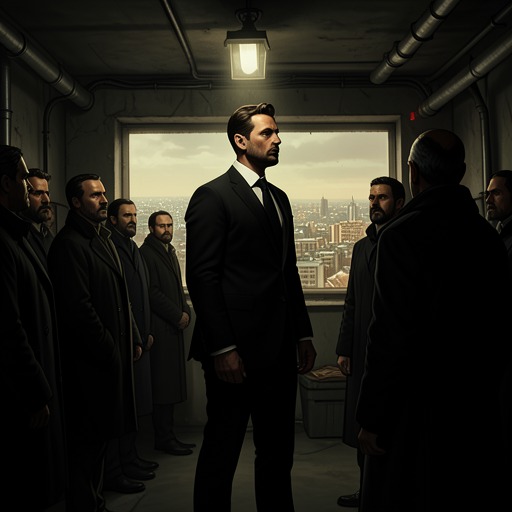
Bruce Wayne’s retirement is presented against a Gotham City marked by social decay and escalating public danger. The city continues to exist without Batman, but the absence does not produce lasting security. Crime, disorder, and institutional weakness create the conditions in which his withdrawal appears less like a solution than a vacancy. Batman’s disappearance removes a feared and independent force from the streets while leaving the causes of the city’s crisis unresolved.
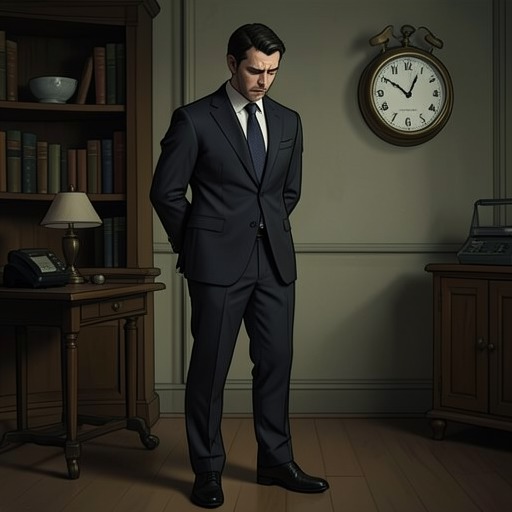
The retirement also changes Bruce’s position within Wayne Manor and his relationship with the past. His life is organized around the memory of what Batman once did, while Alfred Pennyworth remains associated with the older order that Bruce has renounced. The contrast between the retired Bruce Wayne and the returning Batman gives the state its central tension: age and routine press toward passivity, but the accumulated evidence of Gotham City’s collapse makes passivity increasingly untenable.
The Buried Identity Returns
The retirement is not simply a decision remembered from the past; it is repeatedly challenged by situations that revive Bruce’s combat instincts and sense of responsibility. His return follows the recognition that the city’s dangers have reached a point at which ordinary remedies cannot contain them. The act of becoming Batman again therefore breaks the retirement’s practical boundary, but it does not erase its consequences. Bruce returns older, physically diminished by time, and forced to test whether the methods and identity of his earlier life can survive in a changed Gotham City.
That return is also a conflict over identity continuity. Bruce Wayne has attempted to remain a retired man, yet Batman persists as a role, discipline, and moral demand rather than as a costume alone. The recurrence of the Batman identity shows that retirement has suppressed an active vocation without resolving it. When Bruce reenters the streets, the narrative treats the event as a return from latency: the former hero does not recover a lost youth, but recommits his aging body to the same city that made retirement seem necessary.
Retirement Under Pressure
As the plot moves forward, the consequences of the retirement become increasingly visible. Bruce’s long absence has allowed threats to mature and has left Gotham City without the figure who once confronted them directly. His renewed intervention brings him into conflict with the Mutant Gang and the Mutant Leader, while the wider crisis expands through institutional breakdown, public emergency, and the Gotham City blackout. These developments establish that the retirement has not separated Bruce from Gotham City; it has merely postponed his response to its deterioration.
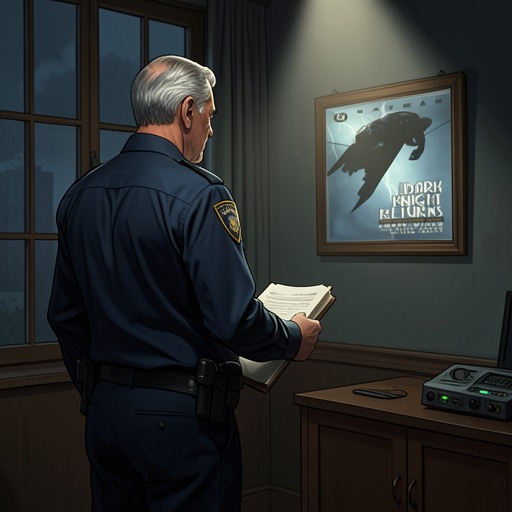
The state also sharpens the contrast between private withdrawal and public responsibility. Bruce possesses wealth, experience, and a powerful symbolic identity, but the retirement has kept those resources outside active public use. When the crisis becomes severe, his return mobilizes more than individual violence: Batman’s example helps organize resistance and contributes to the restoration of order when formal authorities can no longer control the city. The retirement thus acquires a political consequence, because the absence of one unofficial guardian exposes how dependent Gotham City has become on a person who is no longer willing to remain absent.
The Cost of Returning
Batman’s return does not restore the conditions that existed before retirement. Bruce must confront enemies whose histories are connected to his earlier career, including Harvey Dent / Two-Face and The Joker, and he must operate in a city transformed by fear, emergency rule, and mass disorder. The retirement has therefore created distance but not reconciliation. Past relationships and conflicts return with the Batman identity, demonstrating that withdrawal has preserved the old antagonisms rather than bringing them to an end.
The physical cost of renewed action is inseparable from the meaning of the retirement. Bruce’s age makes every intervention a judgment on the limits of the body, while the risks of the larger political crisis extend beyond street crime to the confrontation with Clark Kent / Superman. The retired life cannot be resumed simply after each mission, because each return raises the stakes and narrows the possibility of an ordinary existence. In this sense, retirement is both the condition Batman breaks and the warning that follows him whenever he acts.
Legacy and Final Transformation
By the final movement of the story, Batman’s retirement has been replaced by a different form of withdrawal. After the confrontation with Clark Kent / Superman and the staging of his own death, Bruce Wayne appears to leave public life again, but this departure is not equivalent to the earlier decade of inactivity. The first retirement isolates him from action; the later disappearance conceals an organized continuation of his mission.
The distinction matters because the ending converts retirement from an absence into a question of succession. Bruce’s experience, methods, and purpose are directed toward a future in which others can carry forward what the singular Batman once embodied. The state that began as personal exhaustion and civic disengagement ends as a strategic transformation: Bruce no longer needs to remain publicly visible in order for the Batman legacy to continue. Batman’s retirement therefore frames the entire narrative as a passage between forms of heroism, from an aging individual’s return to a collective future built from the identity he refused to let die.