Gotham City
Batman the Dark Knight Returns 10th Anniversary Edition HardcoverGotham City is more than the setting of The Dark Knight Returns: it is the story’s central social body, visibly deteriorating before Bruce Wayne / Batman re-enters public life and repeatedly reorganizes itself around crisis. The city moves from normalized decay to gang rule, blackout, nuclear catastrophe, and martial law, yet it also becomes the ground on which citizens recover agency. Its decisive significance lies in this tension: Gotham is endangered by institutional failure, but it is not portrayed as politically empty. The city’s future depends on who can mobilize its people and give collective fear a usable direction.
Definition and Initial Condition
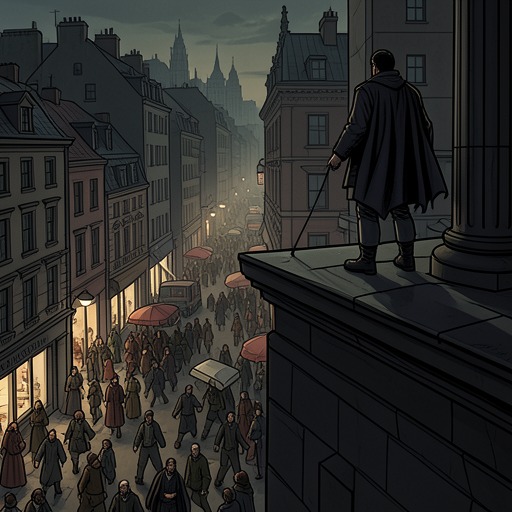
Gotham City is introduced as a place whose social deterioration has become ordinary rather than exceptional. Crime and public danger form the background against which Bruce Wayne / Batman’s retirement appears not simply as a personal decision but as part of a wider civic abandonment. The city’s decline makes the absence of Batman politically legible: the old symbol has disappeared while the conditions that once called for him have worsened.
The city’s condition is also filtered through recurring public images and institutional responses. Gotham City Police Department and government authority remain visible, but their presence does not prevent disorder from becoming the city’s defining atmosphere. Gotham therefore functions as a space where official power continues to exist while losing the capacity to inspire confidence. The resulting vacuum permits private violence, sensational media narratives, and charismatic figures to compete for control of public meaning.
Batman’s Return and the Mutant Crisis
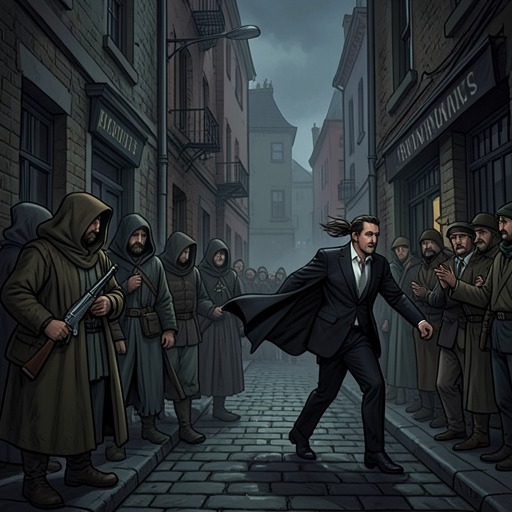
The return of Bruce Wayne / Batman changes Gotham City’s political temperature. His intervention against the Mutant Gang Uprising is not merely a series of assaults on criminals; it is a public reappearance that forces the city to reconsider what kind of authority can still act effectively. The Mutant gang’s power rests on numbers, intimidation, and territorial dominance, while Batman relies on reputation, tactical knowledge, and the ability to convert a single intervention into a citywide symbol.
Gotham’s crisis sharpens when Batman confronts The Mutant Leader. The conflict exposes the difference between uncontrolled collective violence and disciplined leadership. Batman’s victory does not instantly heal the city, but it breaks the gang’s claim that fear alone can govern Gotham. The aftermath produces a new and unstable political possibility: the city’s energy can be redirected rather than merely suppressed.
That redirection becomes visible when Batman organizes Gotham’s citizens to restore order. The people who had previously appeared as victims or passive observers become participants in the city’s defense. Their mobilization demonstrates that Gotham’s survival depends on social networks and shared symbols as much as on weapons or official institutions. Batman supplies the organizing frame, but the city’s residents supply the human force that makes recovery possible.
Blackout, Nuclear Winter, and Competing Rule
Gotham City later enters a more extreme crisis through the Gotham Blackout and the broader nuclear disaster. The loss of electricity strips away the routines that make urban government appear stable. Communication, transportation, surveillance, and ordinary policing become unreliable, leaving neighborhoods exposed to both opportunistic violence and institutional paralysis.
The nuclear crisis transforms Gotham’s disorder into a condition of isolation and deprivation associated with Nuclear winter. The city is no longer simply threatened by gangs or crime; it is caught inside a national and environmental emergency whose consequences exceed local control. This widening scale changes the meaning of Batman’s activity. He is no longer responding only to individual crimes but attempting to preserve a social order under conditions in which conventional authority has become visibly inadequate.
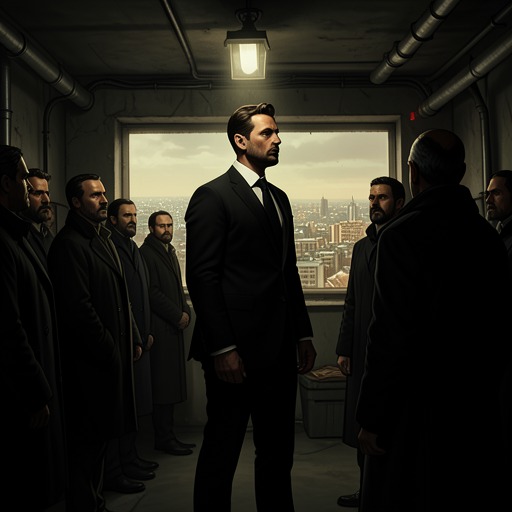
During the resulting Martial law in Gotham City, the city becomes a contested space between formal state power and local forces that claim to protect it. The Sons of Batman Take Over Gotham, turning the earlier civic mobilization into a more militant and ambiguous movement. Their action demonstrates the durability of Batman’s organizing legacy, but it also raises the danger that a symbol created to resist chaos may be reproduced as coercive power. Gotham’s political transformation therefore contains both emancipation and the possibility of another domination.
Institutions, Citizens, and Authority
Gotham City’s major conflicts repeatedly ask who has the right to command obedience. The Gotham City Police Department represents institutional legitimacy, yet its ability to control events is repeatedly strained. Batman possesses no formal mandate, but his knowledge, effectiveness, and symbolic authority allow him to attract allies and influence civilians. The Mutant gang and later the Sons of Batman rely more directly on force and allegiance within the streets.
These competing forms of authority give Gotham a layered political structure. Government officials can declare policy, police officers can attempt enforcement, and gangs can impose immediate physical control, but none automatically produces social consent. Batman’s power is strongest when it converts personal legend into collective action, as when Gotham’s citizens help restore order. It is weakest when his movement risks becoming indistinguishable from the authoritarian violence it opposes.
The city also serves as a laboratory for public labeling. The media, police, government, and residents assign identities such as criminal, hero, extremist, or threat, and those labels alter how each group is treated. Batman’s return is thus a struggle over narrative ownership as well as street control: whoever defines what Gotham is experiencing can shape which actions appear necessary and which forms of violence appear legitimate.
Memory, Survival, and Narrative Significance
Gotham City carries the accumulated memory of earlier violence, including the personal history that made Bruce Wayne / Batman’s identity possible. Public symbols such as the Bat-Signal and the continuing presence of Batman’s image allow private trauma to become collective memory. The city does not simply remember its past; it repeatedly uses that memory to authorize present action.
This memory is double-edged. It can restore courage by reminding citizens that resistance has a history, but it can also preserve cycles of fear and retaliation. Gotham’s recurring crises make the past feel continually unfinished, so the city’s political present is haunted by earlier failures and earlier promises. Its decay is therefore social and historical, not merely architectural or criminal.
By the end of the narrative, Gotham City has not returned to an uncomplicated normality. Its institutions have been shaken, its population has been politicized, and new collective forces have emerged from the struggle against disorder. The city’s significance lies in that unfinished condition. Gotham is both the object Batman seeks to save and the power that tests, modifies, and potentially outgrows him: a damaged civic organism whose future depends on whether resistance can become durable community rather than another form of rule.