Gotham City blackout
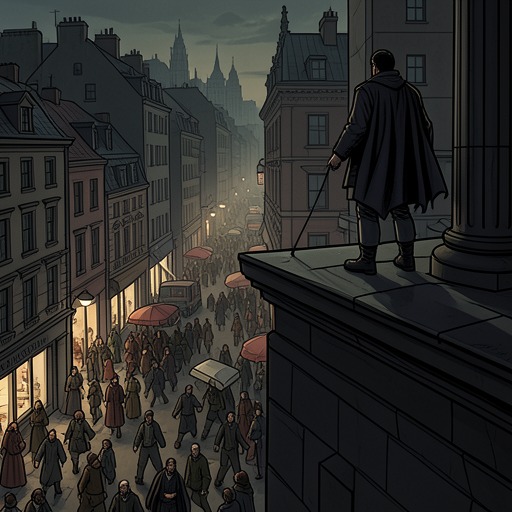
Batman the Dark Knight Returns 10th Anniversary Edition HardcoverGotham City blackout is the prolonged condition of darkness and infrastructural collapse that follows the electromagnetic pulse released during the nuclear confrontation. More than a temporary interruption of electricity, it strips Gotham City of the systems that make modern urban order appear permanent: communications fail, police authority is weakened, essential services become unreliable, and frightened residents must confront the limits of government protection. The blackout therefore becomes the material setting in which Gotham City’s political order is tested and remade.
Causes and Immediate Setting
The blackout begins as a consequence of the international crisis surrounding the nuclear attack. The electromagnetic pulse accompanying the detonation disables electrical and electronic infrastructure across Gotham City, linking the city’s local emergency to a conflict whose scale exceeds its borders. The event makes the city vulnerable without reducing the danger to a single visible enemy: the immediate threat is not only violence in the streets but the sudden disappearance of the technological network on which ordinary administration depends.
The power loss also belongs to the wider aftermath of the nuclear exchange. Gotham City is forced to exist under the shadow of nuclear winter, when the consequences of distant strategic decisions become local conditions of darkness, cold, scarcity, and uncertainty. The blackout thus reveals a security paradox at the center of the crisis: measures presented as protection by powerful states produce insecurity for civilians who have no control over the confrontation. A weapon intended to alter the balance between enemies also disables the infrastructure of the city it is supposed to defend.
Effects on Gotham City
Once the power fails, Gotham City loses the reassuring visibility and coordination associated with a functioning metropolis. Darkness conceals movement, interrupts communication, and makes the response of the Gotham City Police Department less effective. The city’s residents are left to interpret danger without dependable information, while existing tensions become harder to contain because the institutions responsible for maintaining order can no longer operate normally.
The blackout exposes the difference between formal authority and effective authority. Government and police structures may continue to exist in name, but their ability to direct events is sharply reduced when electricity, communications, and routine logistics disappear. In that gap, emergency conditions begin to resemble martial law: exceptional measures become easier to justify, and coercive power can pass from public institutions to whoever possesses organization, supplies, transport, and the confidence of the population.
The condition also intensifies Gotham City’s social decay rather than creating it from nothing. The city was already marked by fear, criminal violence, and institutional exhaustion. Darkness removes some of the barriers that had restrained those pressures, allowing disorder to become visible as a struggle over streets, resources, and legitimacy. The blackout is consequently both a disaster and a revelation: it shows what the city’s established order had been concealing and how little resilience remains beneath its surface.
Batman and the Reorganization of Order
For Bruce Wayne / Batman, the blackout creates the circumstances in which private intervention becomes politically consequential. Batman does not merely respond to isolated crimes during the emergency; he treats the collapse of official coordination as a problem of collective organization. The crisis helps make possible Batman’s effort to mobilize Gotham City’s residents and restore order through direct action, practical cooperation, and the authority attached to his symbol.
That response is inseparable from Batman’s return to public life. The loss of power turns his methods into an alternative infrastructure. Where the state can no longer guarantee communication or security, Batman’s network supplies leadership and direction. His authority is not bureaucratic and is not derived from a formal mandate. It rests on personal reputation, discipline, fear among enemies, and the willingness of others to follow him when conventional institutions have failed.
The blackout therefore changes the meaning of Batman’s vigilantism. Under ordinary conditions, his actions stand outside the law and appear as a challenge to public authority. Under emergency conditions, the same extralegal force can be read by frightened civilians as the most available form of protection. This does not resolve the moral problem of private power; it makes that problem impossible to ignore. The city’s survival begins to depend on an actor who has no constitutional authorization, even as the crisis makes the authorized institutions ineffective.
Political Consequences and Aftermath
The power loss contributes to the transfer of practical control away from the weakened institutions of Gotham City and toward organized groups. Batman’s followers, including the Sons of Batman, can operate in the vacuum because they possess a shared emblem, a command structure, and a readiness to act collectively. The blackout is therefore a condition of political transition: it allows emergency organization to become a rival form of government rather than a temporary supplement to it.
This transition carries an unresolved question of legitimacy. When the Sons of Batman take over Gotham City, their authority emerges from action and force rather than from elections, law, or an established chain of succession. The blackout helps explain how such a takeover becomes possible, but it does not automatically make it just. The new order can suppress immediate disorder while reproducing the underlying pattern of rule through concentrated power. The city moves from institutional weakness to charismatic and coercive authority, not necessarily from crisis to democratic restoration.
The condition also shapes the wider arc of Batman’s final confrontation with the powers that define the age. The electrical darkness is part of a sequence in which nuclear escalation, state violence, police failure, and private mobilization become intertwined. By the time Gotham City reaches the later stages of the crisis, the blackout has ceased to be merely a technical failure. It has become the environment in which the city’s inhabitants discover that order can be destroyed quickly, rebuilt collectively, and claimed by whoever is prepared to assume responsibility for the consequences.
Narrative and Thematic Significance
Gotham City blackout gives physical form to the collapse of an old political order. Darkness functions literally as the absence of power, but it also marks the withdrawal of institutional certainty. The city cannot continue pretending that technology, government procedure, or inherited authority will automatically protect its population. Every later act of restoration is consequently charged with a question about who has the right to impose order and what kind of order emerges from emergency.
The blackout also binds local social crisis to global strategic violence. Gotham City’s citizens experience the consequences of decisions made at the level of nuclear deterrence, yet the narrative follows the effects through streets, neighborhoods, police stations, and improvised networks of aid and control. That movement from the geopolitical to the intimate gives the state a distinctive significance: it is the point at which abstract conflict becomes bodily vulnerability and civic breakdown.
Ultimately, the blackout is a threshold state. It destroys the conditions of ordinary governance, enables Batman’s mass mobilization, and prepares Gotham City for an unauthorized transfer of power. Its darkness is not simply an image of despair, because it also permits new forms of solidarity and leadership to appear. But neither is the resulting order innocent. The blackout reveals that recovery can depend on the same exceptional violence that the crisis seemed to demand, leaving Gotham City restored in function while still confronting the question of whether survival has produced legitimate freedom.