The Sons of Batman Take Over Gotham
Batman the Dark Knight Returns 10th Anniversary Edition HardcoverThe Sons of Batman Take Over Gotham is the decisive political aftermath of Gotham City’s breakdown. What begins as a city in which official institutions cannot contain violence becomes a moment of popular organization, as people shaped by Bruce Wayne / Batman’s return turn his methods and symbols into a wider movement. Their takeover demonstrates that Batman’s intervention has not merely defeated individual criminals; it has altered who believes the city can be defended, who claims the right to act, and what kind of order may follow the collapse of the old one.
Causes and Background
The movement grows out of Gotham City’s prolonged social decay and the failure of established authority to protect its residents. Earlier crises have shown the limits of the Gotham City Police Department and the government, while the Mutant Gang’s violence has made public space feel effectively surrendered to organized force. Batman’s return therefore enters an already mobilized field of fear, resentment, and political absence rather than creating the city’s unrest from nothing.
Batman’s example supplies the movement with a recognizable framework. He brings together people who have been treated as passive victims and gives them a role in restoring order; the important change is not simply that citizens admire him, but that they begin to act collectively. The bat emblem becomes a mobilizing sign, linking scattered individuals to a common identity and converting personal courage into an organized response. In this sense, the Sons of Batman inherit an image, a vocabulary of resistance, and the expectation that decisive action can succeed where official procedure has failed.
Formation and Seizure of Power
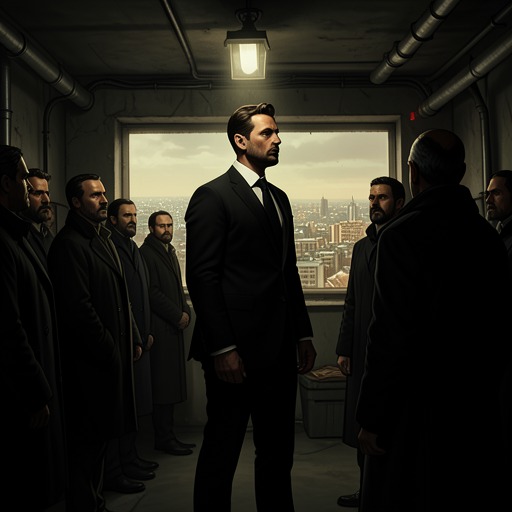
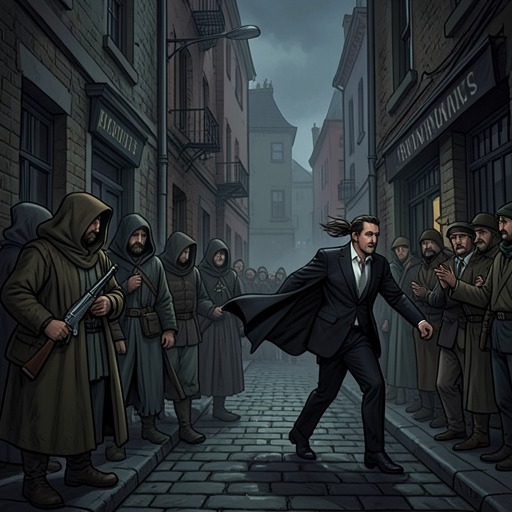
After Gotham City’s wider emergency, the Sons of Batman move from imitation to political action. They take over streets and neighborhoods that no longer appear to be governed effectively, using collective presence to displace the forces that had previously controlled them. Their power rests on numbers, weapons, mobility, information shared through an informal network, and the authority of a symbol that has already acquired public force through Batman’s actions.
The takeover is consequently more than a riot or a single victory in combat. It is a transfer of practical control. The Sons of Batman occupy the gap left by the failing state and make order depend on their ability to organize, patrol, and compel obedience. Their authority is not presented as ordinary legal-bureaucratic legitimacy; it comes from emergency conditions, visible effectiveness, and the charisma associated with Batman’s name. The episode exposes the political ambiguity of such success: the same methods that allow a powerless population to resist predation can also create a private armed authority with no clearly defined mechanism of accountability.
Batman’s Influence and the Movement’s Distinction
Batman is the movement’s originating figure, but the Sons of Batman are not simply Batman multiplied. Bruce Wayne / Batman acts according to a personal code and a highly controlled mission, whereas the Sons operate as a collective whose behavior can exceed the discipline of its model. The distinction matters because the movement gives Batman’s ideals a social reach that he could never achieve alone while also making those ideals vulnerable to simplification and coercion.
Their rise confirms that Batman’s return has produced a durable change in Gotham City’s political imagination. Citizens who once appeared isolated can become participants; a symbol once associated with one masked vigilante can become the basis of group identity; and the city’s residents can challenge the assumption that disorder is permanent. Yet the same continuity that makes the Sons effective makes their succession unsettling. They inherit the right to use force more readily than they inherit the restraint, judgment, and responsibility that Batman believes define his mission.
Consequences for Gotham City
The Sons’ takeover helps Gotham City recover a functioning public order after catastrophe. Their intervention shows that the city is not entirely dependent on the institutions that failed it, and it creates the conditions in which ordinary people can reclaim streets from criminal domination. The episode therefore carries a genuine emancipatory charge: the people are no longer only an audience for television reports, official pronouncements, or superhuman interventions.
At the same time, the new order remains an emergency order. The city’s blackout, violence, and institutional paralysis have made extraordinary measures appear normal, and the Sons’ authority emerges from that suspension of ordinary legality. No formal transfer, trial, or settled constitutional process is described as legitimizing their rule. The result is a political transformation whose effectiveness is evident but whose legal status remains unresolved: Gotham City has been rescued from one form of domination, yet it has not thereby solved the problem of who may govern it.
Narrative Significance
The event enlarges the meaning of Batman’s return from a personal revival into a social contagion and a question of succession. Batman can no longer be understood only as an aging man in a Batsuit confronting old enemies. His actions have become a model that others reproduce, and Gotham City’s future now depends on how that model is interpreted by people who did not originate it.
The Sons of Batman thus embody both the triumph and the risk of Batman’s politics. They prove that fear and resignation can be broken through collective action, but they also reveal how quickly resistance can resemble rule. Their takeover is the book’s clearest image of a city remade from below: hopeful because citizens acquire agency, dangerous because agency arrives armed and outside conventional law. It prepares the larger movement toward a new order while leaving the central question deliberately alive—whether Batman’s legacy will produce responsible successors or merely a more disciplined form of power.