Al-Anon's Three Cs: You didn't cause it, can't control it, or cure it
Beautiful Boy: A Father's Journey Through His Son's AddictionAl-Anon's Three Cs: You didn't cause it, can't control it, or cure it is a principle David Sheff hears at an Al-Anon meeting as he struggles with his son Nic Sheff's addiction. It names a limit on what relatives can do, but the scene gives that limit a painful counterpoint: David recognizes the words and their possible help, yet continues to believe that he is to blame.
The Principle at the Meeting
The three Cs are stated as: "You didn't cause it, you can't control it, and you can't cure it." At the meeting, they sit alongside the familiar Al-Anon phrase "Let go and let God." David regards the sayings as potentially helpful, though he cannot always believe them. Their plainness contrasts with the knot of guilt he brings into the room; knowing the principle does not make it emotionally convincing.
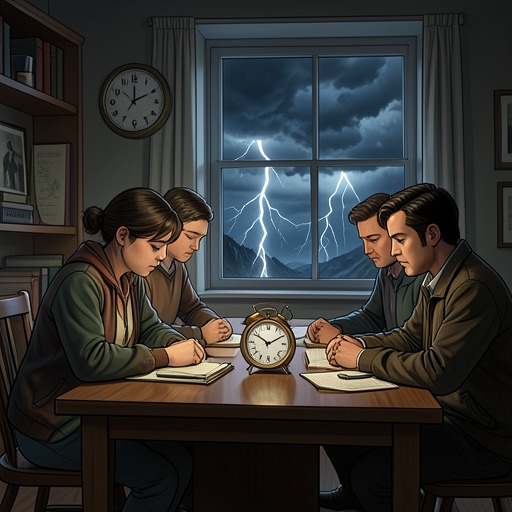
The meeting takes place in Novato, in a dingy room where twelve people sit in a circle of plastic chairs. Folgers coffee, powdered-sugar doughnuts, flickering neon tubes, and a wobbly fan give the gathering an unceremonious, ordinary setting. The three Cs are not presented as a dramatic revelation. They are part of the meeting's repeated language, offered among other attendees' shared experience and the slogans David initially finds irritating.
David's Resistance and Self-Blame
David has kept the family's problem secret, he explains, in part to protect Nic and preserve others' good impressions of him. He has come to see the value of speaking about Nic's addiction and hearing other people's stories, after counselors recommended Al-Anon to him and Karen. The meeting's language about secrets therefore meets him at a moment when he has begun to speak openly, but openness has not released him from responsibility as he imagines it.
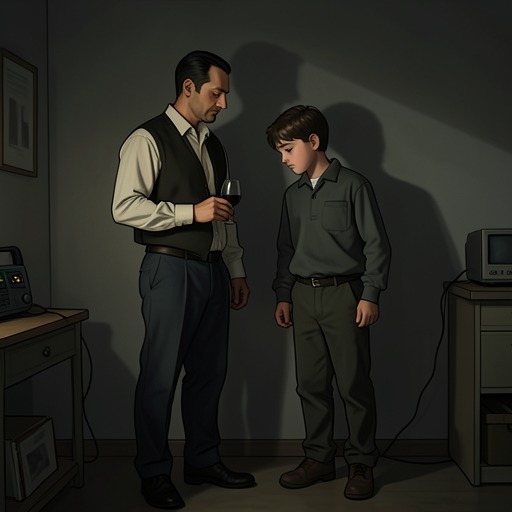
He continues to wonder whether his own past behavior helped authorize Nic's drug use. David recalls that he smoked with Nic while also warning him about drugs, and describes this in retrospect as tacit permission. Because stopping drugs was easy for David and stopping was not easy for Nic, the difference sharpens rather than resolves his sense of fault. He says that he does not believe the reassurance that he did not cause the addiction; his self-accusation persists even as he acknowledges that he acted naively and immaturely.
From Distance to Affinity
David's response to the three Cs is shaped by his resistance to the meeting itself. His first impulse is condescension toward the people gathered there, whom he sees through their clothes and appearance. By the time he leaves, however, that distance has given way to affinity with parents, children, spouses, partners, and siblings affected by drug addiction. His sympathy grows without any claim that the three Cs have settled his own doubts.
The principle thus functions less as a solution than as a difficult boundary: it offers relatives a way to understand what they cannot control or cure, while David's experience shows how hard it can be to accept that boundary when guilt attaches itself to particular memories. The meeting's movement from clichés he resents to people for whom his heart breaks gives the three Cs their human context. They are a shared language of limits, not an instant escape from self-blame.