Alcoholics Anonymous
Beautiful Boy: A Father's Journey Through His Son's AddictionAlcoholics Anonymous is a mutual-help fellowship that appears throughout the book as part of Nic Sheff’s repeated efforts to recover from addiction and as a source of support for his family. Its meetings offer routine, sponsors, and a framework for working the steps, but they do not promise a cure or guarantee lasting sobriety. For David Sheff, attending with Nic and hearing other people’s experiences makes recovery less isolating while confronting him with how uncertain its course remains.
Meetings and participation
Nic’s attendance at Alcoholics Anonymous becomes a visible measure of his attempts to follow a recovery routine. While home, he asks to borrow the family station wagon to attend a meeting. Because he has lost driving privileges after missed curfews and an accident in which he damaged both family cars, the request matters: David allows it because meetings are an important part of continued recovery. Nic returns as promised and says he has asked someone he met to become his sponsor while he is in town.
The next day, Nic asks to use the car again so he can have lunch with that sponsor. He tells his family where he is going and when he expects to return, then comes home on time. On another evening, exhausted, he falls asleep at home and wakes with a start, checks his watch, and says, “I almost missed the meeting.” He washes his face, brushes his hair back, changes his shirt, and leaves in a hurry. To David, these details initially suggest commitment: Nic makes the effort to attend even when he is tired and has been ready to sleep for the night. The book also makes the tension in that interpretation clear. Nic stays out late after a later meeting, and David’s unease returns; what looked like reliable participation cannot by itself settle the family’s fear that an apparent return to normal may conceal trouble.
Meetings also give Nic a public language for his condition. At a family session during treatment, he introduces himself: “I'm Nic, and I'm an addict and alcoholic.” David has heard him make this admission at other sessions and at meetings, but it still jars him. He feels some pride in Nic’s willingness to say it, while doubting whether Nic truly believes the words. Later, father and son attend a meeting together and introduce themselves again. Nic identifies himself as a drug addict and alcoholic; David presents himself as the father of an addict and alcoholic, there to support his son. The paired introductions show how the fellowship’s language recognizes both the person seeking recovery and the family member accompanying him.
Sponsorship, steps, and treatment
Sponsorship and step work recur as practical elements of Nic’s recovery. At Hampshire College, he attends meetings as agreed and finds a sponsor, a graduate student at the University of Massachusetts. The sponsor hosts a Sunday morning gathering at his home for students, with muffins, coffee, and a meeting. Nic also sees a drug and alcohol counselor recommended by the school. For a time, he reports regularly about classes, friends, and meetings; then he stops returning David’s calls, and David suspects a relapse. Participation can establish a structure, but the account does not present it as protection against recurrence.
At Hazelden’s New York program, which is designed to last six months or longer rather than operate as a four-week introductory course, required meetings are built into a broader routine of work or school, therapy, group sessions, chores, and curfew. Nic attends Alcoholics Anonymous meetings each evening with other Hazelden patients. He describes the group’s outings in characteristically dry terms: “We're a sight walking through the city,” he says, “a gang of grateful misfits.” The description conveys fellowship without suggesting that treatment is effortless or that participants have left their difficulties behind.
The book connects Alcoholics Anonymous principles to treatment programs more broadly. Richard Rawson explains that many programs draw on its principles, which seem essential to staying sober for most, if not all, alcoholics and addicts, whatever the drug. The programs described combine those principles with varied behavioral, psychological, and cognitive therapies, counseling, group sessions, and other services. This is the narrator’s account of how treatment is organized, not a claim that Alcoholics Anonymous alone treats methamphetamine addiction. In the Hazelden program, required meetings are one part of a longer effort to integrate recovery into everyday life.
After a relapse following eighteen months of sobriety, Nic says he has been attending two meetings a day and must start the steps over. He admits that he became overconfident, thinking his life was manageable and that he could handle the situation. With help from his sponsor, Randy, he finds a new job and begins working the twelve steps again; the two also take long bicycle rides before or after work. The episode gives the steps a renewed, concrete place in his routine, while emphasizing that prior sobriety and prior work do not prevent relapse.
Support for families
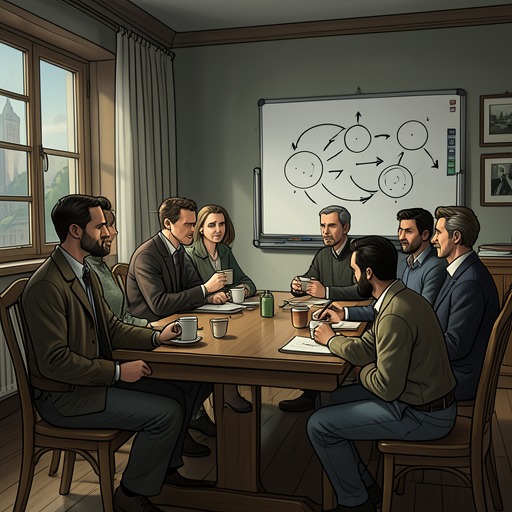
Alcoholics Anonymous reaches David through meetings he attends with Nic and through a wider fellowship of shared experience. He hears people in recovery describe interventions arranged by their parents or treatment they were forced to enter. Some say, “I hated them at the time. They saved my life.” Others recount failure, including a parent whose son died. These contrasting accounts offer no dependable formula for what families should do. They make the stakes and uncertainty of addiction more vivid, and David concludes that statistics cannot tell a parent in advance which outcome will be theirs.
David also draws on a familiar Alcoholics Anonymous saying when he considers the family’s secrecy around Nic’s addiction: “you're as sick as your secrets.” For a long time, he keeps the problem private, hoping to protect Nic’s reputation and preserve other people’s good impressions of him. Advice from counselors, and the experience of listening to others, eventually help David and Karen speak more openly. The meetings do not erase his self-blame. He still wonders whether his own past conduct contributed to Nic’s drug use, and cannot fully accept the fellowship’s reassurance that he did not cause, control, or cure the addiction. The principles are presented as guidance that can help even when belief in them remains incomplete.
David’s account also locates these meetings within the social stigma surrounding addiction. A counselor explains that families may stop sleeping and eating normally, blame themselves, feel rage and shame, and keep their suffering private. Unlike families dealing with some other illnesses, families affected by addiction may encounter judgment as well as support. Alcoholics Anonymous meetings give David a place to hear others speak plainly about experiences that families often hide; this shared recognition eases isolation without removing grief or responsibility for one’s own recovery.
Public stories and continuing recovery
The fellowship’s influence extends beyond the meeting room through the stories people tell and read. David says that hearing accounts at Al-Anon meetings, and reading other writers’ work, helped him feel less alone and gave him guidance through unfamiliar circumstances. He later submits an article about the family’s experience to The New York Times Magazine. After its publication, Nic says that people at Alcoholics Anonymous meetings recognize him as the boy in the article, embrace him, and tell him they are proud of him. Their response affirms his work in recovery, and the public account helps him feel more able to tell his own story.
For David, the meetings’ value lies in both modest practical guidance and contact with other people facing addiction. They do not settle whether a particular intervention will work, prevent Nic from relapsing, or free the family from worry. Instead, Alcoholics Anonymous appears as one recurring support within a recovery process that must be resumed and renewed. Nic returns to meetings and step work after relapse; David returns to meetings for help containing his own worry. The fellowship’s significance in the book rests in that repetition: it offers a way to continue when neither family love nor a previous period of sobriety can guarantee what happens next.