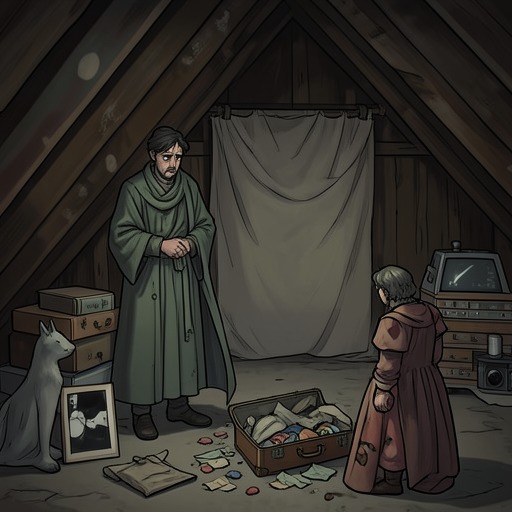
Eternal sunshine of the spotless mind
Beautiful Boy: A Father's Journey Through His Son's AddictionEternal sunshine of the spotless mind is the narrator’s recurring metaphor for wishing to remove Nic from his memory so that the pain of addiction would stop. Its significance lies in its reversal: what first appears to be a desperate fantasy of relief becomes, after the narrator’s brain hemorrhage, a measure of his enduring attachment to his son.
The fantasy of erasure
The narrator recalls a film concept in which a doctor erases every trace of a person from someone suffering the pain of a traumatic relationship. He imagines undergoing the procedure himself, even describing the desired escape as something like a lobotomy. The fantasy is not a plan to act against Nic; it expresses how unbearable the repeated cycle of fear and disappointment has become.
That anguish has several parts. The narrator wants relief from worrying about Nic, from being hurt and disappointed by him, and from blaming both Nic and himself. Most vividly, he wants to stop the relentless mental slide show of his son drugged in sordid scenes. The imagined erasure promises not simply forgetting events but escaping the continuing images and emotions attached to them.
Repetition and intensification
The wish returns when Nic is not all right, particularly during periods when he is gone and somewhere on the streets. The narrator describes wanting every remnant of him scraped from his brain, along with the knowledge of what has been lost and the worry that remains. His image of scraping out the seeds and pulp of an overripe melon makes the wish bodily and grotesque: the hoped-for relief would leave no trace of the rotted flesh.
This recurrence shows that the fantasy belongs to a repeating pattern of anguish rather than a single passing thought. The narrator yearns to be free both of his own pain and of the knowledge of Nic’s suffering, but the wish cannot separate those burdens from his relationship with his son. Each return of the image registers the cost of continuing to care while Nic’s addiction keeps making his safety uncertain.
The reversal after the hemorrhage
After the narrator’s brain hemorrhage, the memory of being unable to remember Nic’s telephone number sharpens the metaphor’s meaning. Even that disruption to his memory did not remove his worry about Nic. Looking back on the occasions when Nic was missing, the narrator recognizes that he had repeatedly longed for a spotless mind, but now says he is grateful to have everything, including the worry and pain. He no longer wants a lobotomy or Nic erased; he is willing to bear the worry in order to keep what he identifies as the most important emotion to emerge after the hemorrhage.
The change does not mean that anxiety disappears. The narrator remains accustomed to the distress accompanying Nic’s addiction and acknowledges fear about relapse and other possible catastrophes. What changes is his relation to that distress: alongside the uncertain future, he experiences compassion and love for his family. The erasure fantasy gives way to an acceptance that loving Nic includes enduring the worry, rather than trying to remove the son from memory in order to escape it.