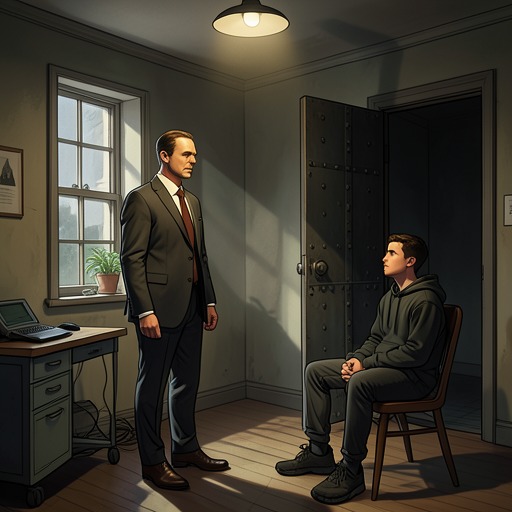
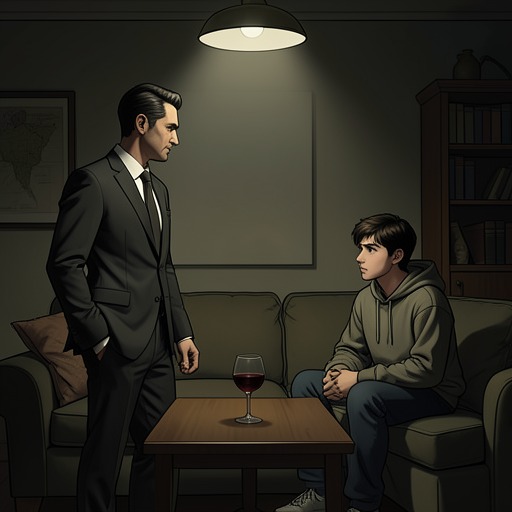
Nic high is a ghost
Beautiful Boy: A Father's Journey Through His Son's Addiction“Nic high is a ghost” gives shape to the narrator’s attempt to understand a painful division: when Nic is high, the person his father loves seems absent, while the possibility of that person’s continued existence remains a source of faith. The metaphor does not promise recovery. It lets the narrator grieve Nic’s apparent loss without surrendering the belief that drugs cannot touch his son’s deepest self.
The Image of Absence
The narrator arrives at this language because he needs some approximation of meaning for what he sees. He writes that “Nic on drugs is not Nic but an apparition” and calls him “a ghost, a specter.” In this account, being high pushes the “lovely son” aside, leaving him dormant and inaccessible. The ghost is not a supernatural presence or a claim that Nic has literally vanished; it names the painful distance between the son the father remembers and the person obscured by drugs.
The metaphor also makes absence more complex than physical separation. The narrator believes Nic’s essence remains whole and protected somewhere within him, even when it cannot be reached. Yet that belief is explicitly uncertain: Nic strong, clear, and filled with love may never emerge again. The drug may win the battle for his body. The image therefore holds hope and the possibility of permanent loss in the same frame rather than resolving one into the other.
Grief and Continuing Love
The ghost image belongs to an ongoing grief, not just a single moment of alarm. The narrator has feared Nic’s death, but recognizes that he has already been grieving for the part of his son that seems missing since drugs took over. He can mourn that loss and still celebrate what he regards as untouched by meth or any other drug. The metaphor gives these responses room to coexist: the high Nic is experienced as absent, while the loved son remains more than the condition that conceals him.
This distinction does not lessen the narrator’s recognition of danger. He accepts that Nic may stay high or die and that he would have to continue living with the resulting wound. His faith is narrower than a prediction of recovery: he believes Nic is somewhere within himself, but does not know whether he will become accessible again. The ghost is thus both an image of disappearance and a measure of what the father refuses to relinquish.
Meaning and Limits
The narrator presents the metaphor as a meaning he has come to, not as an objective explanation of Nic’s inner life. Its emotional force comes from the tension between certainty and uncertainty: he insists that the drug cannot touch Nic’s essential self, while conceding that this self may never reappear. The image gives the father a way to continue loving without confusing that love with control over what happens next.
The passage ends its reflection on the image with an unconditional statement: “Whatever happens, I will love Nic.” That assurance does not cancel the ghostly absence or guarantee that it will end. Instead, it marks the boundary of the narrator’s claim: he cannot promise Nic’s return, but he can affirm that the love survives the distance drugs have made.