
A Family’s Shared Recovery
Beautiful Boy: A Father's Journey Through His Son's AddictionThis theme traces the gradual expansion of recovery from Nic Sheff’s treatment to the family’s own work of communication, grief, boundaries, and independence.
increasing Bearing strength in each event
 decreasing
Bearing strength in each eventdecreasingThe Addicted Family

The Family Is Not a Bystander
A system under strain
A counselor explains that addiction affects relatives through sleeplessness, guilt, rage, secrecy, and attempts to control. David recognizes the pattern in his own search for drugs and efforts to manage Nic’s choices.
The family’s moods have become dependent on Nic’s condition. Jasper, Daisy, and Karen are connected to the crisis even when they are not present for treatment or relapse.
Recovery must widen
The family begins to understand that helping Nic cannot be its only work. The household also needs ways to protect its members and restore attention to their own lives.
A First Al-Anon Meeting

Speaking the Secret
Entering the room
David resists Al-Anon for a long time, then attends a meeting with Karen. He initially feels out of place but finds that the people there understand the experience of loving someone with addiction.
He unexpectedly tells the group that his son is missing and breaks down. The public expression of grief brings relief rather than judgment.
Company changes isolation
The meeting cannot resolve Nic’s situation, but it allows David to stop carrying the crisis entirely alone. Listening to others provides both companionship and a language for what is happening.
Supporting Jasper and Daisy

Children Need Their Own Help
Acknowledging the impact
David and Karen read books about addiction with Jasper and Daisy, speak with their teachers, and invite the children to discuss their feelings. They tell them the problem is not their fault.
The family therapist gives the children the word ambivalence and validates their fear, love, and anger. This direct acknowledgment helps them understand that their mixed feelings are normal.
Recovery includes the siblings
The children’s needs cannot be postponed until Nic is well. Their support becomes a distinct part of the family’s response to addiction.
Boundaries Around Contact
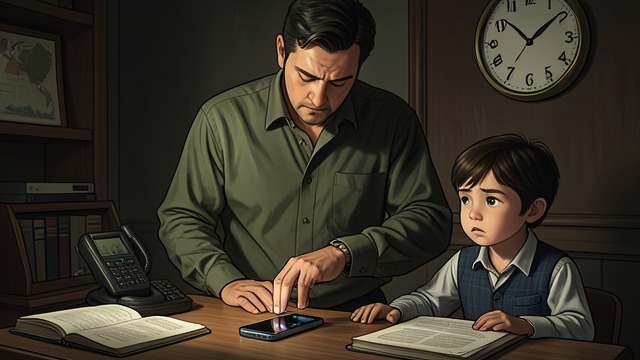
Making Contact Safer
The phone as a trigger
The family therapist identifies the ringing phone as a source of constant alarm. Each call may bring frightening news, a misleading promise, or disappointment when Nic does not call.
David begins turning off the ringer during chosen periods and plans regular conversations with Nic. The practical adjustment feels frightening because it reduces the immediate sense of connection.
A boundary restores space
The family can remain in touch without living in permanent readiness for crisis. The boundary supports the younger children and David’s own recovery while preserving contact with Nic.
A Different Kind of Love

Connection Without Control
Separate lives remain connected
David accepts that Nic must decide whether to pursue recovery and that the family cannot guarantee the outcome. He stops organizing his own well-being around Nic’s daily condition.
He continues to speak with Nic, care about his future, and hope for sustained sobriety. These feelings coexist with a recognition that Nic is an adult with an independent life.
Recovery extends beyond treatment
The family’s progress lies partly in learning to live, communicate, and care for one another while uncertainty remains. Love persists, but it no longer has to masquerade as control.
During treatment education at St. Helena Hospital
After Nic Sheff disappears from home
After Nic Sheff’s repeated relapses
During Nic Sheff’s final residential treatment period
In the epilogue
