David Sheff begins his own recovery work
Beautiful Boy: A Father's Journey Through His Son's AddictionDavid Sheff begins his own recovery work when a therapist challenges him to treat his long-standing worry about Nic Sheff as a problem he can address in himself, rather than as the price of being a conscientious parent. The turning point follows David’s brain hemorrhage and changes the direction of his attention: he begins attending Al-Anon and increases his therapy, gradually facing the guilt and fear beneath his efforts to take responsibility for Nic’s life. The event does not resolve Nic’s addiction; it marks David’s recognition that he cannot control or cure it, and that his own recovery must proceed independently.
Background: fear after the hemorrhage
David recalls that the immediate aftermath of his brain hemorrhage did not bring the sudden clarity he had heard survivors describe. He had already appreciated life, but the experience initially made life seem more frightening: tragedy, he realized, could strike him or his children without warning. Only later did lessons from the neuro intensive-care unit begin to settle. The understanding that followed was delayed, not an instant revelation.
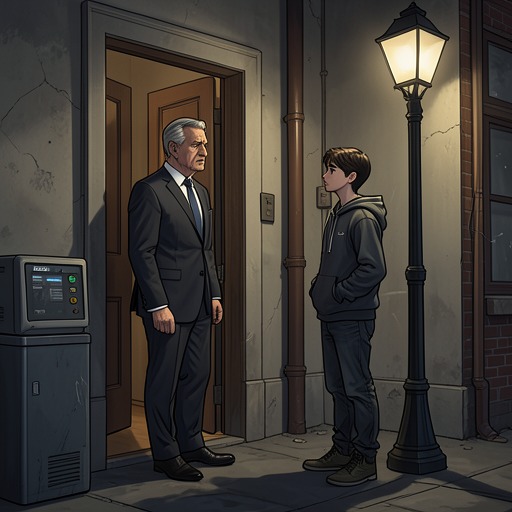
In December, when David turned fifty, he discussed the previous few years with a therapist. Neurologists had dismissed a direct connection between the hemorrhage and stress in his life; the therapist did not claim otherwise, but answered, “Well, it sure didn't help.” His point was that David had lived for years with intense, relentless worry about Nic. David had treated that worry as an inevitable feature of parenting a child with addiction, while trying to enjoy his life with Karen Barbour, Jasper Sheff, Daisy Sheff, other family members, and friends. The intervals when Nic seemed better offered relief, but they were brief and uncertain.
The therapist’s challenge
The therapist framed David’s situation not as a reason to blame himself for the hemorrhage, but as an opportunity to change how he responded to what he could change. Without invoking Alcoholics Anonymous or Al-Anon, he restated the practical logic of the Serenity Prayer: accept what cannot be changed, find courage to change what can, and learn to distinguish between the two. He made the distinction personal by asking whether David had the courage to act on it.
David answered, “I've tried,” and added, “I have tried for years.” The therapist’s reply, “Apparently you haven't tried hard enough,” redirected the conversation from his efforts to help Nic toward the choices David still had available. He asked why David attended therapy only once a week. David cited both time and money. To test the financial objection, the therapist asked whether David would have found money for more treatment if someone had said that Nic needed it to get well. David answered honestly, “Yes.” The next question—“Is his mental health more important than yours?”—made the imbalance unmistakable.
The therapist pressed the same point about time. He asked how much time was worth ending a person’s suffering, how much David was already losing to suffering, and how he wanted to spend the rest of his life after nearly dying. The exchange converts an abstract principle into a concrete decision: caring for Nic did not require David to keep neglecting his own distress. His age and the hemorrhage made the finite nature of that choice newly urgent.
Turning toward his own recovery
David says the hemorrhage ultimately made him appreciate, rather than fear, the fact that time is finite. He took the therapist’s challenge seriously and began trying to move beyond obsessive worry about Nic. The distinction was stark: David could not change Nic; he could work on himself. From then on, he focused on his own recovery instead of making Nic’s recovery the center of his attention.
That change took practical form. David attended Al-Anon meetings and began therapy twice a week. For the first time, he lay down on the therapist’s couch. He describes the work as like dismantling a multilevel Lego building, including its hidden rooms and attics, brick by brick and examining each piece. The image conveys both method and difficulty: this was a gradual investigation of structures David had not previously examined, and the process could be frightening as well as transformative.
One discovery was that focusing on Nic’s recurring crises had become safer for David than focusing on himself. The crises supplied an urgent subject and a familiar role, while turning inward required him to confront his own history and feelings. David even recognizes that facing a near-fatal brain hemorrhage had, in a sense, been safer than that self-examination. The comparison does not diminish the medical danger; it shows how deeply he had organized his attention around Nic rather than his own suffering.
Guilt, responsibility, and limits
As therapy continued, David uncovered layers of guilt and shame that helped explain why he had been willing to assume responsibility not only for Nic’s addiction but for Nic’s life. He does not present this work as a clean absolution. He accepts that he made serious mistakes while raising Nic and remains uncertain about how much he caused or contributed to the addiction. The uncertainty matters: David does not claim certainty about his influence, but neither does he use uncertainty to excuse himself. He expresses remorse directly to Nic.
His acceptance of the limits of control is similarly incomplete in one respect and firm in others. David says he still does not fully accept the first of the three Cs associated with Al-Anon, that he did not cause the addiction; he cannot know how much he contributed. He does accept that he cannot control or cure it. He believes he has done everything he could to help, and accepts that what happens next depends on Nic and cannot be decided by David’s efforts. Letting go is therefore not indifference or a claim that the past no longer matters. It is a boundary around what a parent can do.
A different relationship with Nic
This shift opens the possibility of a different relationship between father and son. David contrasts the previous pattern—his attempts to control Nic, even when motivated by a wish to save him—with a relationship that might develop through independence, acceptance, compassion, and healthy boundaries. He connects that possibility to the kind of relationship Nic had envisioned in Santa Fe. David imagines that Nic may also feel relieved now that his father has stopped trying to take over his recovery; he presents that response as a possibility, not as a certainty. Love, in his account, remains constant even as the terms of their relationship change.
The hemorrhage helps David understand emotionally what he had known intellectually: his children will live with or without him. For a parent, he calls this a staggering realization, but also one that can free children to grow up. The event therefore carries consequences beyond David’s therapy schedule. It alters his understanding of care, separating love from the attempt to direct another person’s life.
David wishes he had reached this understanding sooner, but recognizes that he could not have forced it to arrive earlier. He no longer expects either parenting or life to become easy, or the world to become simple. The account ends instead with an acceptance of contradiction: there is good and beauty, but enjoying love also means bearing pain. His recovery begins not with certainty that Nic will recover, but with the difficult recognition that David’s own life and choices remain his responsibility.