Miracle and hope
Beautiful Boy: A Father's Journey Through His Son's AddictionMiracle and hope name a fragile possibility in David Sheff’s account of Nic Sheff’s addiction: that life and connection can persist without any guarantee of safety or permanence. The word gathers force in concrete moments—a father greeting his son at twenty-one, a year and a half without drugs, a family gathered around a plan—while the possibility of relapse remains present. Hope here is neither proof of a cure nor a promise that suffering will end. It is a way of seeing what remains possible while refusing to mistake possibility for certainty.
A milestone that feels like a miracle
In July, David visits Nic in Los Angeles for his twenty-first birthday. He picks him up outside Herbert House, where Nic leaps into the car and the two embrace. Nic appears whole again. The birthday carries the familiar weight of a milestone in a young person’s life, but David experiences it also as a milestone for a parent: after the damage and fear of addiction, his son is there, alive and seemingly restored. The scene makes hope physical and immediate—not an argument about recovery, but a hug and a face David can recognize.
That relief does not instantly repair the family’s trust. Karen is not yet ready to see Nic, and David and Karen have not allowed Jasper Sheff and Daisy Sheff to visit him. They fear the children will be hurt again, even as the siblings love one another. The family remains divided between fear and love, unsure when trust is warranted. Near the end of summer, Karen and the children finally join David on a drive down the coast, and the family meets Nic on a beach. Nic, Jasper, and Daisy build sand castles and play in the surf. Later visits extend the reunion into ordinary shared time: the family sees Nic at work, hikes with dogs he is caring for, and rides together along the Venice boardwalk. These encounters make hope more than the relief of a single birthday. They show affection returning through repeated contact, while the questions that made reunion difficult are not erased.
Wonder without certainty
David’s sense of miracle also grows through attention to the living world. Walking in the woods, he notices the range of greens, buds before they open, a darting rabbit, and red-tailed hawks, great blue herons, and an osprey overhead. The complexity and beauty of what he sees feel profound whether or not they are evidence of God. Consciousness and love, too, strike him as miraculous. This is not a claim that goodness cancels evil: he accepts the presence of evil as part of participating in what feels miraculous. The idea therefore holds wonder and pain together instead of using one to explain the other away.
Nic’s sobriety gives that wonder a more intimate focus. He has been sober for more than a year, then a year and a half. On a morning when Nic calls on his way to meet Randy for a bike ride down the coast, David pictures the PET scan Edythe London once showed him: a control-group brain with balanced chemistry and neurotransmitter fluctuations in proportion to life events. He wonders whether his son’s brain might again resemble that image. The thought is hopeful, but it remains a question rather than medical confirmation. At home, Jasper and Daisy play outside on a homemade Slip n' Slide while David carries the lasting effects of his own brain hemorrhage. Family life continues in the same scene as bodily vulnerability; neither recovery nor ordinary happiness makes the damage disappear.
Hope in the face of relapse
The memoir refuses to make hope depend on a simple story of recovery completed. David recalls the bleak, single-digit success rates for meth rehabilitation that a nurse had once given him. He now understands that expecting people to remain sober forever after one, two, or three attempts is unrealistic. A lecturer’s account offers a less absolute measure: more than half of people who enter rehabilitation are sober ten years later, even though that does not mean they have not moved in and out of sobriety. The distinction matters. A return to drug use does not make earlier sobriety unreal, but neither does a hopeful statistic guarantee an individual outcome.
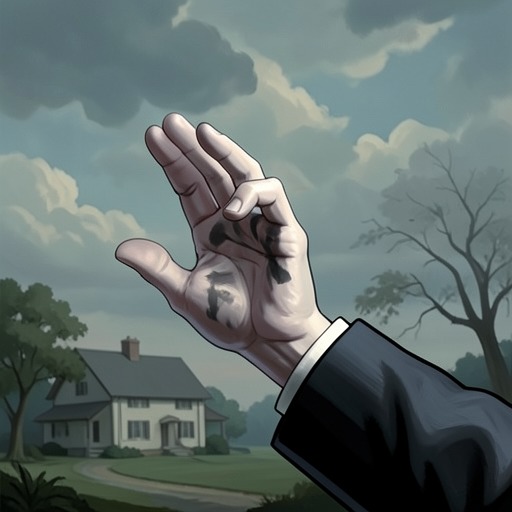
Against this uncertain background, Nic’s name becomes a private emblem. His full name is Nicolas Eliot Sheff, and its initials spell the Hebrew word for miracle. David prays for a larger miracle that might save his son, yet finds grounds for gratitude in a smaller, immediate fact: Nic is alive and has a chance. Hope narrows here to its most necessary form. It does not claim that Nic is safe from future harm; it recognizes that survival leaves room for something not yet decided.
A plan made of small steps
At a family therapy session, a therapist asks participants to mark where they are, where they want to go, and the concrete steps that might carry them there over the next few months. The rest of the paper is imagined as a swamp, with dangers to be marked along the route. Nic uses a thick red marker to draw the perils: old mistakes, habits, drug temptations, and a hypodermic needle. So much red crowds the page that the steppingstones seem small and unsteady beside the hazards.
Still, Nic writes his plan and the family’s plan on those stones. They will move slowly, support rather than impede one another, and focus on Alcoholics Anonymous and other sustained work. He hopes to repair his relationships, including those with Karen, Jasper, and Daisy. His mother and David must also step back and support him without taking over his recovery; the family’s aim is loving, supportive, but independent relationships. Most of the hardest work, the scene insists, falls to Nic because the perils remain his to face. When David looks from Nic to Nic’s mother and recognizes that they are together in the room, the family’s presence itself feels miraculous. It is a modest ending to the exercise, not a prediction of success: hope appears as a shared plan and a willingness to take the next small step through a landscape that remains dangerous.