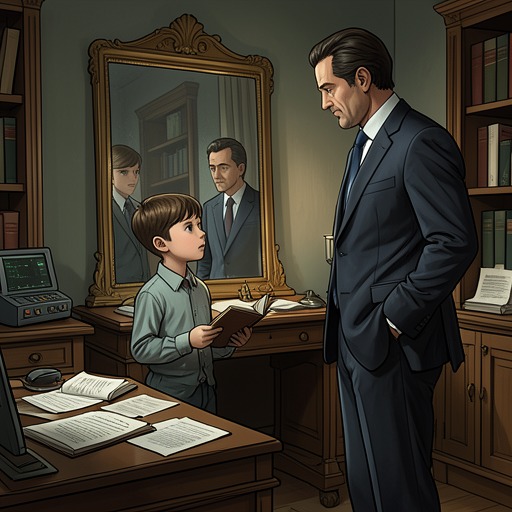
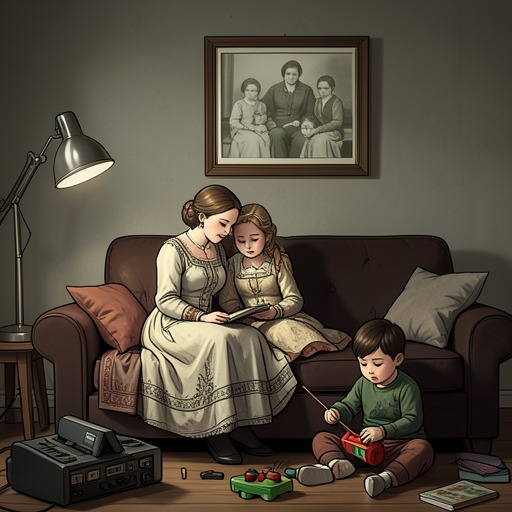
Nic's polysubstance addiction
Beautiful Boy: A Father's Journey Through His Son's AddictionNic's polysubstance addiction is presented as a developing and recurring condition, not a single bad decision or a problem confined to one drug. His experimentation expands into the mixing of substances, while denial and resistance make treatment difficult to secure. The account follows not only the danger to Nic but also the way his addiction reorganizes family life, exposing the limits of parental control and forcing David Sheff to reconsider what it means to help.
Development and Escalation
Nic's account of his early use begins with alcohol. After returning from Paris at sixteen, he described having drunk heavily while going out to bars and clubs there. At home, still a high-school student and unable to obtain alcohol, he began smoking Marijuana every day. He later traced his first use of harder drugs to a party after his high-school graduation. Ecstasy made him feel intensely connected to other people during a series of emotionally charged goodbyes; afterward he took whatever was available, including LSD and mushrooms, before trying Methamphetamine. He remembered that first experience as making him feel better than he ever had before.
That progression matters because the substances did not remain isolated experiments in his account. The movement from alcohol to daily Marijuana, then to a succession of drugs and Methamphetamine, shows an expanding pattern of use. The recollection also sets pleasure and danger beside each other: the ecstasy experience is associated with closeness, while Methamphetamine is remembered through an overwhelming sense of relief and elevation. The later course of his addiction would make such immediate rewards increasingly difficult for his family to separate from the larger harm.
The consequences were already visible in ordinary legal and working life. After Nic failed to appear in court over a Marijuana-possession citation he had not told David Sheff about, he was arrested. David Sheff bailed him out, telling himself that this would be the only time and believing the arrest might teach him a lesson. Yet Nic could also hold down a job as a barista in Mill Valley. When his family visited the coffee shop, he greeted them with a broad smile, introduced the children to his coworkers, and made them hot chocolate. The contrast between this sociable, capable presence and the hidden citation cautions against treating visible functioning as proof that the underlying problem has passed.
Denial, Danger, and the Limits of Intervention
At eighteen, Nic was using and combining more drugs than many people considerably older than he was, according to a counselor who assessed him. She described him as resistant to treatment and proud of being hardcore, with little understanding that he was in trouble. In her view, his certainty that he was fine, could stop whenever he wished, and that other people were the ones with a problem reflected the denial commonly seen in addiction. She warned David Sheff that Nic could die from the drugs he was using and said he needed treatment, though not in that particular program.
The warning sharpened an existing conflict between parental concern and legal authority. David Sheff increased his pleas for Nic to enter rehabilitation, but Nic would not agree. Because Nic was now over eighteen, David Sheff could not commit him simply because he feared the effects of drug use. A brief psychiatric evaluation could be pursued through a complicated process if Nic posed a threat to himself or someone else, but parental concern about drug use alone did not qualify. David Sheff later wondered whether he should have compelled treatment while Nic was still young enough for him to make that decision. He acknowledged that Nic might not have been ready to hear the message, and that no one could know whether forced treatment would have helped; the lost opportunity nevertheless haunted him.
After using Methamphetamine, Nic slept as much as twenty hours a day for three days. He then became depressed and withdrawn, before disappearing again without warning on a cold spring afternoon. This sequence—intense use followed by prolonged sleep, withdrawal, and sudden absence—made the crisis legible to his father without giving him a reliable way to control it. Nic's disappearance also gives concrete form to the gap between recognizing danger and being able to secure treatment for an adult who refuses it.
Family Life and Secrecy
The account treats addiction as a family condition as well as Nic's individual illness. At a treatment-program lecture, a counselor described relatives who stop sleeping and eating, blame themselves, feel rage and shame, and often suffer in silence. She contrasted this isolation with the support families might receive if a child had cancer, arguing that stigma can invite judgment even from people who mean to be supportive. A mobile made the family pattern visible: the addict's paper figure hung at the center, while Karen Barbour and the children, Jasper Sheff and Daisy Sheff, were positioned around him, affected by his moods and drug use. David Sheff's figure hung precariously between them, representing his efforts to prop Nic up, make excuses, protect the rest of the family, and keep everyone connected.
For a long time, David Sheff kept the problem private, partly to protect Nic's reputation and preserve other people's good opinion of him. He came to see that secrecy also isolated the family. At an Al-Anon meeting in Novato, he encountered a dozen people seated in a circle in a dingy room, with flickering neon tubes, a wobbly fan, Folgers coffee, and powdered-sugar doughnuts. He initially judged the other attendees, then left feeling an affinity with parents, children, spouses, and siblings whose lives had also been drawn into addiction. The meeting's principles—that relatives did not cause, control, or cure the addiction—offered a framework he could understand without being able to believe it fully. He continued to blame himself, connecting that guilt to his own past drug use and to the possibility that his warnings had been undermined by his actions.
Publicly telling the family's story produced a similarly mixed response. Many relatives of people with addiction wrote to David Sheff with compassion, counsel, and shared grief; some said the article helped them feel less alone. Others were critical, including one respondent who blamed him over a brief episode in which Nic wore his clothes backward. Nic, meanwhile, said that people who recognized him as the young man in the article embraced him at Alcoholics Anonymous meetings and told him they were proud of his recovery work. The same exposure could therefore invite judgment and offer recognition: stigma did not disappear, but speaking openly created a channel for connection.
Illness, Responsibility, and Recovery
David Sheff struggled with whether addiction should be understood as illness or moral failure. The book does not present that question as an abstract debate detached from Nic's behavior: it is sharpened by the lies and stealing David Sheff associates with the periods when Nic is using. David Sheff moves among blaming Nic's character, the treatment programs, and himself, but returns to the conviction that Nic is not the same person when he is using. The tension remains significant: describing addiction as illness helps explain behavior and direct attention toward treatment, while it does not make the consequences to relatives disappear.
The disease framework also has practical consequences in the account. David Sheff notes that insurance coverage can make treatment available, while untreated addiction may bring escalating medical, psychological, family, and crime-related costs. He argues that waiting for the condition to progress can mean facing grave harm rather than preventing it. In his retrospective advice, he would intervene earlier when a child's drug use raises serious concern, rather than waiting until the child is openly endangering himself or others. He recognizes that treatment before a person is ready may not prevent relapse, but sees a period of abstinence in a sound program as potentially helpful, particularly during adolescence.
His conclusions about assistance are bounded rather than limitless. Rehabilitation is imperfect, he says, but remains the best available option; medication may help some people but cannot replace rehabilitation and continuing recovery work. He would help someone using drugs return to treatment, but not pay rent, debts, or provide money, and he would not repeatedly bail that person out of jail. Looking back, he also reframes relapse: treatment may interrupt cycles of use even when it does not produce a clean, permanent resolution. Nic's addiction thus leaves the family with neither a guarantee of recovery nor a simple rule for when to stop helping. Its lasting significance lies in that difficult interval between care and control, where treatment offers a chance but cannot make the choice on Nic's behalf.