Twelve-step mutual-help recovery
Beautiful Boy: A Father's Journey Through His Son's AddictionTwelve-step mutual-help recovery in the memoir is a practice of returning to other people when addiction makes private judgment and family endurance insufficient. Nic Sheff attends Alcoholics Anonymous meetings and seeks a sponsor; his father, David Sheff, finds support and guidance in Al-Anon. Their experiences are distinct but connected: mutual-help groups make recovery a shared undertaking, offering companionship and practical knowledge without promising a cure or a certain outcome.
Meetings and Sponsorship
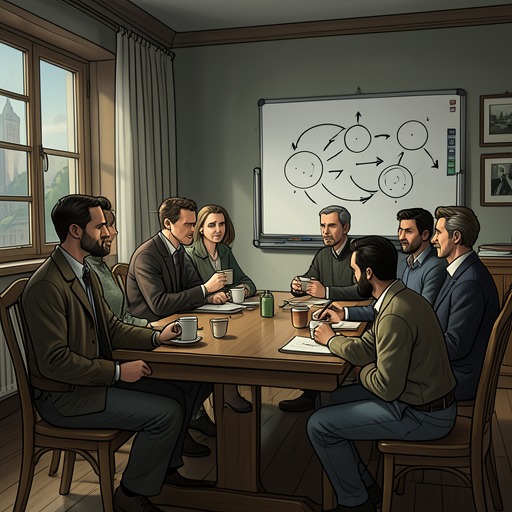
For Nic, meetings are part of the ordinary structure of continued recovery, not merely an emergency response. After curfews and other household infractions had cost him the use of the car, he asks to borrow the dented station wagon so he can attend an Alcoholics Anonymous meeting. David agrees because he regards the meetings as essential to Nic’s recovery. Nic returns as promised and says he has asked someone he met to be his sponsor while he is in town.
The next day, Nic asks to use the car again so he can have lunch with that sponsor. David is impressed by his diligence and adherence to the household rules: Nic communicates where he is going, says when he will be home, and comes back when he promised. The episode gives mutual help a concrete form. A meeting leads not only to another meeting, but to an individual connection that continues beyond it; at the same time, the family sees Nic’s recovery through visible routines and commitments. Those signs matter to David, though the book’s later account of relapse makes clear that they cannot amount to a guarantee.
The book’s dedication places such meetings in a wider community. David dedicates it to people working in treatment, research, hospitals, and sober-living settings, and to the anonymous people who keep returning to twelve-step meetings around the world, along with their families. The dedication presents return itself as a meaningful act: recovery depends not only on institutions or expertise, but also on people meeting repeatedly and recognizing a struggle they share.
Family Support and Shared Knowledge
David’s own route into mutual help is through Al-Anon. He resists attending for a long time, then finds that the meetings strengthen him and ease his sense of isolation, even though they often make him weep. They do not resolve Nic’s addiction or remove David’s fear. Their value is more modest and, for that reason, credible: other people’s accounts prepare him for difficulties that might otherwise take him by surprise and give him guidance when he has little certainty of his own.
The memoir distinguishes this benefit from a cure. David explicitly recognizes that the meetings are no panacea; even limited relief and practical guidance are worth having. The stories he encounters help him understand his family’s experience as particular but not solitary. He has also learned, through Al-Anon, how much other families’ experiences resemble his own. Mutual help thus changes the conditions in which he faces addiction: it cannot choose or recover on Nic’s behalf, but it can give a family language, companionship, and knowledge drawn from lives already affected by the same crisis.
Relapse, Risk, and the Limits of Help
The memoir resists treating participation in recovery as a straight path. Nic’s meeting attendance and sponsor contact coexist with the broader pattern of recurrence that David describes. In the account of a later medical crisis, David reflects on the painful contradiction that a person with addiction may not be responsible for having the condition, yet remains the person responsible for recovery. He also describes the need to draw boundaries and, when circumstances change, to draw them again. Mutual help belongs within this unstable reality: it can support sustained effort, but it cannot make the family’s decisions simple or control what Nic will do.
Stories David hears at Alcoholics Anonymous meetings attended with Nic underscore the uncertainty. People in recovery recall parents who arranged interventions or forced treatment; some say their parents saved their lives, while other stories end with a parent having tried and a son having died. The contrast prevents mutual-help knowledge from becoming a formula. Experience can guide families, but no account guarantees that another family will reach the same result. David concludes that statistics can warn families about the force of addiction, while remaining unable to predict which individual will recover.
Recovery Without a Guaranteed Ending
In retrospect, David comes to see recovery as an ongoing process rather than a completed cure. He believes treatment programs interrupted Nic’s cycles of using and may have kept him alive, even when relapse made earlier efforts seem futile. This view parallels the role of mutual-help meetings: their significance lies not in proving that relapse will never happen, but in sustaining a possibility of return and continued effort.
The book’s ending refuses to turn that possibility into a tidy resolution. David had wanted Nic’s letter to his brother to close the family story on a happy note, but Nic’s latest relapse forces him to acknowledge again that addiction is lifelong and incurable, though it can go into remission and can be managed through hard work. In that frame, mutual-help recovery is neither a promise of permanent sobriety nor a substitute for treatment. It is a recurring human resource—meetings, sponsors, and the accumulated testimony of others—that helps people continue amid uncertainty, without pretending that love, guidance, or attendance can guarantee what happens next.