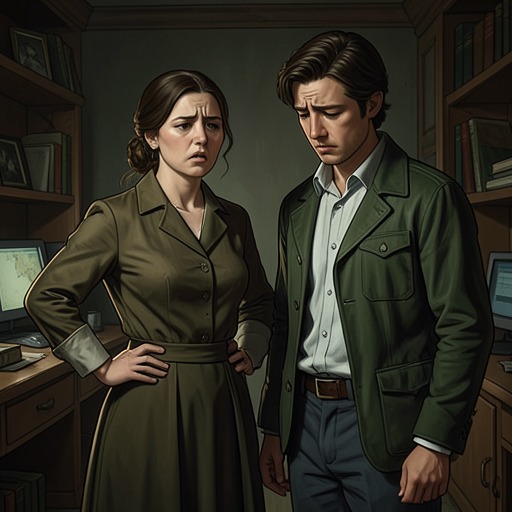
Vicki visits Nic as his life deteriorates
Beautiful Boy: A Father's Journey Through His Son's AddictionVicki visits Nic as his life deteriorates at a moment when a mother’s hope of finding her son alive collides with the visible reality of his decline. In his Hollywood apartment, she sees a condition that David already recognizes but that is new to her: Nic is gaunt and trembling, surrounded by squalor, while his promises that he and his girlfriend are getting sober offer no reassurance. He asks Vicki to leave, and she calls David in a state of fury and horror.
The visit becomes necessary
Nic’s circumstances have worsened quickly. He has appeared high at work and lost his job; because he has not paid his phone bill, his service has been disconnected. He has deserted his friends, including Randy, his best friend and sponsor. In a message, Nic says that he and his girlfriend have sold their clothes to pay for food. David does not know how they have paid the rent or how they will manage the next month. He can see the possibility of homelessness, but not what will happen next.
Against that uncertainty, Vicki drives from the west side of town to Nic’s apartment in Hollywood. The reason for the visit is direct: she wants to see for herself, and to find out whether he is alive. David, meanwhile, pretends not to be waiting by the phone for her report. His waiting ties the two parents to the same crisis even before Vicki reaches the apartment: she goes to witness Nic’s condition, while David waits for news of what she finds.
At the apartment door
Vicki parks, apprehensively enters the building, pulls open the screen, and knocks. No one answers. The window shades are down. She knocks again, waits without a response, and knocks once more. The door opens only a crack before widening. That gradual opening delays the encounter but does not soften what is revealed beyond it.
The apartment is filthy, with a pool of brown water on the floor and trash everywhere. Nic steps into view shakily, using his hands to block the flood of daylight. His girlfriend appears behind him. The details make the scene more than a report that Nic is using again: the uncontained water, rubbish, drawn shades, and the pair’s appearance place the consequences of their situation in the room around them. For David, the scene is familiar; for Vicki, it is the first time she has seen Nic like this.
Nic is gaunt and white, nearly yellow. His limbs tremble, and black circles are sunk around vacant eyes. The contrast between the parents’ perspectives matters: David recognizes a condition he has encountered before, while Vicki must take in its physical reality for herself. Her visit brings the crisis into view for her, not as the uncertain possibility described in Nic’s message, but as the son standing in front of her.
Explanations and rejection
The scene also exposes the strain of the couple’s living situation. Z.’s legs are bleeding. When she notices her uncovered legs and realizes that Vicki is staring, she stammers, "A light bulb broke on the floor. We were cleaning it up." The explanation is offered in the immediate presence of visible injury and the filthy apartment; the account records what she says without establishing the cause of the bleeding. Her hesitation and the injury deepen the impression of disorder, while leaving the explanation unresolved.
Nic responds with claims that sound familiar to David: "We had to go through this. We're done now. We're getting sober." The assurances describe the crisis as something already endured and sobriety as the next step, but they do not change what Vicki has just seen. The scene sets Nic’s declaration against his trembling body and the apartment’s condition. His words promise an ending to the decline; the evidence in the room does not confirm one.
He then asks his mother to leave and not come back. The request turns her attempt to see and reach him into an immediate rejection. The visit has given Vicki the confirmation she sought about Nic’s condition, but it does not give her access to him or establish that he is ready to accept help.
The call to David
Vicki calls David and tells him what happened. Her reaction is described as furious, wretched, and horrified, an emotion so overwhelming that she cannot yet cry. The call carries the scene beyond the apartment: David had waited for news, and Vicki now passes to him what she has witnessed. Her response echoes feelings he has experienced on many previous occasions, but for her the encounter is new.
The visit ends without a reconciliation or a demonstrated turn toward recovery. Its force lies in the gap between Nic’s assurance that they are getting sober and the condition his mother encounters, and between Vicki’s purpose in coming and Nic’s demand that she go. The account leaves that conflict unresolved. What changes is not Nic’s situation, but Vicki’s knowledge of it: the decline David already knew becomes something she has seen firsthand.