
Long-Distance Childhood
Beautiful Boy: A Father's Journey Through His Son's AddictionThis thread follows how divorce and long-distance custody shape Nic Sheff’s childhood, friendships, separations, and lasting sense of divided belonging.
increasing Bearing strength in each event
 decreasing
Bearing strength in each eventdecreasingThe Divorce Decision
Two Homes Begin
A marriage ends
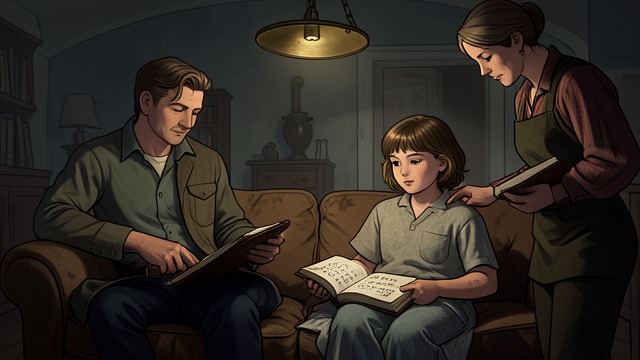
David and Vicki’s marriage breaks apart while Nic is still very young. The parents want him close, but the relationship’s collapse leaves him at the center of decisions he cannot control.
A child psychologist evaluates the family and recommends that Nic spend the school year with David and holidays and summers with Vicki. The plan gives each parent substantial time but divides Nic’s life by calendar.
A lasting arrangement
David experiences the agreement as a loss as well as a practical solution. For Nic, the arrangement means repeated departures and a childhood organized around travel between homes.
Airport Goodbyes
The Shuttle Between Parents
Repeated departures
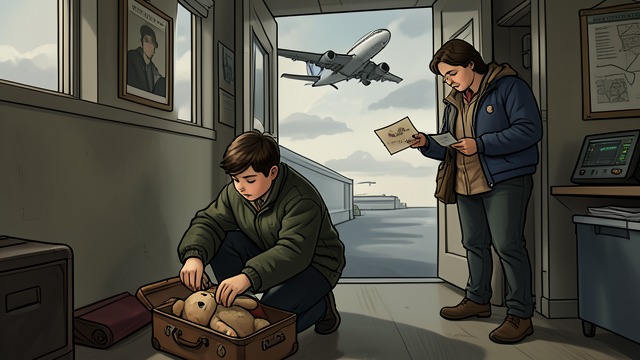
Nic travels between Northern and Southern California, first with a parent and later as an unaccompanied child. He packs treasured objects into a small suitcase and learns a private goodbye phrase with his father.
The routine makes travel familiar but not easy. Nic says he has a pit in his stomach when leaving, even though he loves the parent he is going to see.
The cost of parallel lives
The flights become an ordinary feature of family life, but Nic’s later reflections make clear that two homes do not simply combine into one childhood. He describes the emotional condition succinctly: he is always missing someone.
A New Family Forms
Belonging Expands
Karen joins the household
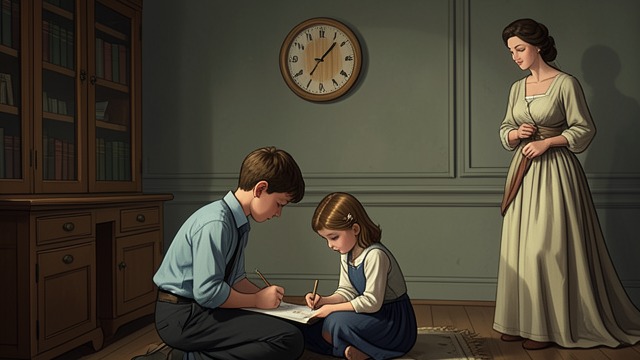
Karen builds a bond with Nic through shared drawing, books, French, jokes, and time together. Their relationship is affectionate but complicated by her role as a stepparent and Nic’s continuing devotion to Vicki.
David sometimes intervenes in disagreements and unintentionally undermines Karen’s authority. The family must navigate closeness without pretending that a stepmother replaces a mother.
New siblings arrive
Jasper and Daisy become part of Nic’s daily family world. Nic delights in them, reads aloud, plays, and gives them affectionate attention, even as the family’s divided geography remains in place.
Nic’s Public Protest

A Child Names the Cost
Writing about custody
Nic publishes an essay in Newsweek criticizing long-distance joint custody. He argues that parents who move away from their children should bear the burden of travel rather than making children commute between separate lives.
His argument turns a private family arrangement into a public account of its emotional consequences. The essay gives voice to frustrations he has carried since childhood.
A father’s recognition
David has long suspected that the arrangement costs Nic more than the adults acknowledged. Nic’s own words make that cost unmistakable, while leaving the parents unable to undo the years already spent apart.
Shared Concern After Divorce

Co-Parents Reunited by Crisis
A common fear
As Nic’s disappearances and drug use intensify, David and Vicki communicate with a focus they had not shared since the divorce. Their old antagonism recedes beside the immediate fear for their son.
They confer about treatment, money, and how to respond when Nic asks for help. Their judgments do not always match, but they recognize one another’s particular parental terror.
A relationship reshaped
The addiction does not repair the marriage, but it creates a working bond around their shared child. Their cooperation becomes a practical form of care, even while Nic’s recovery remains beyond either parent’s control.
When Nic Sheff is three
During Nic Sheff’s early school years
From David Sheff’s relationship with Karen through Daisy’s birth
During Nic Sheff’s junior year of high school
After Nic Sheff’s addiction becomes severe
