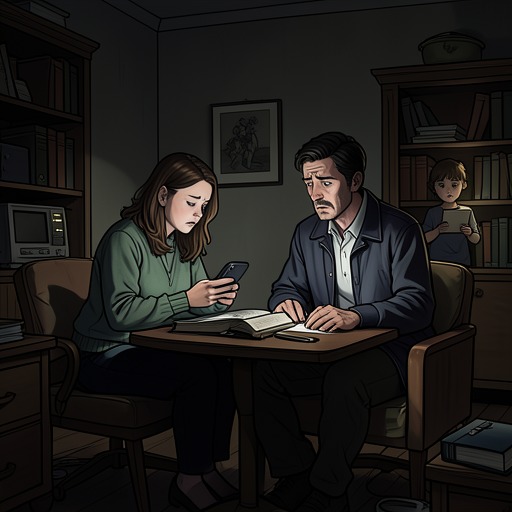
Methamphetamine-induced psychosis (tweaking)
Beautiful Boy: A Father's Journey Through His Son's AddictionMethamphetamine-induced psychosis, or tweaking, is a potentially dangerous state associated with methamphetamine use, often intensified by prolonged wakefulness. The book describes hallucinations, paranoia, delusions, and extreme anxiety, and explains how distorted perceptions can turn ordinary interactions into apparent threats. The condition connects the family’s experience of Nic’s addiction to the drug’s wider medical and social consequences, without treating each crisis or relapse as proof that he experienced psychosis at a particular moment.
Definition and recognition
The account traces recognition of methamphetamine psychosis to Japan in the late 1940s. Its symptoms can include hearing or seeing things that are not present, intense suspicion, and delusions; some symptoms may be difficult to distinguish from schizophrenia. The state is not presented as a single uniform reaction. Rather, the text describes a range of symptoms and emphasizes the way anxiety and distorted interpretations can shape a person’s responses to other people.
The book reports that as many as half of methamphetamine users, and a larger proportion of people using ice, experience tweaking at some point. It characterizes the condition as a risk associated with the drug, not an inevitable outcome for every user. Prolonged lack of sleep is especially relevant: a police report summarized in the account describes a person who may have gone three to fifteen days without sleeping and who is irritable and paranoid. The combination of methamphetamine use and fatigue is also linked elsewhere in the account to paranoia and aggression.
Early observations and public consequences
The historical discussion recounts how David Smith began clinical research after emergency rooms started seeing overdoses involving methamphetamine. In experiments described by the book, rats given the drug experienced severe effects; when smaller doses were administered to rats housed together, their behavior changed in ways Smith interpreted as a drug-induced distortion of ordinary social behavior. The passage uses these observations to convey the seriousness of the drug’s effects, not to claim that animal behavior maps directly onto every human experience.
By 1967, Smith had left his medical-school setting to work in the community through the Haight Ashbury Free Clinic. He described a neighborhood where people using speed stayed awake, became paranoid, and could act dangerously. In 1968, he issued an early public warning about speed’s risks during a period when users passed a needle around in a bar. The account also connects shared needles to a hepatitis C epidemic. This history places psychosis within a larger pattern of harms: methamphetamine can affect judgment and social behavior while drug-taking practices create additional risks for users and those around them.
The book relates methamphetamine use to an increased likelihood of antisocial behavior compared with use of other drugs, with crack identified as a possible exception. Its examples range across homicide, abuse within families, and other serious crimes. Presented together, they show why the subject is treated as a public-safety concern as well as a medical one. They do not establish that psychosis explains every crime or that every person who uses methamphetamine becomes violent; the account instead describes overlapping risks and the severe consequences reported in communities affected by the drug.
Recognizing and approaching a crisis
A police report discussed in the book advises treating a person who may be tweaking as potentially unpredictable, particularly when prolonged wakefulness, irritability, and paranoia are present. It cautions against approaching alone and recommends keeping roughly seven to ten feet away, since closeness may be perceived as threatening. It also advises against shining bright lights at the person, which could intensify suspicion or prompt a fearful reaction.
The same guidance emphasizes communication and visible, measured behavior. Responders are advised to slow their speech and lower their vocal pitch, move slowly, and keep their hands where they can be seen. They are also encouraged to keep the person talking: silence may indicate that paranoid thoughts have become dominant. These instructions make the report’s central concern concrete. In a state where ordinary actions may be misread, distance, pacing, visibility, and backup are presented as precautions against escalating a crisis, not as a way to diagnose or treat the condition.
Nic, treatment, and the limits of control
The family narrative establishes that Nic used methamphetamine and that, despite his protests and promises, the narrator increasingly urged him to enter rehabilitation. Once Nic was over eighteen, the narrator learned that a parent could not commit him to treatment simply because of concern about his drug use. A brief involuntary psychiatric evaluation could be sought only through a complicated process if he posed a threat to himself or someone else. The distinction exposes a practical limit: parental alarm did not itself provide legal authority to compel treatment.
After one period of methamphetamine use, Nic slept for as much as twenty hours a day for three days. He was then depressed and withdrawn, before disappearing again on a cold spring afternoon. The account does not label this sequence tweaking; its significance here is the broader pattern of drug use, exhaustion, emotional decline, and renewed disappearance that made the narrator fear for his son. The narrator later wished he had compelled Nic to enter a long-term program while he was legally able to make that decision, while acknowledging that treatment might not have worked if Nic was not ready to hear its message.
That uncertainty recurs in the narrator’s reflections on relapse and recovery. He comes to understand rehabilitation as imperfect but capable of interrupting cycles of use, and argues that recovery requires continuing work rather than a single intervention. His account also holds together two difficult ideas: addiction may compromise a person’s responsibility for the condition, yet the person using drugs remains the one who must undertake recovery. The narrative gives no simple solution to that tension. Its emphasis on the hazards of tweaking and the limits of family control instead shows why concern, boundaries, and repeated offers of treatment coexist without guaranteeing a particular outcome.