
Normality and Fitting In
BeautifulAva and Gideon each question the demand to appear normal, finding connection in spaces where difference and distress can be acknowledged openly.
increasing Bearing strength in each event
 decreasing
Bearing strength in each eventdecreasingAva Tries to Blend
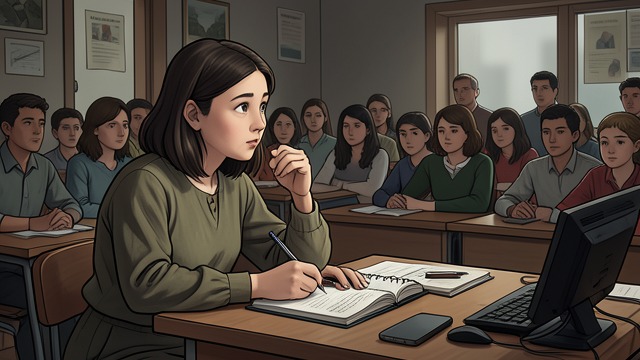
Be Beige
A plan for invisibility
Ava writes a reminder to appear quiet and unremarkable, hoping to escape the staring and whispers at school.
The impossible performance
Her grief breaks through that strategy, exposing how the demand for normal behavior conflicts with her actual state.
Gideon’s Social Fear
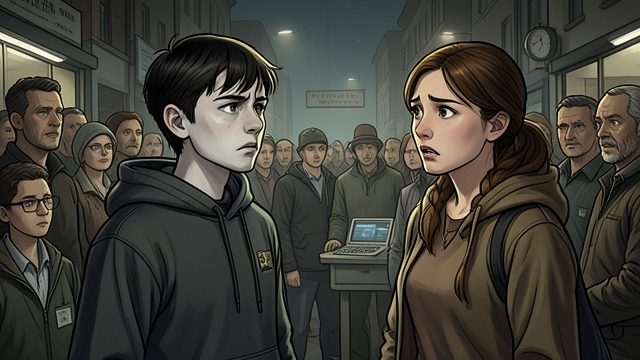
Assuming the Worst
A mind that anticipates judgment
Gideon imagines that other people are analyzing and disliking him, which makes ordinary conversation feel risky.
A label questioned
Robbie challenges the idea that everyone is focused on Gideon, helping him distinguish anxiety from evidence.
The TAPs Classroom
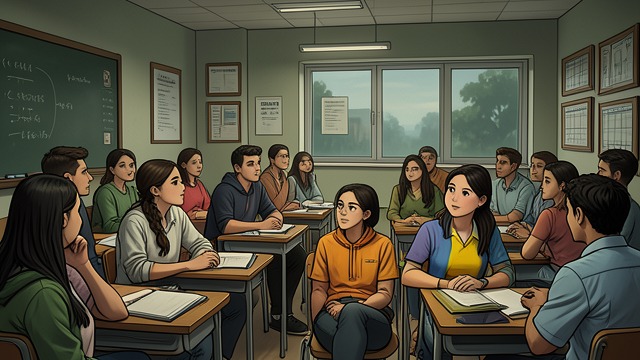
No One Is Just One Thing
Students name assumptions
A class discusses how appearance, family, and behavior invite judgments; Ava says people mistake her humor for happiness.
Difference becomes ordinary
No one treats her answer as a spectacle, and she experiences a moment of calm among students whose lives also resist easy categories.
Ria’s Workshop
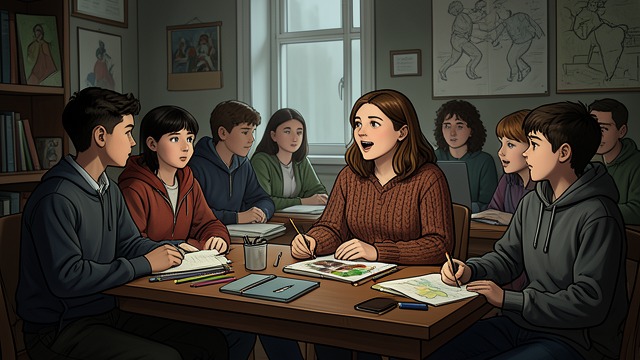
A Room Without a Normal Script
Rules that invite participation
Ria’s group values honesty, trying things, and consideration rather than conventional social polish.
Belonging through difference
Gideon can be awkward, anxious, and creative without being asked to disguise those traits as normality.
A Broader Definition
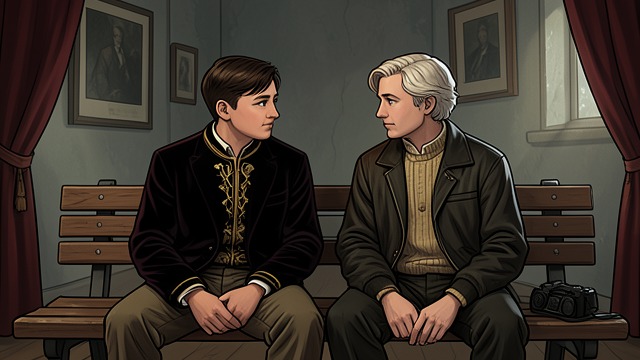
Ordinary Lives Are Not Simple
Expectations loosen
Gideon and Ava both reconsider school, work, relationships, and what a successful future should look like.
Honesty replaces fitting in
Their progress comes not from becoming conventional, but from making choices that acknowledge their actual needs and limits.
On the morning of the memorial assembly
Before he begins working at Magic Kebab
Ava’s first week at TAPs
During Gideon’s regular writing group
After the breakup, near graduation
