
Political Order and Collective Resistance
Berlin AlexanderplatzThis flow traces Franz’s changing confrontations with political claims about order, work, and solidarity, from nationalist self-identification and tavern violence to his encounter with anarchist critique and a more cautious sense of collective life.
increasing Bearing strength in each event
 decreasing
Bearing strength in each eventdecreasingThe Appeal of Order
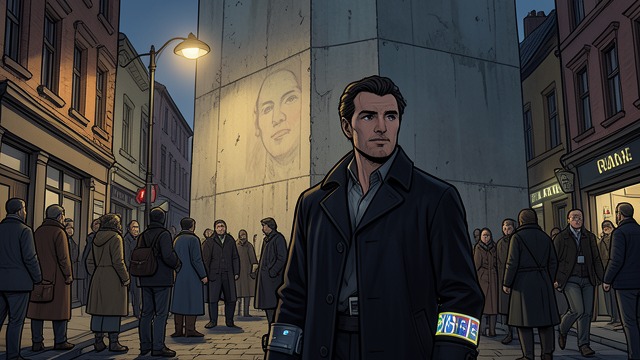
The Appeal of Order
A political identity takes shape
Franz sells populist newspapers and adopts the view that law and order are necessary for ordinary people to work and live. He wears a political armband and identifies with nationalist symbols, although he has little grasp of the political forces that use them.
A narrow idea of independence
His position grows from distrust of parties and public movements. Franz believes that political agitation threatens everyday stability, and imagines that he can remain decent and self-sufficient by avoiding collective struggles.
The apparent firmness of his outlook masks a lack of political understanding. Franz wants protection from disorder but cannot see that the same institutions he trusts may protect unequal power rather than people like him.
A Tavern Turns into a Battlefield

A Tavern Turns into a Battlefield
Songs and provocation
At Henschke’s pub, left-wing patrons challenge Franz over his armband and nationalist songs. Franz answers with a furious defense of order and threatens violent punishment for revolutionaries, moving from argument into a near-frenzy.
Retreat rather than persuasion
The confrontation ends without changing the political convictions of either side. Franz leaves after the group rejects his appeals, and he interprets the incident as proof that people will not let him live quietly rather than as evidence that his own political position is contradictory.
The conflict exposes how easily Franz’s demand for peace becomes a threat of violence. His language about order is shaped by fear and personal grievance, not by a considered political program.
Willi’s Challenge to Respectability
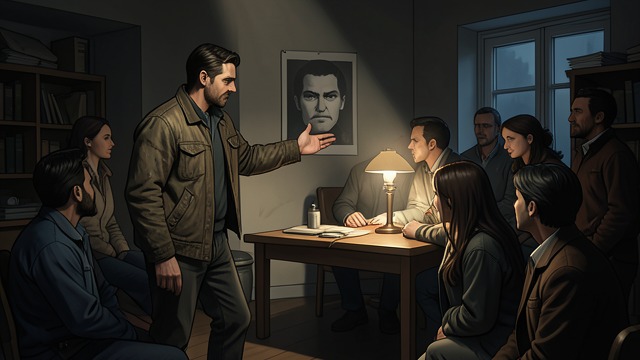
Willi’s Challenge to Respectability
A different political argument
Willi introduces Franz to anarchist and anti-parliamentary ideas, arguing that legal institutions and political parties serve the powerful. At meetings, Franz hears calls for direct action and the rejection of parliamentary politics.
The limit of verbal rebellion
When a worker asks what Franz himself does, Franz admits that he earns money through improper work and refuses ordinary labor. He uses the meeting’s critique of wage slavery to defend his own position, but cannot explain how individual lawbreaking would change the conditions workers face.
The encounter forces political language into conflict with Franz’s conduct. He rejects the worker’s call for solidarity and withdraws from politics, even as the worker’s account of poverty and exploitation remains difficult to dismiss.
Economic Necessity and Criminal Work
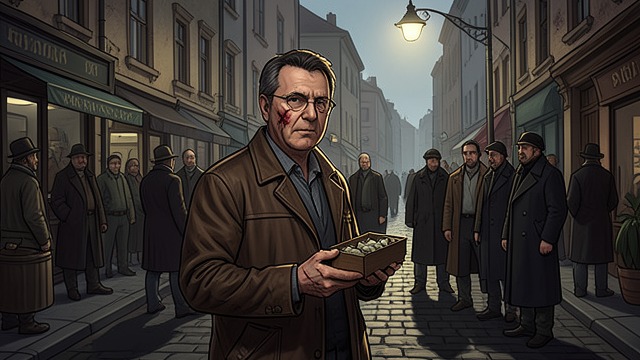
Economic Necessity and Criminal Work
The loss of legitimate work
After losing his arm, Franz finds ordinary employment difficult and rejects the idea that he should simply accept dependency. He returns to the street, tries to support himself through illicit dealing, and gradually enters organized crime.
Labor as a point of conflict
Franz’s choices collide with the speeches he has heard about exploitation and class struggle. He treats criminal work as a personal alternative to wage labor, while the experiences of working people around him show that economic insecurity is not solved by individual toughness.
His movement into crime does not amount to political resistance. It places him inside a hierarchy controlled by Pums and exposes him to coercion without giving him the solidarity or bargaining power he has rejected.
A Cautious Collective Lesson

A Cautious Collective Lesson
A smaller working life
After the Buch crisis and Reinhold’s trial, Franz takes part-time work as a factory doorman. He no longer presents independence as proof that he can stand outside other people’s actions and decisions.
Learning to stay alert
Franz concludes that walking alone leaves a person exposed and that listening to others can help reveal what is true. His final reflections connect personal safety to collective awareness, while warning that crowds and political movements can also carry people toward violence.
The ending does not turn Franz into a political theorist or promise that solidarity will solve every danger. It marks a change in how he understands conflict: he must watch, judge, and recognize his connections to others rather than calling every blow fate.
Winter 1927–28, after Franz begins street trading
Early 1928, during the confrontation at Henschke’s pub
Summer 1928, after Franz loses his arm
Summer to early autumn 1928
At the novel’s close, after Franz’s release
