
The Search for a Life Beyond the Old Franz
Berlin AlexanderplatzThis thread follows the successive identities Franz tries on and the painful process through which the old self gives way to a more attentive, less self-sufficient life.
increasing Bearing strength in each event
 decreasing
Bearing strength in each eventdecreasingThe Released Prisoner
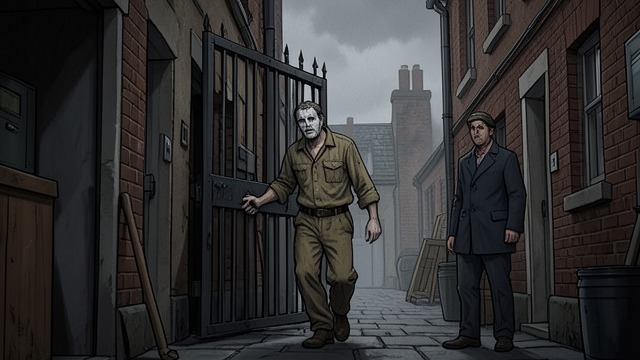
The Released Prisoner
Leaving one identity behind
Franz exits Tegel as a man who has served his sentence and wants to start afresh. Yet the transition from prisoner to free citizen overwhelms him, and he initially retreats into sheltered spaces rather than confidently entering the city.
Freedom without understanding
His release changes his legal status but not the fears and habits shaped by imprisonment. The first version of Franz hopes that being outside will itself make him new; the city immediately challenges that assumption.
The Honest Man
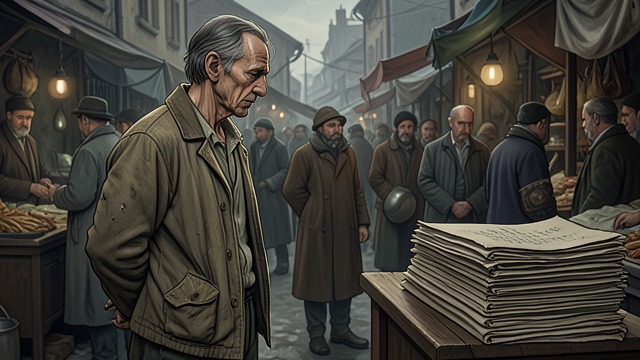
The Honest Man
A self-image built on resolve
Franz vows to live decently and regards work and self-control as proof that he can leave his criminal past behind. For a time, newspaper selling and a renewed sense of physical strength make the vow seem achievable.
A brittle identity
Franz treats respectability as a personal achievement that can be preserved through stubbornness. He does not yet recognize how little his promise addresses exploitation, violence, or his own capacity to harm others.
The One-Armed Survivor
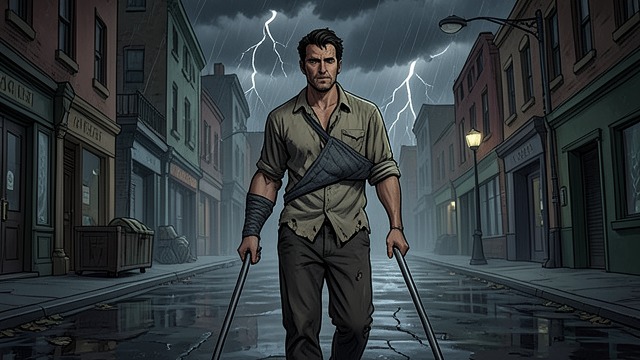
The One-Armed Survivor
Survival through adaptation
After Reinhold throws him from the moving car, Franz survives surgery but loses his right arm. He refuses to identify his attackers and gradually returns to Berlin, determined to prove that the injury has not made him powerless.
Strength becomes evasion
Franz adapts to life with one arm, but he often uses toughness to avoid confronting what happened. His new confidence can look like resilience while still repeating the old refusal to examine his choices and dependencies.
The Broken Self
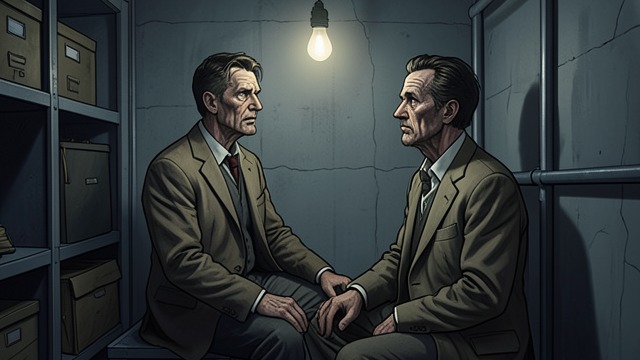
The Broken Self
Loss exposes the limits of denial
When Mieze disappears, Franz expects her to return and resists the urgency Eva feels. News of her murder breaks through that denial; he is arrested after a police raid and sent to Buch secure ward in a profoundly damaged state.
The old identity collapses
His bodily rigidity and refusal to eat accompany an inner reckoning with his violence, blindness, and self-pity. The man who once believed that strength meant enduring anything cannot continue as before. The breakdown is destructive, but it creates the possibility of a different life.
The Cautious New Man
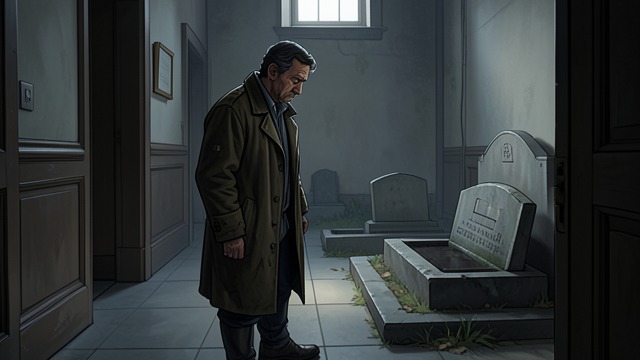
The Cautious New Man
Returning without triumph
Franz leaves Buch frail and resumes a place in Berlin with Eva’s help. He visits Mieze’s grave but does not treat mourning as a command to resume the old life; he can remember her while also continuing to live.
Work and watchfulness
He becomes a part-time doorman and adopts a new understanding of human dependence. He no longer celebrates solitary toughness as sufficient protection. His future remains modest and uncertain, but the story ends with his attention turned outward, toward people and circumstances he once dismissed.
At the beginning, after Franz’s sentence ends
In the weeks following his release
After the burglary and attack of April 1928
From Mieze’s disappearance through the winter of 1928–29
After discharge from Buch, at the story’s close
