
August Gerner’s Burglary Partnership
Berlin AlexanderplatzAugust Gerner and Gusti are drawn from anxious tenants into a burglary operation that briefly promises independence but ends in arrest and exposure.
increasing Bearing strength in each event
 decreasing
Bearing strength in each eventdecreasingA Bottle in the Yard
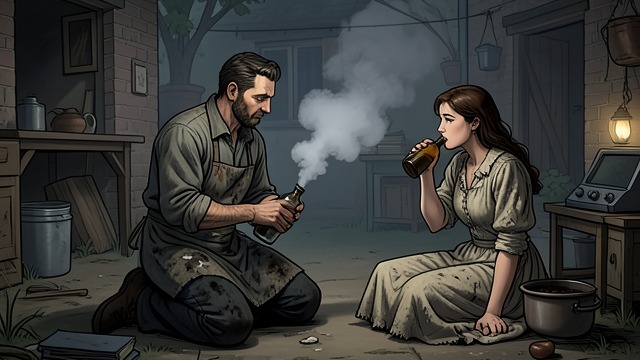
A Bottle in the Yard
August Gerner, a joiner and caretaker, discovers a bottle of spirits and papers in the yard after investigating repeated break-ins at a nearby wholesale business. He quietly takes the bottle rather than reporting it, and Gusti joins him in drinking it at home.
A First Compromise
The couple justify keeping the bottle by imagining that the burglars have already taken it from the firm. Their need for a small pleasure and their resentment of people who possess more make the theft seem harmless.
The incident links Gerner’s household to the burglary problem before he has formally joined any gang. A minor act of concealment gives him a taste of taking what is available instead of waiting for lawful work to improve his circumstances.
An Invitation from the Thieves

An Invitation from the Thieves
When burglars return, Gerner surprises them but persuades one man that he wants to cooperate rather than summon the police. He brings the young intruder into his home, where Gusti helps make the meeting appear ordinary and welcoming.
Respectability as a Cover
The visitor treats the couple as people who might be useful allies, and long conversations about business and getting ahead draw Gerner further into the arrangement. He begins to believe that the gang’s cleverness offers a route out of exhausting, insecure work.
Gusti is swept up in the possibility of a more comfortable life, even while she has doubts about participating directly. The couple’s home shifts from a refuge against the city’s dangers into a place where criminal plans and domestic hopes become entangled.
A Household Goes In
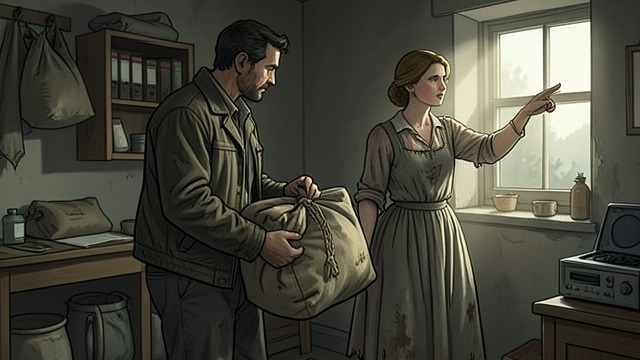
A Household Goes In
Gerner tells Gusti that he intends to stop working for builders and make money through the burglary operation. He argues that the gang is organized, experienced, and more likely to reward him than an employer who might dismiss him for age.
Private Doubt and Public Resolve
Gusti objects that her varicose veins make her unsuited to running or helping during a robbery. Gerner insists that her presence will matter, while her inward resistance remains stronger than her outward agreement.
Their choice is not made in a single dramatic leap. It grows out of financial insecurity, the attraction of partnership, and Gerner’s wish to recover the independence he once had as a business owner.
The Cellar Operation
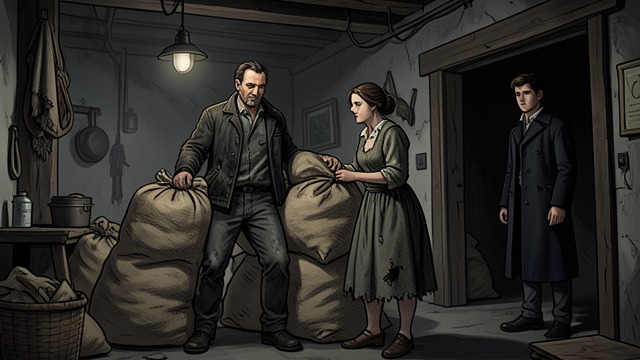
The Cellar Operation
Gerner and Gusti hide in a cellar while the gang removes goods from a nearby firm. They help move sacks of coffee, sugar, currants, and alcohol into their flat, turning the household into storage for the stolen property.
Profit and Unequal Partnership
Gerner resents sharing the haul with the gang, while Gusti admires the young man who recruited them. After the thieves leave, the couple drink through the night, sampling the alcohol as if the crime has already delivered the comfortable life they wanted.
Their excitement blinds them to the risk of keeping conspicuous goods in their home. The burglary seems to have made them business partners, but the gang controls the operation and can abandon them as soon as the police arrive.
Arrest in the Flat

Arrest in the Flat
Gerner and Gusti are too drunk to open the door when the police arrive. The officers find the flat crowded with stolen goods and take the couple away; Gerner protests that someone must have broken in and planted the property.
The End of the Partnership
Gusti tries to explain that they are respectable people, but neither spouse can provide a convincing account of the sacks, crates, and bottles. The men who recruited them are absent, leaving Gerner and Gusti to face the visible evidence alone.
Their arrest punctures the fantasy that joining a clever gang guarantees control over one’s fate. Gerner’s household becomes the operation’s vulnerable weak point, and the promise of escaping wage labor ends in detention and public humiliation.
During Franz’s retreat from public life
After Gerner’s first theft from the yard
After Gerner decides to work with the burglars
A night after the household joins the burglary scheme
The morning after the cellar burglary
