
Franz Against Police and Punishment
Berlin AlexanderplatzThis flow follows Franz Biberkopf’s encounters with the institutions that regulate and punish him, from surveillance and expulsion through criminal recruitment and arrest to the asylum’s competing attempts to control his body and mind.
increasing Bearing strength in each event
 decreasing
Bearing strength in each eventdecreasingAn Ex-Convict Under Notice
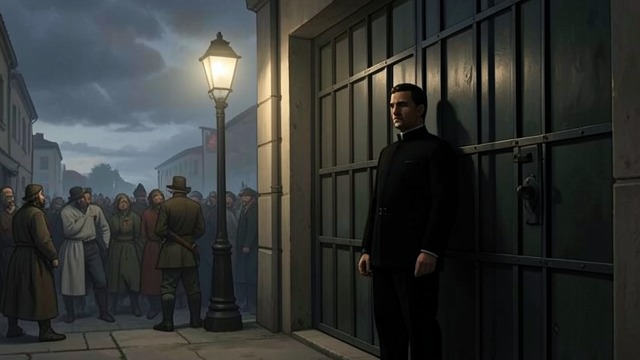
An Ex-Convict Under Notice
The expulsion order
Franz receives an official order expelling him from Berlin and nearby districts because his past conviction marks him as a threat to public safety. A welfare office offers a way to remain under supervision, requiring him to report and submit to inquiries about his work.
Respectability under surveillance
Franz initially believes the arrangement has settled the problem. The legal notice and welfare oversight nevertheless make his new life conditional: he must prove his conduct to authorities who have already classified him by his criminal record.
The conflict is between Franz’s desire to begin again and a system that treats his past as a continuing risk. His confidence lasts partly because he has not yet experienced how quickly official scrutiny can return.
A Private Code of Silence

A Private Code of Silence
Injury and investigation risk
After Pums’s gang throws Franz from a car, leaving him without his right arm, his friends urge him to identify the attackers and seek retribution. Franz refuses, insisting that a prosecution or revenge would not restore what he lost.
Silence becomes a new vulnerability
Franz keeps the gang’s role from authorities and later disguises himself with false papers when registering for a room. He believes this lets him remain independent, but the concealment further separates him from lawful employment and makes future encounters with police more dangerous.
His silence is a choice made under pressure, not evidence that the attack no longer matters. The private code preserves the gang while leaving Franz exposed to both criminal coercion and official suspicion.
The Raid and Arrest

The Raid and Arrest
A police operation
Berlin Police organize a raid on several drinking places, detaining patrons and checking their identities. Franz enters the Alexanderquelle pub during the operation, disguised with a wig and an artificial arm, and refuses to leave when ordered.
Violence and identification
When officers confront him, Franz fires at a policeman. The police overpower him, discover his disguise and two pistols, and identify him as a wanted man connected to the murder investigation involving Mieze. He is remanded in custody while authorities connect him to previous offences.
The arrest closes the gap between Franz’s hidden criminal life and state investigation. His attempt to control when and how he will be caught ends in a public confrontation that strengthens the case against him.
The Asylum’s Contested Control
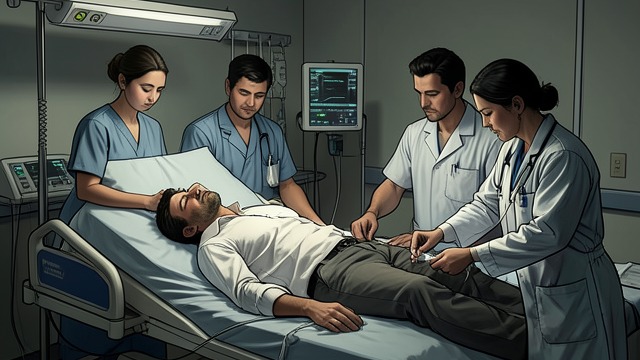
The Asylum’s Contested Control
A body under observation
Franz stops speaking and eating, and doctors transfer him from custody to Buch secure ward for observation. He lies rigid, requiring force-feeding and medical interventions as his body weakens.
Treatment versus resistance
The doctors disagree about how to understand his condition. Younger practitioners pursue psychological explanations and try to engage him; the senior physician favors a diagnosis of catatonic stupor and warns against tormenting him with futile conversation. Franz experiences their interventions as another attempt to force his will.
The institutional conflict concerns whether Franz is refusing cooperation or has lost the ability to respond. His recovery does not come through winning a contest against the doctors, but through an inner collapse that makes a different understanding possible.
Release with a Criminal Trial Ahead

Release with a Criminal Trial Ahead
Discharge under scrutiny
After Franz speaks again and provides limited information, doctors certify him fit to leave the secure ward. The authorities release him while making clear that police will continue to monitor him and that the criminal case has not simply vanished.
Testimony without revenge
Franz later testifies at Reinhold’s trial about the killing of Mieze and their history. He refuses to turn his evidence into a full denunciation of the gang, but his statement contributes to the proceedings; Reinhold is convicted of voluntary manslaughter and sentenced to ten years.
Franz is no longer defined solely by the institution that holds him. Yet release is not immunity: he must live with the legal consequences of his actions and the knowledge that other people remain part of his fate.
Early 1928, shortly after Franz’s release
April–summer 1928, after the gang’s attack
November 1928, during the raid on the Alexanderquelle pub
Winter 1928–29, after Franz is remanded
Near the end of winter 1928–29
