
Nachum’s Warning About Fortune
Berlin AlexanderplatzNachum’s tale of Stefan Zannovich offers Franz a model of worldly confidence, then its grim ending turns the story into a warning about ambition, responsibility, and survival.
increasing Bearing strength in each event
 decreasing
Bearing strength in each eventdecreasingA Stranger in the Yard
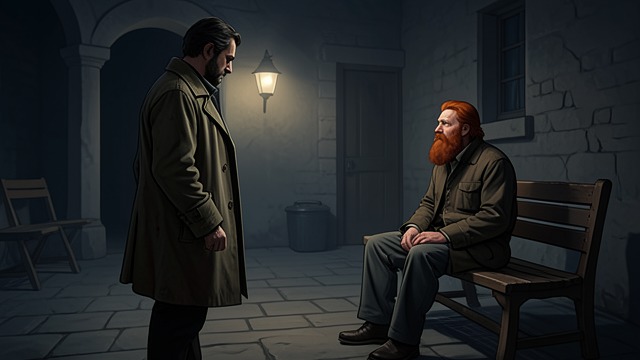
A Stranger in the Yard
After leaving Tegel, Franz wanders through Berlin in a state of panic, unable to bear the streets, crowds, and ordinary signs of life. In a courtyard he sings to steady himself, and a red-bearded stranger takes him into a Jewish household.
Shelter and Storytelling
The stranger, Nachum, recognizes that Franz cannot yet explain what frightens him. Rather than force him back into the street, Nachum sits beside him and begins telling a story, treating conversation itself as a form of shelter.
Franz first resists the attention and calls Nachum an ape. Yet the story gives him something to follow besides his own terror, and the household’s welcome helps him regain enough composure to introduce himself.
The Elder Zannovich

The Elder Zannovich
Nachum tells Franz that Stefan Zannovich’s father began as a poor Albanian trader and made his way to Venice. He survived by understanding the speed and density of city life, entertaining people and taking their money through card tricks and deceit.
From Poverty to Respectability
After a dispute brought the law after him, the elder Zannovich returned to Albania with money, bought an estate, and became a respected man. His story makes success appear less like a reward for virtue than the product of nerve, adaptability, and a willingness to leave one world for another.
The father’s ambition for his children—to become more than he had been—sets up a second, more dazzling rise. Nachum offers the tale not as a simple moral lesson but as an account of how people invent paths through circumstances that seem closed to them.
The Prince’s Performance

The Prince’s Performance
The younger Stefan studies at Padua and learns to charm people by observing the nobility around him. In Montenegro, others mistake him for a great man, and he accepts the identity they offer, presenting himself as a nobleman and then as a descendant of the national hero Skanderbeg.
A Life Built on Recognition
His impersonations work because audiences want the story to be true. Stefan supplies a role that entertains and flatters them, while their money enables him to travel and live as the prince he claims to be.
Franz becomes absorbed in the tale and briefly snaps at Nachum, then asks him to continue. The episode speaks to Franz’s desire for a way to face the world without fear, though Nachum’s account has not yet revealed what this daring performance ultimately costs.
Eliser’s Correction
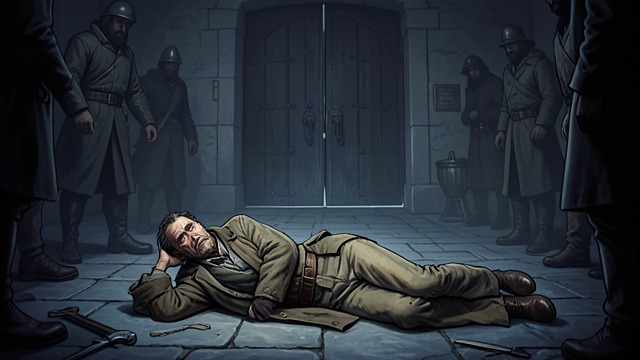
Eliser’s Correction
Eliser interrupts Nachum’s admiring story with its ending. Stefan’s self-invention carries him from the role of a nobleman toward political schemes in Brussels, where he uses an official letter to borrow money and is exposed as a swindler.
The Cost of the False Identity
Unable to repay his debts, Stefan is prosecuted and imprisoned. He dies by suicide, and his body is treated as refuse rather than as the remains of a once-celebrated prince. The contrast makes the earlier triumphs look precarious: public admiration can vanish as soon as a performance fails.
Franz asks whether the account is true and protests the degrading treatment of the dead. His response moves beyond fascination with success; he sees how the law and the crowd can reduce a person to a contemptible object after failure.
A Story Carried Forward

A Story Carried Forward
Franz leaves the household with Nachum’s account lodged in his mind. He returns later, now prosperous enough to buy food and drink, and again asks about Stefan Zannovich, remembering him as an impressive man whose end was unjust.
The Warning Behind the Example
Nachum offers another image: a ball thrown with the expectation that its contents will make it stop exactly where intended. Instead, it bounces and rolls aside. The analogy suggests that a person cannot fully control what follows from an action or determine where life will carry him.
Franz laughs off the warning and boasts that his own ball is flying high. The episode gives Nachum’s story an afterlife in the novel: its lesson is available to Franz, but his confidence allows him to hear the tale as admiration rather than caution.
On Franz’s first day back in Berlin
During the first evening at the Jewish household
Later in Nachum’s story that evening
Near the end of Nachum’s account
After Franz leaves the household and regains his footing
