Alexanderquelle pub
Berlin AlexanderplatzThe Alexanderquelle pub becomes the setting for a decisive reversal in Franz Biberkopf’s story: during a police raid, a man who has evaded registration is recognized beneath a disguise and taken into custody. The pub is first shown as a busy Friday-night gathering place, where people come for a drink after receiving their wages. As the raid empties the room, however, its tables, entrances, and remaining corners become part of a police operation that leads from mass detention to the identification of one especially sought-after man.
A Friday gathering place
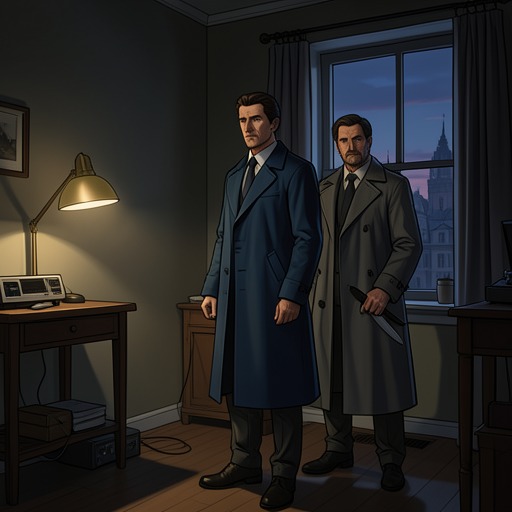
The pub is packed when the police arrive. It is Friday, and people with wages have come for a quick drink; music and radio are playing, and a waiter continues serving as officers push inside and announce the raid. The customers do not all react alike. Some keep talking or object to being detained, while a woman in the passage protests that she has not yet registered with the police in the district. Her predicament gives the roundup a practical consequence beyond the interruption of an evening: a person’s status and location can determine whether she is allowed to remain where she is.
The raid proceeds through repeated journeys between the pub and police headquarters. People are taken out in batches, and the trucks return for more. The scene registers the pub’s changing character through its occupation: a crowded room becomes a place of waiting, argument, and removal. By the time the last groups are leaving, the police are controlling who may enter and who must go with them. The pub’s public sociability has not simply stopped; it has been overtaken by a system of checks and detention.
The late arrival
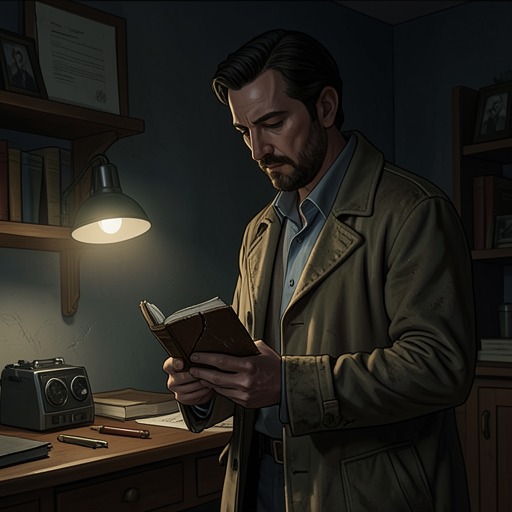
At about a quarter to eleven, after the operation has been under way for some time, a grey-haired man enters while officers are occupied with the remaining crowd. He passes through the entrance during a moment when attention is directed elsewhere, orders a beer, and goes up the steps. The scene marks him out from the ordinary customers and from those already taken away: he has arrived late, quietly, and under a disguise that will later help identify him as Franz Biberkopf.
Alone at a table, he finds a gun on the floor near the wall. He already has another, and his discovery changes the stakes of his presence in the pub. The police continue clearing the room, while he remains seated and does not respond readily when an officer tells him to leave with them. The approach of more officers turns the encounter into a direct confrontation. Still seated, he fires at the first officer rushing toward him. A struggle follows; Franz gets to his feet but is soon overwhelmed and collapses near the bannister. The pub, until then the setting for an expansive roundup, has become the place where the search for this particular man ends.
Identification and arrest
The police take Franz from the pub in handcuffs and transport him with the other detainees to Berlin Police Headquarters. There, the arrest is processed through searches, questioning, and checks of personal details. The shift from the pub to the police station makes the consequences of the raid concrete: being taken away is followed by institutional examination, and Franz’s silence and visible disguise do not prevent the authorities from investigating him.
A report of the arrest identifies the features that expose him. He has an artificial right arm and is wearing a grey wig; together with a photograph already held by the police, these details allow them to recognize him as Franz Biberkopf. They connect him to the murder case of Emilie Parsunke in Freienwalde, in which he is regarded as a possible accomplice, and note his previous record for manslaughter and procurement. The raid has therefore produced both a mass arrest and what the police describe as a particularly valuable individual capture. The Alexanderquelle pub is the site where that identification becomes possible, not because the narrative describes it as Franz’s usual haunt, but because the roundup brings him into contact with the authorities while he is carrying a disguise and a weapon.
Place in the narrative
The pub episode links public urban life to the institutions that regulate and confine it. At the Alexanderquelle, customers arrive for a drink after work, a waiter serves them, and music and radio fill the room; during the raid, the same room is reorganized by police lines, repeated removals, and identity checks. The contrast is built through changes in who controls movement: patrons initially occupy the space on their own terms, but officers progressively determine who may stay, leave, or enter.
For Franz, the pub is a threshold between concealment and recognition. He enters after the roundup has already begun, finds a second gun, and is arrested only after the police discover the details that identify him. His removal leads into police custody and medical observation; he is subsequently taken to the secure house at Buch after doctors conclude that he appears to be seriously mentally ill. The pub thus stands at the start of a new sequence of confinement, while the raid’s collective machinery singles out Franz from the many people it sweeps up. Its significance lies in that conjunction: an ordinary drinking place becomes the point at which a disguised fugitive is exposed and transferred from the city’s crowded public life into institutional custody.