Franz Biberkopf’s psychological breakdown after Lüders’s betrayal
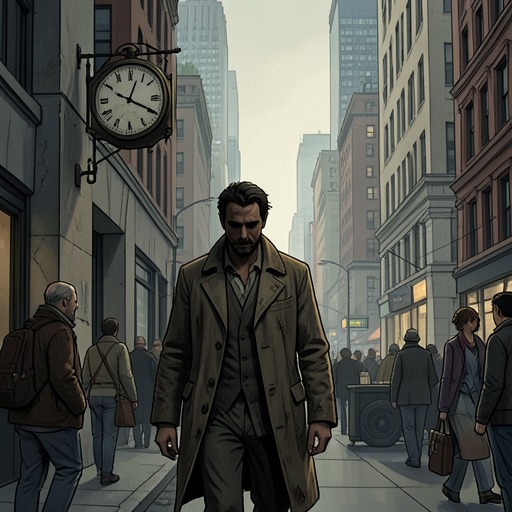
Berlin AlexanderplatzFranz Biberkopf’s psychological breakdown after Lüders’s betrayal turns a letter into a rupture in ordinary life. Unable to reconcile the betrayal with his belief that Lüders was a sensible man and a father, Franz loses the ability to rise, speak plainly, or continue his work. His collapse first appears as blankness, then as a disappearance, and finally as a violent attempt to wash the betrayal out of his surroundings. The episode exposes how fragile his resolve to live decently remains, while the narrative explicitly frames this crisis as an early blow, not the worst that is to come.
The Letter and the First Collapse
The immediate trigger is a letter delivered the morning Franz is due to meet Lüders. Its contents are not reproduced in this episode, but Franz’s reaction and the later search for an explanation make clear that it reveals something about Lüders that Franz cannot absorb. The shock arrives in the middle of routine business: the landlord asks about a parcel of stock, and Franz answers the practical question before sinking onto a wooden stool by the display cabinet. He holds the letter limply in his left hand and stares across the table. When Lüders enters, sees him sitting there, and promptly leaves, Franz does not follow or confront him. His body has already registered the break before he can put it into words.
The landlord notices Lüders’s abrupt retreat and repeatedly asks what has happened. Franz can scarcely hear him; he imagines cotton wool stuffed in his ears and takes a brandy when it is offered. Even as the landlord tries to keep him engaged—with questions about Lüders, an envelope Franz has dropped, and the morning paper—Franz circles back to the letter. He cannot make its contents fit with his established picture of Lüders as sensible and responsible, a man with children. That mismatch leaves him unable to act. His head grows heavy, he falls forward as if asleep, and his legs seem to slide into the same vast emptiness before he drops down completely.
Withdrawal from Work and Company
Franz eventually raises his head from the table and asks Lina whether the woman he expects has arrived. It is only nine o’clock, and he has done nothing; Lüders has gone as well. The delay between receiving the letter and recognizing the full force of its implications is rendered as a return of painful knowledge: Franz remembers that he has been released while the others remain behind, digging potatoes near the prison’s rubbish heap. He had thought prison life could be pleasant by comparison, and now the freedom he had anticipated feels like punishment. He insists on standing and going outside, telling himself that nobody can get at him, but his attempt to resume movement does not restore his composure. He leaves a message that there has been a death in the family, says the expected visitor need not wait, and seems unable to remember what parcel the landlord is discussing.
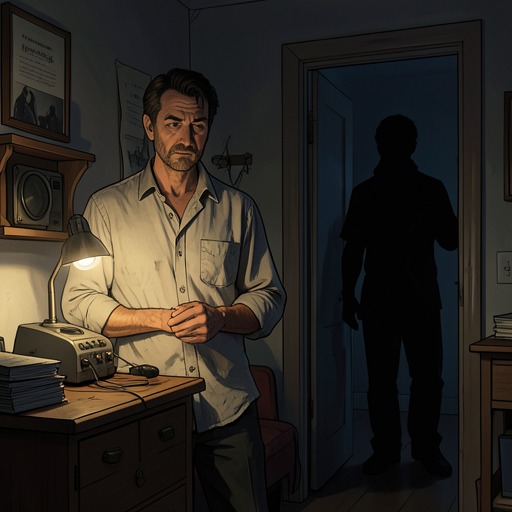
That afternoon Lina finds him at home, though he would ordinarily be out doing business, especially around Christmas. She has brought a brown cardigan she knitted for him, but Franz scarcely looks at her. Instead, he sits by his bed with the table pulled close and dismantles an alarm clock. He insists the clock is not all right: it makes a whirring noise and does not strike properly. The meticulous tinkering offers a narrow, mechanical task while his attention remains closed to Lina and to the wider crisis. He scrapes at his teeth and barely responds; Lina thinks he looks like a zombie and decides to let him sleep off what she takes to be a hangover. When she returns that evening, he has gone. He has paid, packed all his belongings, and instructed the landlady to write “Travelling” on the police registration form. The complete clearing of his room turns an inward collapse into a practical disappearance.
The Search and the Encounter with Lüders
Lina spends a day trying to locate Gottlieb Meck, hoping he can help. Meck initially has no explanation for Franz’s absence and doubts that a tough, resourceful man like Franz would simply vanish. Lina rejects the suggestion that she and Franz may have quarrelled: she had just brought him the cardigan. The landlady confirms that Franz moved out in a rush, taking everything, and that something seemed wrong despite his having been cheerful earlier that morning. Pressed by Lina, Meck follows his suspicion to Lüders. Lüders claims Franz has abandoned him and owes him money, but Meck does not believe him; a long conversation yields no admission. Meck and Lina later catch Lüders in the pub opposite his home, and the confrontation eventually leads Lüders to recount what happened.
Lüders says that he visited Franz in a room near the old flat, carrying a cardboard box and a pair of boots. Franz was lying on the bed with his boots still on and his feet hanging down. A light bulb burned overhead. Lüders had an open knife in his left pocket and a few marks in his other hand, which he placed on the table. He talked, moved about the room, and showed Franz the bumps on his head from Meck’s blows and his thick ears; his voice was hoarse, and he was consumed by resentment. Franz sat up. His face alternated between hardness and nervous twitching. He pointed at the door and quietly ordered Lüders to leave. When Lüders asked for a note proving that he had visited, or suggested that Meck or Lina might come, Franz rose abruptly and moved toward the washstand.
Water, Rejection, and Continued Absence
Franz seized the washbasin and swept its water across the room toward Lüders’s feet. The narration joins the act to the biblical language of dust returning to earth. Lüders jumped aside and reached for the door handle; Franz then threw water from the jug, splashing Lüders across the throat and mouth with icy water. Lüders fled. The water is not merely a means of forcing him out: Franz continues to empty jug after jug into the room, splashing the air and insisting that everything must be clean and go. He opens the window, worries that the water will drip onto people below and stain things, then closes it and lies flat on the bed. The cleansing gesture has no power to undo what has happened. Instead, the repeated water and the death-inflected refrain make the room into a scene of attempted expulsion—of Lüders, of the betrayal, and of the life Franz says he wants nothing more to do with.
Franz has left that room by nightfall, and Meck cannot find out where he has gone. He takes Lüders to local cattle traders and has them question him about the letter and what occurred, but Lüders remains adamant. The men eventually let him go, while Meck says that Lüders got what was coming to him. Meck and Lina search across half of Berlin without finding Franz. The search gives the breakdown a social consequence: the people trying to help can establish that he has disappeared, but they cannot reach him or make him explain himself.
Significance and the Next Crisis
The narrative interrupts the immediate distress to address the reader directly: Franz has not, it insists, really met with disaster, though he recognizes that his simple resolution must be flawed somewhere. That recognition, rather than a clearly stated account of the letter, drives him into profound sadness. The contrast is deliberately severe. From an outside perspective, the incident might seem too small to justify such alarm; for Franz, the betrayal strikes at the assumptions supporting his attempted new life. His judgment of Lüders as sensible and responsible cannot survive what the letter has disclosed, yet Franz has no stable alternative understanding to put in its place.
The episode also makes the breakdown legible through repeated failures of ordinary action: he cannot rise from the table, cannot keep his attention on a conversation, cannot finish his business, and cannot remain in his room or accept Lina’s company. The disassembled alarm clock, the abandoned parcel, the emptying washbasins, and the cleared room give physical form to that dislocation without supplying a complete explanation of his inner state. The narration then warns that Franz will drink heavily and nearly give himself up for lost, but insists that the ordeal has not yet become as severe as it will. His disappearance is therefore both an ending to this immediate encounter and a threshold into a larger collapse.