Reinhold
Berlin AlexanderplatzReinhold is a stammering small-time criminal whose hesitant manner conceals both a compulsive pattern of relationships and a capacity for calculated violence. His friendship with Franz Biberkopf becomes the channel through which he draws Franz into the Pums gang, and then the scene of a betrayal that leaves Franz gravely injured. Later, after killing Mieze, Reinhold hides behind a false identity and arranges to be imprisoned under another man’s name; his eventual conviction gives his evasions a belated, grim conclusion.
Identity and Introduction
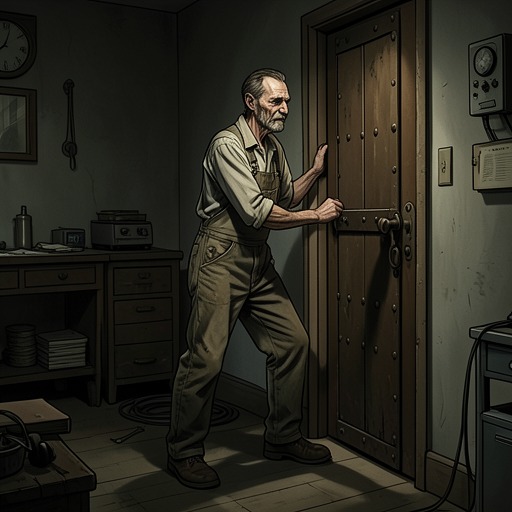
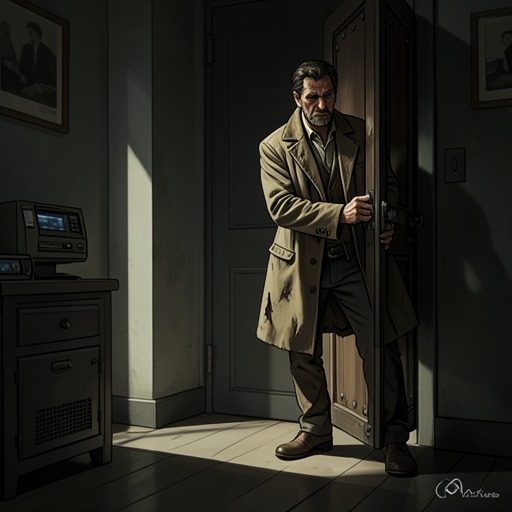
Reinhold first appears among the acquaintances around Meck, wearing a shabby army greatcoat and old yellow boots. He is young, with a long face marked by deep lines, and he stammers so severely that conversation can seem laborious. Franz is nonetheless drawn to him, watching him closely and seeking his company. The contrast between the young man’s pleading eyes and the hard lines of his face anticipates the gap between his vulnerable presentation and his actions.
Reinhold has already taken political action once: he was involved in an attempt to blow up a gasworks, but the group was exposed without being caught. He has not served a prison sentence. By the time Franz knows him, Reinhold says he is selling fruit and helping out, and the men around him appear to be doing well in the same trade. The account makes clear that this respectable-sounding business is a cover for criminal activity: a red-faced cattle trader supplies the group as its wholesaler. Reinhold belongs to a world Franz does not yet understand, and keeps his distance even as their association develops.
Women and the Pattern of Rejection
Reinhold’s relationships follow a recurring course. He becomes intensely attached to a woman, then quickly loses interest and wants her gone. He tells Franz that the change can come after about four weeks: a woman who had seemed irresistible becomes unbearable to him. He seeks help from Franz in ending these relationships, treating his friend as a person who can take over the women he has tired of. The cycle is not a single episode but an increasingly visible habit that brings several women into contact with both men.
The first such arrangement involves Fränze, the wife of a brewery delivery driver, who has already left her husband for Reinhold. When Reinhold no longer wants her, he struggles to tell her so. He has her bring Franz a pair of stout boots, and Franz recognizes that Reinhold is using the delivery to redirect her toward him. Franz accompanies Fränze to look for Reinhold, who is not there; afterward, she returns to Reinhold and tells him she has found someone else, without saying who. The episode turns Reinhold’s romantic difficulty into a practical exchange, with Franz caught between his amusement at Reinhold’s distress and his participation in the arrangement.
The pattern continues with Cilly and then Trude. Franz does not immediately accept Reinhold’s expectation that he will discard Fränze, and points out that she has no summer clothes and that he cannot afford to buy them. Later, when Reinhold says he wants to escape women and has sought help from the Salvation Army, he admits that he keeps becoming infatuated and then abruptly repelled. Franz is surprised by the intensity of this confession, but Reinhold’s appeal for help does not end the cycle. He asks Franz to take Trude, and Franz refuses. Reinhold’s dependence on him is therefore real but unstable: he seeks assistance, yet continues to treat women as interchangeable burdens to pass along.
Other women expose how widely the consequences have spread. Trude, Cilly, and women from earlier relationships remain around Reinhold, variously worried, angry, or still attached. Nelly, a widow from the central market hall, is shocked when she discovers the history of his affairs. One former partner tells Franz that Reinhold has drawn many women into similar stories and urges him to report Reinhold to the police. The accumulating accounts make clear that what Reinhold presents as private confusion has become a repeated pattern affecting many people.
Friendship, Crime, and Betrayal
For a time, Franz regards Reinhold as a true friend. Their closeness is built partly on Franz’s confidence that people can master themselves and set their lives right. Reinhold, in turn, needs Franz as an intermediary in his relationships and later as a useful addition to his criminal circle. Their friendship thus contains an imbalance from the outset: Franz reads it as loyalty, while Reinhold repeatedly makes use of Franz’s strength and willingness to help.
When Franz approaches the Pums gang, Reinhold argues that he should be allowed in. He calls Franz a pimp and reasons that he is already too deeply involved to return to an honest life. He also wonders why Franz has come to them rather than to his friend Herbert. Reinhold proposes admitting him while warning that the gang can deal with him if he causes trouble. The decision brings Franz into the gang, but Reinhold’s suspicion never disappears. Later, when the gang learns that Franz has survived and lost an arm, its members fear that he might expose them. Reinhold remains protected within the group even as the others recognize the danger created by his earlier decision to bring Franz in.
That suspicion becomes betrayal. During a journey in a car loaded with cloth, Reinhold gives a covert signal to the man beside him and helps force Franz through the open door onto the road. A second man strikes Franz as he struggles to remain in the car. Reinhold’s attack leaves Franz severely injured and without an arm; Reinhold expects him to have been killed. The act converts the friendship into a lasting conflict, while the attack’s consequence follows Franz into later encounters with the gang and Reinhold.
Reinhold initially treats the violence as a victory. After the attack, he returns to his flat and throws Trude out at one o’clock on Monday afternoon. He is pleased with the money from the trip, believes he has outwitted Franz, and hopes Franz has been killed. The narrator passes over the intervening weekend rather than describing it, then resumes at this precise hour, making Reinhold’s casual satisfaction the first clear measure of his betrayal’s aftermath. Elsewhere, Reinhold considers Franz’s one-armed condition a reason he can be overpowered, and argues that the gang should let Franz join because they can beat him if necessary. His confidence that other people can be controlled—whether women or Franz—repeatedly proves dangerous.
Mieze, Capture, and Trial
Reinhold later turns his attention to Mieze, whom he considers taking from Franz. He ultimately kills her in the forest at Freienwalde. The narration joins this violence to the recurring language of seasons: the time to be born and the time to die. That refrain makes the murder more than another episode in Reinhold’s pattern of taking and discarding; it marks the lethal end of the possessive logic that has shaped his relationships. Reinhold’s actions remain his own, even as the novel’s repeated death imagery places them within a broader atmosphere of forewarning.
After Mieze’s murder, Reinhold deliberately tries to get himself arrested so that prison will provide shelter while matters become dangerous. He sets out for Motzstrasse, where posters announce the murder and reward, intending to commit a theft and be caught without proper identification. He steals a handbag and strikes its owner much too hard. At police headquarters, his false papers identify him as Moroskiewicz, a Polish pickpocket wanted in Poland, and the police send him to Moabit Prison without recognizing him as Reinhold. His arrest is therefore both self-engineered and successful in concealing who he is.
The concealment does not last. When Konrad travels to visit Reinhold at Brandenburg, he sees a Thursday-evening newspaper reporting that the Freienwalde murderer has been caught in prison under a false name. The short newspaper notice reveals what Reinhold’s assumed identity had hidden and links the murder investigation to the prisoner already being held. At trial, Reinhold receives ten years for voluntary manslaughter and accepts the sentence. The court’s description includes alcoholism, a compulsive disposition, and a deprived youth; these labels frame the judgment but do not undo the sequence of choices that brought him there.
Narrative Role and Significance
Reinhold’s repeated changes of partner and his betrayal of Franz are connected by a common habit of treating other people as means of escape or control. He turns to Franz when a relationship becomes inconvenient, to the gang when he wants criminal protection, and finally to a false identity when he wants prison to shield him from danger. In each case, another person bears the consequence: the women are passed from one man to another, Franz is attacked and left disabled, and Mieze is killed.
The novel also makes Reinhold an object of foreboding through the recurring reaper song, which it identifies as a leitmotif for him. That motif accompanies a character whose hesitant speech and pleading appearance might invite pity, but whose actions repeatedly expose the limits of such an impression. His story does not culminate in reform or reconciliation. It ends with identification, conviction, and a sentence he accepts: the false name that delayed recognition cannot finally keep his conduct from being judged.