
Arjuna's Moral Crisis
Bhagavad GitaThis flow traces Arjuna's movement from battlefield paralysis to renewed commitment to his duty.
increasing Bearing strength in each event
 decreasing
Bearing strength in each eventdecreasingArmy Inspection
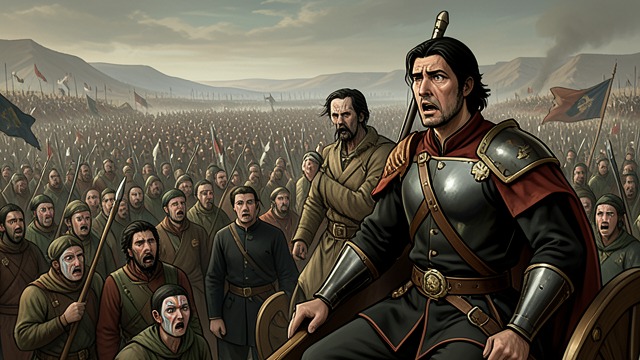
Army Inspection
A Charged Beginning
Arjuna surveys the opposing lines from Arjuna's chariot and recognizes teachers, elders, relatives, and friends.
The Moral Shock
The battlefield becomes a family scene rather than an abstract contest. His knowledge of personal bonds overwhelms his warrior identity.
Narrative Importance
The entire dialogue begins because public duty has collided with private compassion.
Physical Collapse
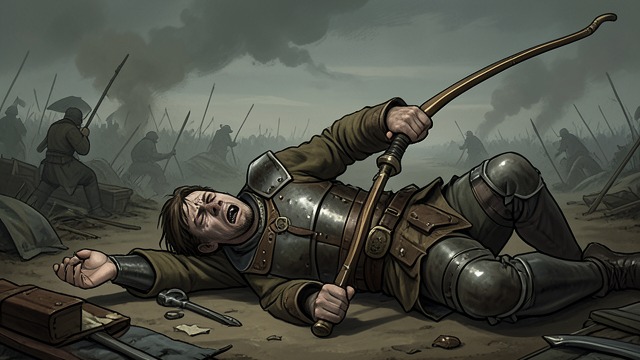
Physical Collapse
Symptoms of Grief
Arjuna's limbs weaken, his mouth dries, his body trembles, and Gandiva slips from his hand.
Inner Disintegration
His physical collapse expresses a crisis of judgment. He can no longer separate military action from the destruction of his own world.
Narrative Importance
The fallen bow turns an impending battle into a philosophical emergency.
Argument Against War
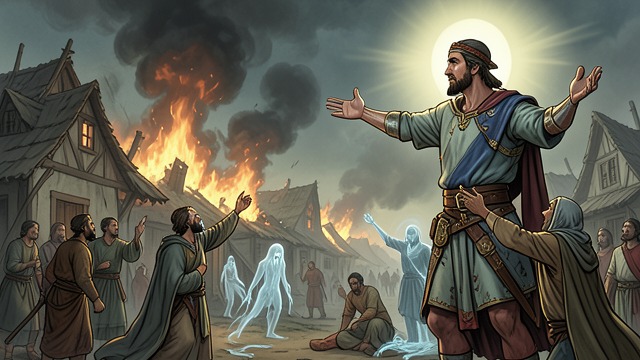
Argument Against War
Family Destruction
Arjuna argues that victory, sovereignty, and pleasure have no value if they require killing revered kinsmen.
Social Consequences
He fears that the destruction of families will dissolve customs, corrupt social order, and condemn both the living and their ancestors.
Narrative Importance
His refusal is not cowardice alone; it is a comprehensive moral case against violence.
Discipleship
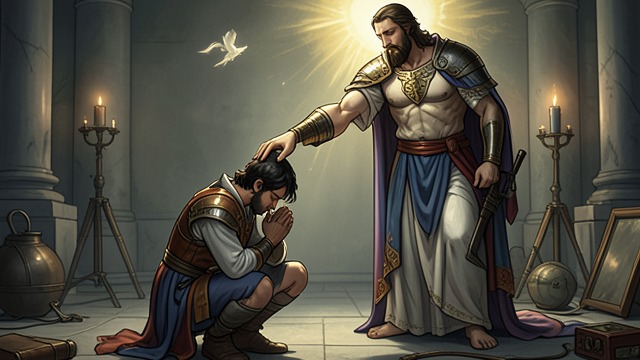
Discipleship
Confessed Uncertainty
Arjuna admits that his judgment about duty has failed and asks Krishna to instruct him.
Changed Relationship
He stops speaking as an equal companion and becomes a disciple seeking an authoritative vision of the good.
Narrative Importance
This surrender gives Krishna permission to transform grief into a systematic teaching.
Renewed Resolve
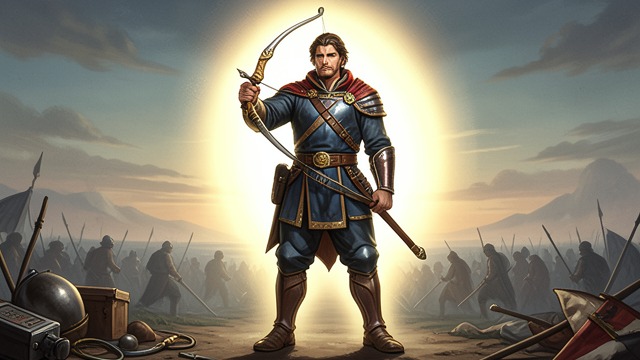
Renewed Resolve
Restored Memory
After hearing Krishna's teachings, Arjuna declares that his delusion has vanished and his doubts are dispelled.
Chosen Action
He accepts Krishna's command and prepares to act without the earlier attachment to personal gain.
Narrative Importance
The dialogue resolves the crisis not by removing action, but by changing the consciousness behind it.
at the opening of the battle
moments after the army inspection
during the first exchange of the dialogue
at the turning point of the opening crisis
near the dialogue's conclusion
