
The Tower’s Models of Marla
Bimbo Suite: A Dark Ex Lovers Erotic Thriller (The Institute Protocols)This flow follows the facility’s transformation of Marla into a designed image, a replicated ideal, and finally a ruler whose appearance carries both memory and power.
increasing Bearing strength in each event
 decreasing
Bearing strength in each eventdecreasingAn Image Before Arrival

An Image Before Arrival
A filtered reflection
The suite’s mirror shows Marla a softened version of her face before any verified physical transformation is established. The image suggests that the tower has already prepared a preferred visual template.
Reflection as instruction
The mirror does not simply report appearance; it makes a proposed identity visible and emotionally charged. Marla’s discomfort begins with recognizing a face that seems connected to her but no longer fully belongs to her.
The image provides the first model through which the facility can teach her to see herself.
The Designed Outfit

The Designed Outfit
Clothing as a script
The tower presents an outfit as the reward for repeating its mantra. Marla tells herself that she is gathering information, but the clothing and its audience-facing image frame her as a participant in the role.
Performance recorded
The mirror preserves an image of Marla responding to stimulation and smiling. The facility can use that footage to challenge her own account of unwillingness, even though the recording does not establish free consent.
The clothing becomes more than decoration: it is a costume designed to make coercion appear like self-expression.
A Room of Replicas
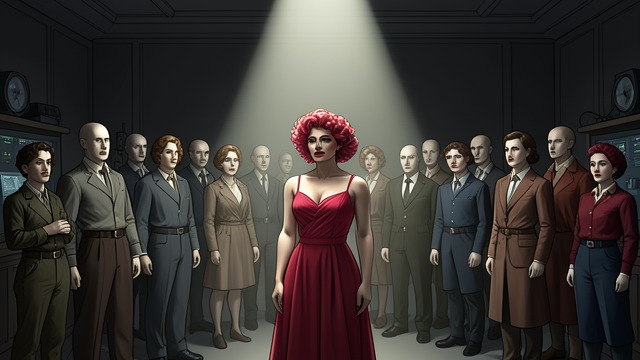
A Room of Replicas
Marla multiplied
The Penthouse contains mannequins bearing versions of Marla’s face in different styles. The display suggests that the institution has imagined her as a repeatable product rather than an individual subject.
A future made physical
The moving figures speak the mantra together, turning a visual archive into a threatening chorus. Marla and Cherry are confronted with the scale of the tower’s investment in a standardized identity.
The room transforms earlier mirror anxiety into an institutional fact: Marla’s appearance has become a model the facility intends to reproduce.
The Body as Interface

The Body as Interface
A tactical presentation
Marla enters the ceremony in a body and appearance shaped by the tower. Rather than treating appearance as proof of surrender, she uses the institution’s expectations to approach its central sensory node.
Control beneath display
The stage and cameras interpret her as a completed product, but her actions reveal an intention the system has failed to read. She turns the visual spectacle into cover for sabotage.
The scene distinguishes bodily appearance from authorship. The tower may alter what it displays, but that does not determine what Marla chooses to do.
The Doctor’s Reflection

The Doctor’s Reflection
An altered presentation
Marla now wears a tailored coat and retains the transformed appearance associated with Marnie. Her reflection combines the signs of institutional redesign with the composure of someone who has taken command.
Image without closure
The final portrait does not resolve whether this look represents self-authorship, accommodation, or both. Marla accepts the new title Doctor M without correcting the system that gives it to her.
Her appearance therefore marks a transfer of power but not a clean return to her former identity. The tower’s model of Marla has become inseparable from its new ruler.
at the first mirror encounter
after the first reward sequence
during the failed escape into the Penthouse
during Marla’s return to the ceremony
on the final morning
