Black Beauty and Joe Green Meet Again
Black BeautyBlack Beauty and Joe Green Meet Again is the reunion that restores a personal connection from Black Beauty’s early life just as the horse is being considered for a new home. Joe, now a grown groom, identifies Black Beauty by the marks that remain from his former life; Black Beauty responds to the recognition with affection. The encounter also establishes the terms of his next chapter: a cautious trial becomes a permanent place where he is treated kindly and given easier work.
Circumstances of the Reunion
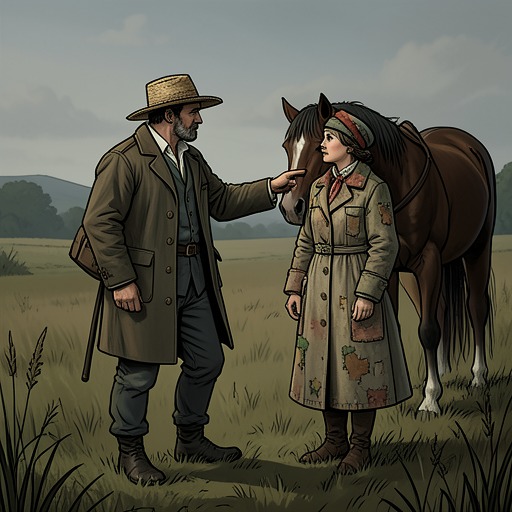
By the time of the meeting, Black Beauty has passed through serious hardship and is being offered to a household that wants a safe horse. Mr. Thoroughgood brings him to a modest, low-built house with a lawn and shrubbery, where Miss Blomefield, Miss Ellen, and another sister come out to inspect him. Miss Ellen likes his appearance, but the horse’s damaged knees give one of the women reason to fear that he might fall again. Mr. Thoroughgood explains that a horse can bear blemishes through a driver’s carelessness rather than through any fault of its own, and offers Black Beauty on trial instead of pressing the women to accept him.
The setting matters because this is not an immediate rescue completed by a single act. Black Beauty must first be judged for the work and safety he can offer, while the household weighs his visible condition against his character. His history is present in his knees, but Mr. Thoroughgood asks the women to consider the possibility that the damage came from mistreatment rather than from any inherent unsoundness or bad temper.
Joe Recognizes Black Beauty
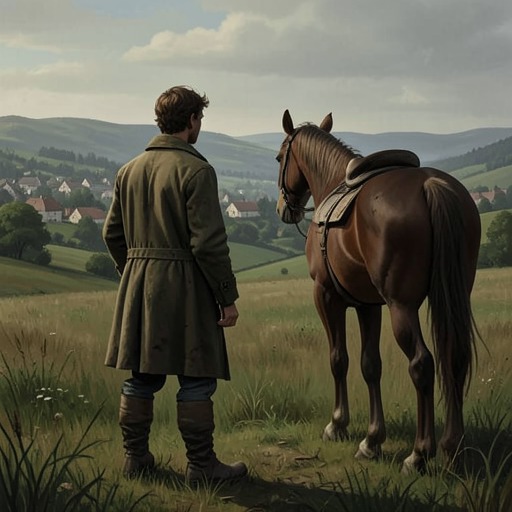
After Black Beauty is led to the new stable, a groom notices that his white forehead star resembles the mark of a horse he once knew. He also recognizes the horse’s height and finds a small knot on the neck where Black Beauty had been bled. Looking more closely, he sees the little patch of white hair on the back that John Manly had called Beauty’s three-penny bit. Taken together, these details make the identification certain: the horse on trial is Squire Gordon’s old Black Beauty.
The groom is Joe Green. His recognition is immediate and joyful, but the years have changed both sides of the encounter. Black Beauty cannot identify Joe by appearance: the boy he knew has become a grown man with a man’s voice and black whiskers. Yet Black Beauty understands who Joe is, and raises his nose toward him in an effort to show that they are friends. The reunion therefore works through unequal but reciprocal recognition: Joe reads the signs on the horse’s body, while Black Beauty answers the warmth of Joe’s response.
From Inexperience to Trust
The meeting recalls an earlier moment when Joe, still young and not yet skilled in horse care, looked after Black Beauty after an exhausting journey. He rubbed the horse down but, thinking that Black Beauty was too hot, did not cover him with a warm cloth; he also gave him cold water. Black Beauty became ill, and John Manly later attended to him with warm coverings and gruel. That episode marked the limits of Joe’s knowledge, not a lack of concern: he had tried to do what he thought was right.
Joe’s development is also visible in a later incident at the brick-yard. When he saw a worker flogging two horses, he went to alert Mr. Clay and agreed to give evidence if the man were brought before a magistrate. John Manly praised him for intervening, insisting that cruelty was everyone’s concern when it could be stopped. The reunion presents the grown Joe as a dependable groom, while the earlier episodes show how care becomes more effective when kindness is joined to knowledge and the willingness to act.
A Trial Becomes a Home
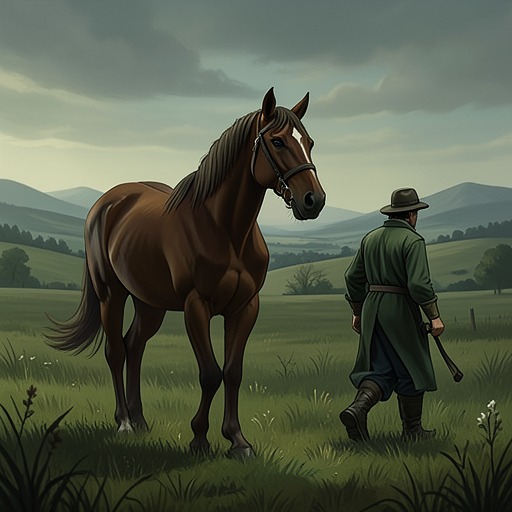
On the afternoon of the recognition, Miss Ellen drives Black Beauty in a low park chair, with Joe accompanying her. She handles him well and is pleased with his paces. Joe tells her that he is sure the horse is Squire Gordon’s former Black Beauty, and Miss Ellen decides to write to Mrs. Gordon to tell her that her favorite horse has come to them. The old connection thus reaches beyond the two figures in the stable: Black Beauty’s identity is carried back to the household where he was once loved.
Black Beauty is driven regularly for about a week. Once he proves safe, Miss Lavinia ventures out in the small close carriage, and the women decide to keep him and call him by his old name. The trial has become an acceptance, but one grounded in evidence of how he behaves rather than in sentiment alone. The women see his blemish; his conduct gives them reason to trust him.
Meaning and Outcome
A year later, Black Beauty is still in this home. His work is easy and pleasant, his strength and spirits are returning, and Joe has become the kindest of grooms. Mr. Thoroughgood expects that, in Joe’s care, the horse may last until twenty years of age or longer. The reunion is therefore not only a recognition scene but a practical change in Black Beauty’s prospects: the man who once lacked experience now helps provide the steady care that the horse needs.
The episode also gathers several strands of the book’s concern with humane treatment. Black Beauty is identified through the traces of his past, yet those traces do not define what he can do or the care he deserves. Joe’s response joins affection to responsibility, and the new household’s decision follows a period of observation rather than a snap judgment. In the reunion, an old friendship becomes the beginning of a safer working life.