Bronchitis
Black BeautyBronchitis is the serious illness that nearly kills Jerry Barker after a long, cold night driving a cab during the New Year celebrations. Told through Black Beauty’s observant account of the household and stable, the episode links Jerry’s worsening cough to the demands of his work, shows the strain his illness places on his family, and ends with recovery that requires him to give up cab driving.
Diagnosis and Setting
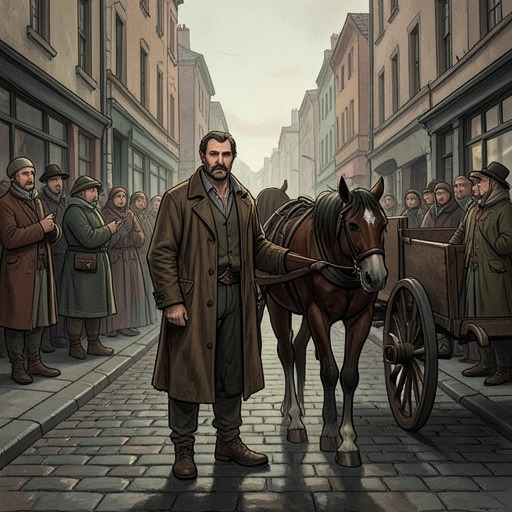
The illness follows a particularly demanding period for cabmen and their horses. In the Christmas week, Jerry has been taking much of the evening work, while his own cough has already become troublesome. On New Year’s evening, he takes two gentlemen to a house in a West End square and is instructed to return at eleven. Jerry arrives punctually, but the clients do not come out until a quarter past one. The delay leaves him and Black Beauty waiting outside for two hours and fifteen minutes.
The weather turns to sharp, driving sleet, with no shelter at the door. Jerry tries to pull Black Beauty’s cloth farther over the horse’s neck, then stamps and walks to keep warm. When the effort sets off his cough, he sits in the cab with his feet on the pavement, partly sheltered. These details place the onset of the crisis within an ordinary work obligation: the passengers decide when the cab is needed, while the driver and horse bear the cost of waiting in the cold. The episode does not establish a medical cause for Jerry’s bronchitis, but it presents his illness against this exposure and his already bad cough.
The Night’s Work and Its Immediate Aftermath
At a quarter past one, the gentlemen finally emerge and direct Jerry to drive them nearly two miles. Black Beauty’s legs are numb with cold, and the horse fears stumbling. The passengers neither apologize for the wait nor accept the fare without complaint. Jerry charges what is due for the two hours and a quarter of waiting; the money is hard-earned after an evening in which he and his horse have endured the weather and the delay.
When they reach home, Jerry can scarcely speak, and his cough is dreadful. Polly Barker does not question him before helping with the immediate tasks. Jerry asks her to get something warm for Black Beauty and prepare gruel for him. Despite his own difficulty breathing, he rubs down the horse and fetches extra straw for the bed. Polly brings a warm mash, and the household settles for the night. The scene makes the contrast plain: Jerry is seriously unwell, yet continues to care for the horse before attending to his own needs.
Diagnosis and Family Anxiety
The next morning, Harry Barker comes to the stable late, cleans and feeds the horses, and restores the straw as if it were Sunday. He is unusually quiet. At noon, Dolly Barker accompanies him and is crying; from their conversation, Black Beauty understands that Jerry is dangerously ill and that the doctor regards the case as serious. The family’s distress becomes visible through these visits and changes in routine, even though the horse narrator does not enter the sickroom.
On the third day, Governor Grant comes to the stable to ask after Jerry rather than going directly to the house. Harry tells him that Jerry is very bad, has been diagnosed with bronchitis, and may take a turn that night. Grant acknowledges the danger but urges Harry to keep hope. Harry then reports the doctor’s view that Jerry has a better chance than most patients because he does not drink: with his fever high, the doctor believed alcohol would have made the illness much more dangerous. The exchange presents abstinence as a concrete factor in the physician’s prognosis, not as a guarantee of recovery. Grant’s concern and Harry’s quick appeal for reassurance show how uncertain the family remains.
Recovery and Consequences
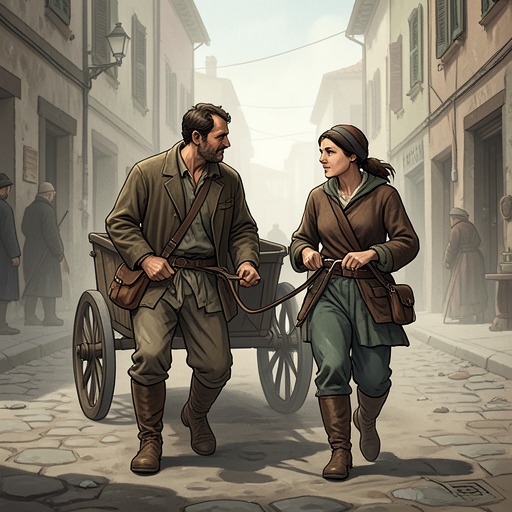
Jerry improves steadily, but the doctor tells him he must never return to cab work if he wants to live to old age. The decision to leave the work is therefore not a simple return to his previous life: the illness forces a lasting change in how the family can earn its living. The children consult about what their parents will do and how they might help bring in money, making the economic consequences part of the recovery story rather than an afterthought.
Governor Grant helps during Jerry’s illness by taking Hotspur out for a week or more, explaining away his assistance as convenient because his own horses need rest. His practical support gives the family help with the cab work while Jerry is incapacitated, though the evidence does not specify how the children ultimately earn money or what permanent arrangements they make. Jerry’s steady recovery is confirmed, but the doctor’s warning remains decisive: health depends on not resuming the occupation that has supported the household.
Narrative Significance
Because the story is narrated by Black Beauty, Jerry’s bronchitis is shown indirectly, through the cough heard on the journey, the return home, the family’s altered behavior, and reports passed between Harry and Governor Grant. The horse can witness the late work and its immediate domestic aftermath, but learns the diagnosis from the people caring for Jerry. This limited vantage keeps the illness embedded in the shared life of the stable rather than turning it into a detached medical account.
The episode also connects human and animal working conditions without treating their experiences as identical. Jerry’s illness threatens his ability to earn a living; Black Beauty, meanwhile, has been left standing in sleet and nearly stumbles on the cold journey home. Their exposure occurs during the same job, and Jerry’s first concern at home is still the horse’s warmth and comfort. The eventual prohibition on cab work marks a clear consequence of the diagnosis: recovery is possible, but preserving Jerry’s health requires the household to reconsider the labor on which it depends.