Dinah Brown Returns Home on Sunday to Visit Her Ailing Mother
Black BeautyDinah Brown’s Sunday journey to visit her dangerously ill mother turns a day normally reserved for rest into an act of urgent care. Polly Barker and Jerry Barker agree to carry her more than ten miles into the country, adapting the trip to Dinah’s weakness and the needs of the tired horse. Through Black Beauty’s account, the excursion joins a family emergency to a small but telling choice about what humane rest means.
The urgent request
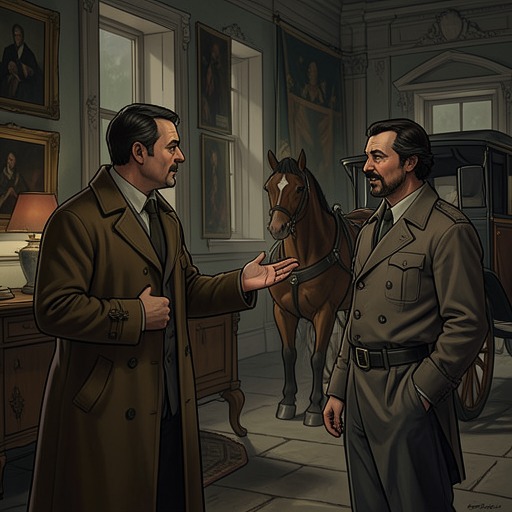
The Barkers had expected Sunday to be a day of rest after returning home tired the night before. Their usual practice was not to work the cab on Sundays. That plan changes when Polly arrives while Jerry is cleaning Black Beauty and explains that Dinah has received a letter: her mother is dangerously ill, and Dinah must go at once if she hopes to see her alive.
The distance is more than ten miles, out in the country. Taking the train would still leave Dinah with four miles to walk, an impossible prospect given how weak she is and that her baby is only four weeks old. Dinah asks Jerry to take her in his cab and promises to pay him. The urgency of the request is therefore not simply a matter of convenience: the available alternative still requires a substantial walk that she cannot manage.
Jerry’s hesitation is about losing the day of rest, not the fare. He points out that both he and the horses are tired. Polly answers by recognizing that the loss falls on the whole household, while arguing that they should treat others as they would wish to be treated themselves. She imagines what she would want if her own mother were dying and reasons that helping Dinah need not violate the purpose of the Sabbath. Her appeal turns the question from whether Sunday work is normally avoided to whether this particular journey is necessary and compassionate.
A journey adapted to the horses
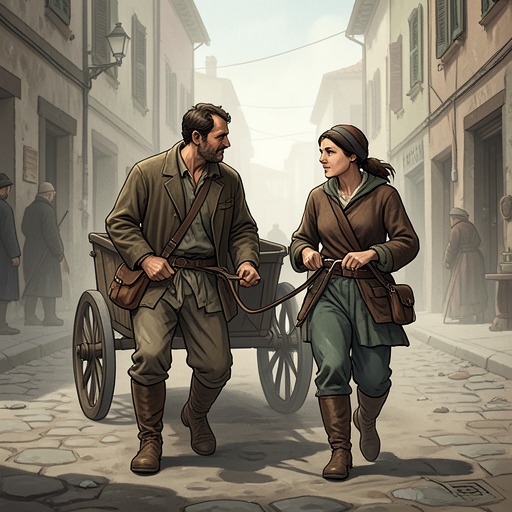
Jerry agrees to be ready at ten o’clock, but looks for a way to reduce the strain on the horse. He asks Polly to approach butcher Braydon for the loan of his light trap, which Braydon does not use on Sundays. The borrowed vehicle is a light, high-wheeled gig, chosen in place of the heavier four-wheeled cab. Polly also prepares bread and cheese for Jerry to take with him, while planning to serve the meat pie at an early tea when he returns.
Black Beauty is selected for the journey, and the party sets out at ten. The narrator describes a fine May day and the change of surroundings as they leave town: fresh air, the smell of grass, and soft country roads recall earlier, freer days. The lighter vehicle seems scarcely to burden him after the cab, and the journey itself begins to restore his spirits. The practical arrangements thus serve both Dinah’s urgent need and the horse’s condition; Jerry does not treat the exception to the rest day as permission to ignore the animals’ tiredness.
Arrival and a rare freedom
Dinah’s family lives in a small farmhouse reached by a green lane, beside a meadow shaded by trees. Two cows are feeding there. A young man from the household invites Jerry to bring the trap into the meadow and offers the cowshed for Black Beauty, apologizing that the family has no better stable to provide. He also welcomes Jerry to share their dinner, though the illness has left the household distressed.
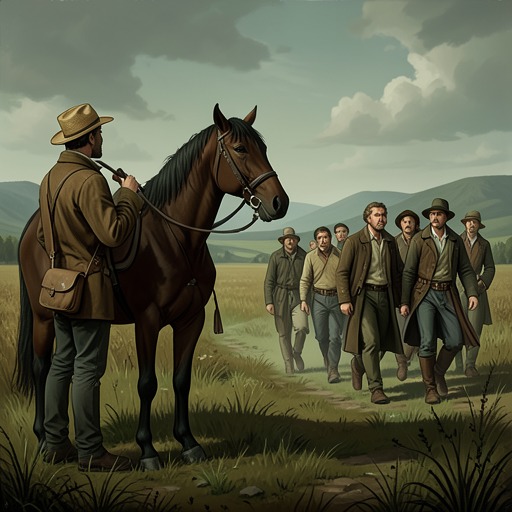
Jerry declines the meal because he has brought his own, and chooses to walk in the meadow. Once Black Beauty’s harness is removed, the horse can scarcely settle on one activity: he eats grass, rolls, rests, and gallops in turn. Jerry, too, makes use of the pause, sitting beneath a shady tree, listening to the birds, singing, reading from his small brown book, and walking beside a brook. He gathers flowers and hawthorn and ties them with long sprays of ivy. He has also brought oats for Black Beauty, giving the horse a meal as well as time out of harness.
The freedom is especially meaningful because Black Beauty has not been in a field since leaving Ginger at Earlshall. The meadow does not change the purpose of the visit, but it gives the journey a second consequence: while Dinah travels to her family in a time of crisis, the horse and driver receive a peaceful interval away from town work.
The return and the meaning of the exception
The party returns gently. Jerry tells Polly that he does not feel he has lost Sunday: for him, the birdsong and his own participation in the day’s quiet have made the outing compatible with its spirit. He describes Black Beauty as lively after the meadow stop. When Jerry gives the gathered flowers to Dolly Barker, she responds with delight, bringing the country outing’s small gift back into the household.
The episode sets the Barkers’ ordinary refusal of Sunday work against a specific need that makes an exception worthwhile. Jerry does not dismiss the value of rest; his concern for the tired horses shapes the choice of a lighter vehicle, and the stop in the meadow allows Black Beauty to graze, move freely, and rest. Polly’s appeal to reciprocity supplies the moral reason to go, while the arrangements make the journey more considerate in practice. The narrative leaves the mother’s condition unstated, but shows Dinah being carried toward her family rather than left to face an exhausting walk with her newborn.