Dolly Barker
Black BeautyDolly Barker is Jerry Barker and Polly Barker’s daughter and Harry Barker’s sister. In the family’s cab life, she takes part in practical work, brings food to her father when he is on duty, and shares the household’s affectionate bond with its horses. Her story is marked by small acts of care and by a painful farewell: when the family leaves for a new home, she cries and kisses Black Beauty, the horse they cannot take with them.
Family and Stable Work
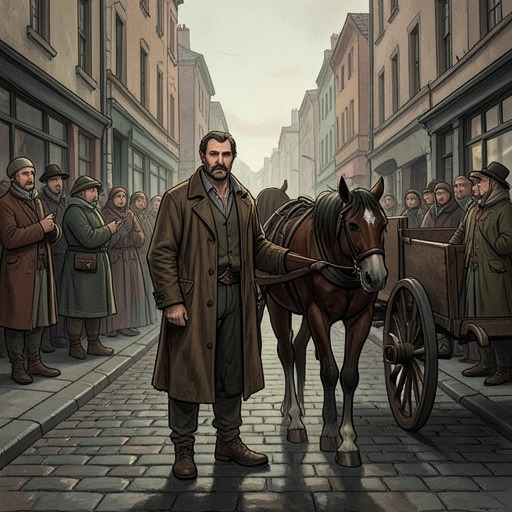
Dolly’s place in the family is shown through shared labor rather than a separate account of her upbringing. In the mornings, she and Polly Barker come to help prepare the cab: they brush and beat its cushions and clean its glass while Jerry Barker grooms Black Beauty in the yard and Harry Barker rubs the harness. The work belongs to the whole household, and the account emphasizes that it is done early, amid laughter and good humor rather than scolding. That cheerful routine affects the horses as well: Black Beauty recalls that the family’s ease put him and Captain in better spirits.
The scene makes Dolly an active participant in the family’s working life. Her contribution is practical and specific, yet the cab is not presented as Jerry Barker’s burden alone. The children help with its daily preparation, and the household’s shared effort creates a setting in which work and affection coexist. Dolly is seen alongside her mother and brother, contributing to the routine without being assigned responsibilities beyond those described.
Care for Jerry Barker
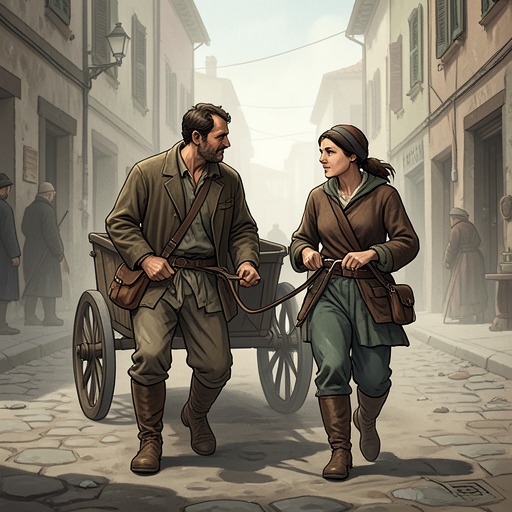
Dolly also brings her father food while he waits at the cab stand. When the weather is cold and the streets are difficult for horses and carriages, she sometimes appears with hot soup or pudding that Polly Barker has prepared. She watches from a street corner to see whether Jerry Barker is at the stand, then hurries back with the food in a tin or basket. The journey crosses a street often crowded with horses and carriages; the men at the rank are fond of her and would help her cross safely if Jerry Barker could not do so himself.
One cold, windy day, Dolly stands beside Jerry Barker as he begins to eat from a basin. A gentleman approaches and is about to take the cab, but tells Jerry Barker to finish his soup first and offers to wait and see Dolly safely onto the pavement. Jerry Barker recognizes the gesture as unusual consideration for a working man and his child. Dolly does not speak in the episode, but her presence makes visible the family care behind her father’s labor: the meal has been prepared at home, carried through the busy street, and shared at the stand.
A Child in the Family’s Wider Life
Dolly appears in a brief episode of conflict when boys throw dirt over her and insult her. Harry Barker rushes in angrily after defending her. Jerry Barker comforts Dolly and sends her to Polly Barker, suggesting that she stay home that day and help her mother. He approves of Harry’s defense of his sister, while also drawing a line between protecting her and bringing election quarrels into the household. Dolly’s role in the scene is that of the child who has been targeted and comforted; the account gives no further response from her, and does not make her responsible for the wider political dispute.
The episode places her within a family that responds directly to her distress. Jerry Barker’s first action is to reassure her and return her to her mother’s care. In contrast with the public argument around political colors, the family’s immediate concern is for Dolly herself and for the safety and solidarity of the household.
Departure and Farewell
A letter from Mrs. Fowler brings news of a possible future beyond cab work. Polly Barker had written to ask to be kept in mind if Jerry Barker ever gave up driving. The reply describes a cottage near Mrs. Fowler, with a garden, henhouse, and apple trees; when her coachman leaves in the spring, she will want Jerry Barker to take his place. The letter also points to possible work for Harry Barker and a good school for Dolly. Dolly carries the news into the stable, where Harry is working, and recounts the family’s prospects: Polly Barker is both laughing and crying, while Jerry Barker is happy. Her announcement makes her the messenger of a change that promises a different home and future for the family.
The move also separates Dolly from Black Beauty. By then, Black Beauty has spent three years in cab work with Jerry Barker, and the work has reduced his strength even though Jerry Barker treated him well. When the family departs, Jerry Barker is not able to go out, and Black Beauty never sees him again after New Year’s Eve. Polly Barker says she wishes they could take the horse; Dolly is crying and kisses him, while Harry Barker strokes him in silence. Dolly’s farewell gives the departure its most direct expression of attachment. The family’s change of circumstances carries them away, but her tears and kiss make clear that Black Beauty has been part of the household’s life, not merely its transport.