Ginger
Black BeautyGinger is a chestnut mare in Black Beauty, first encountered as a difficult stablemate and later revealed as a horse whose early treatment and repeated exploitation shaped her life. Her history contrasts with Black Beauty’s gentler upbringing: she is repeatedly handled as property to be trained, displayed, and worked, while the bond between the two horses briefly offers companionship across those changes. Her last appearance leaves her fate unresolved, making her story a particularly stark example of how a working horse can be used up and passed from owner to owner.
Identity and Introduction
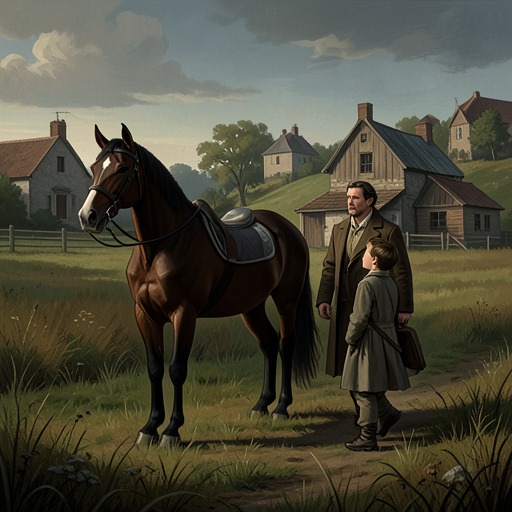
Ginger first appears at Birtwick as a tall chestnut mare with a handsome, long neck and a reputation for biting and snapping. She resents being moved from her box to make room for Black Beauty, and explains the change as an indignity. Merrylegs tells Black Beauty that Ginger once bit James Howard, which made Miss Flora and Miss Jessie wary of entering the stable; he hopes the girls will visit again now that Ginger has left the box. Her conduct is presented as a real difficulty for those around her, but not as an unexplained trait. Merrylegs has heard that she believes nobody has ever been kind to her, and suspects that she was badly treated before arriving at Birtwick. He also points out that John Manly, James Howard, and the household treat horses kindly, leaving Ginger a chance to settle there.
The book gives readers Ginger’s own account through Black Beauty’s first-person recollections. In a conversation in the paddock, she asks about his upbringing and training, then measures her own experience against his. Where Black Beauty remembers patient handling and kindness, Ginger describes little affection or attention. Taken from her mother after weaning, she was kept with other young colts without forming close attachments. The man responsible for them provided food and winter shelter but, as she recalls it, showed no interest in their welfare beyond those necessities. Boys used a footpath through the field and sometimes threw stones to make the horses run. Ginger says this helped teach the young horses to regard people as enemies.
Early Training and the London Carriage
Ginger describes her breaking-in as an abrupt exercise in force rather than an introduction to work. Several men cornered her, restrained her, put on a halter and bit, and dragged her away while another urged her forward. She acknowledges that she was spirited and difficult to handle, but also recalls being confined after a life of movement in the meadows. The contrast with Black Beauty’s training is central to her explanation of herself: she believes a kinder beginning might have given her a better temper, but doubts that she can now change it.
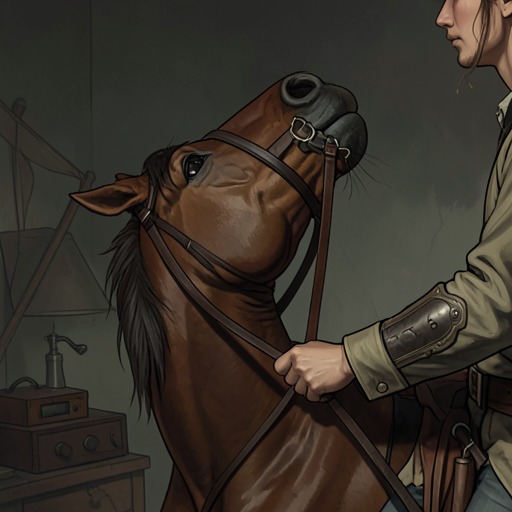
After training, a dealer bought Ginger to match another chestnut horse. She was later sold to a fashionable gentleman and taken to London. The dealer had already driven her in a check-rein; with her new owners, the rein was fastened more tightly because the gentleman and coachman thought the resulting posture looked stylish. Ginger describes being made to hold her head high for long periods, with little freedom to move it, and being driven in two bits. Waiting outside parties or entertainments was especially difficult: if she fretted or stamped, the whip followed. Her account shows fashion shaping the equipment and demands imposed on her, while her discomfort mattered less than the appearance of the carriage horses.
A Brief Friendship and Decline
Ginger and Black Beauty become friends at Birtwick. The paddock gives them room to stand and talk, and Ginger takes a particular interest in how Black Beauty was raised and trained. Their differences do not prevent closeness; instead, the conversation helps him understand why her temper has become defensive. When Black Beauty is injured and confined to a small meadow, Ginger is brought there after being turned out to rest from the effects of hard riding. She and Black Beauty welcome each other, but Ginger’s arrival is not a reunion arranged for their pleasure: she has been sent away from work because her health has been ruined.
Ginger explains that Lord George ignored a groom’s warning that she was strained and unfit for a steeplechase. He urged her to keep up with the leading horses, and she pushed herself through the race. She finished among the first three, but the exertion left her unable to continue as before. Ginger sees a grim parallel between them: Black Beauty has been brought down by a drunk rider, while her own decline followed a rider’s disregard for advice. Their diminished strength does not erase their affection. They no longer gallop together as they once did; instead, they feed, lie down, and stand close beneath a lime tree while they wait for the family to return from town.
Repeated Sales and Final Encounter
Ginger’s rest at Earlshall lasts a year, after which she is judged fit to work and sold to a gentleman. For a time she manages, but a longer-than-usual gallop brings back the old trouble. She is rested and treated, then sold again. The pattern repeats, each transfer taking her lower in the market until she is bought by a man who keeps cabs and horses for hire. Once her weakness is known, she is assigned to a low-grade cab and worked continually. The cab owner expects to recover the purchase price through her labor, while the driver must earn enough to pay the daily hire. Ginger describes work continuing through the week without a Sunday rest, leaving the horse caught between the demands of owner and hirer.
Black Beauty next recognizes Ginger beside his cab at a park where carriages are waiting while music plays. Her former glossy neck and lively appearance have given way to a worn, visibly weakened condition. She tells him that she once resisted ill-treatment, but now sees resistance as futile because people have greater power. She says Black Beauty is the only friend she ever had. When her driver returns, he tugs her out of the line and takes her away, ending their conversation without any prospect of rescue or reunion.
Some time later, a cart carrying a dead chestnut horse passes the cab stand. Black Beauty notices a white streak on its forehead and believes it may be Ginger; he hopes so because death would mean an end to her suffering. The account does not confirm the horse’s identity, and Ginger’s death therefore remains uncertain. That uncertainty is part of the ending’s force: the reader sees the conditions under which she is consumed by work, but is not granted a clear report of what finally happened to her.
Character and Narrative Significance
Ginger’s story challenges the idea that a horse’s difficult temperament can be separated from the life that produced it. At Birtwick, Merrylegs calls her biting a bad habit and believes the kind people there give her a fair chance to improve. Ginger’s account supplies the earlier causes that his view cannot include: separation from her mother, neglect, harassment in the field, forceful training, and later treatment driven by fashion. The difference between these perspectives does not make her actions harmless; it gives them a history.
Her repeated changes of ownership also widen the novel’s focus from individual kindness to the structures of horse use. The check-rein turns a preferred fashionable appearance into a constraint; racing disregards a groom’s warning; and the cab system divides payment and responsibility among owner and driver while Ginger bears the work. Through Black Beauty’s sympathetic but limited witness, Ginger is not merely a cautionary example: she speaks about her own memories, judgments, and attachment. Her brief reunion with Black Beauty recalls the friendship they built in the paddock, while her uncertain fate leaves that bond—and the harm inflicted on her—without a reassuring resolution.