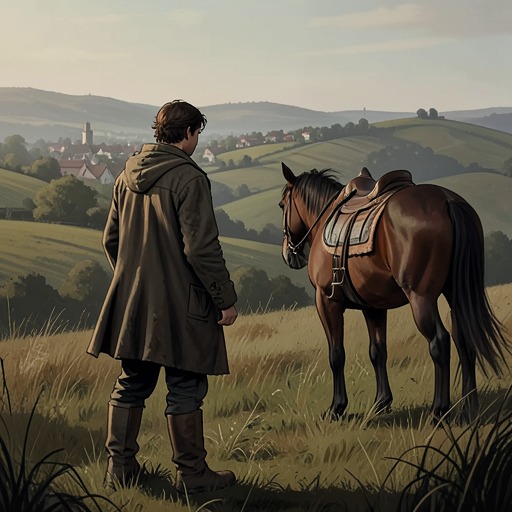
Ginger Breaks Free of the London Carriage
Black BeautyGinger Breaks Free of the London Carriage is a turning point in Ginger’s account of fashionable carriage work: a horse willing to work is subjected to restraint for appearance, and her violent resistance ends her place there. Recounted to Black Beauty as part of Ginger’s remembered past, the episode makes the conflict between a stylish turnout and a horse’s welfare concrete, while showing how people misread the distress their own practices produce.
From Dealer to London
After her breaking in, a dealer bought Ginger to match another chestnut horse. He drove the pair together for several weeks before they were sold to a fashionable gentleman and sent to London. Although Ginger had already been driven with a check-rein, the new establishment fastened hers far tighter. Her account identifies the reason as appearance: the gentleman and coachman thought the arrangement made the horses look more stylish.
The horses were driven in parks and other fashionable places, and sometimes had to wait for hours while their mistress attended a party or entertainment. The strain was therefore not a brief inconvenience but part of the work expected of Ginger. Even when she fretted or stamped while waiting, the response was to lay on the whip rather than ease the restraint.
Restraint and Misjudgment
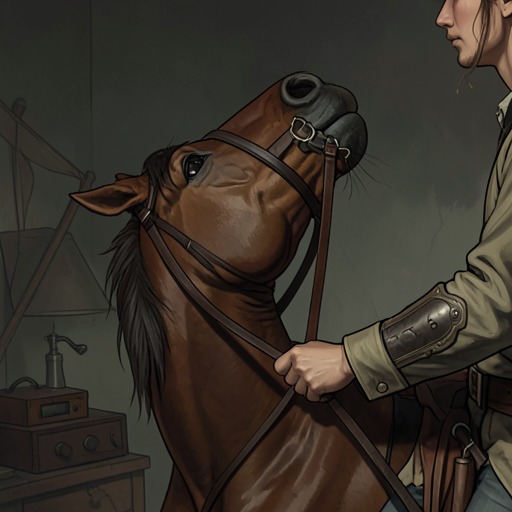
Ginger describes being made to hold her head high for hours, with little freedom to move it. She also wore two bits, one of them sharp, which hurt her mouth. The combined restraint caused pain in her neck and left her feeling that her windpipe was affected; she feared that a longer stay would damage her breathing. Her account links these physical effects to the repeated demands of fashionable display, not to an unwillingness to work.
The gentleman left the care of the horses to his coachman and, as Ginger tells it, did not understand what the check-rein was doing to her. The coachman called her irritable and said she had not been properly trained to the rein, but offered no patient adjustment. When Ginger was miserable and angry in the stable, she received rough words or blows instead of kindness. She says she was ready to work hard; what angered her was being made to suffer for a human fancy and then blamed for reacting to it.
The Break from the Carriage
As Ginger became increasingly restless, she began snapping and kicking when people came to harness her. The groom beat her for this resistance. One day, after she had been buckled into the carriage and her head was being pulled up by the rein, she plunged and kicked with all her strength. She broke a large part of the harness and kicked herself free.
That escape ended her time at the London establishment. The episode does not present her rebellion as an unexplained vice: it follows the escalating restraint, pain, and punishment she has described. In Ginger’s telling, the immediate result is decisive—the harness that physically bound her is broken, and the place that imposed the fashionable arrangement is behind her.
Meaning Within Ginger’s Story
Because the episode is told by Ginger to Black Beauty as a recollection, her account gives the horse’s experience authority: the reader learns what the fashionable appearance concealed from the people directing the carriage. Her body’s responses—fretting, snapping, and finally breaking free—are set against the owner’s concern with style and the coachman’s mistaken diagnosis of temper. The scene turns that contrast into its central judgment: resistance is made intelligible by the treatment that precedes it.