Good places make good horses
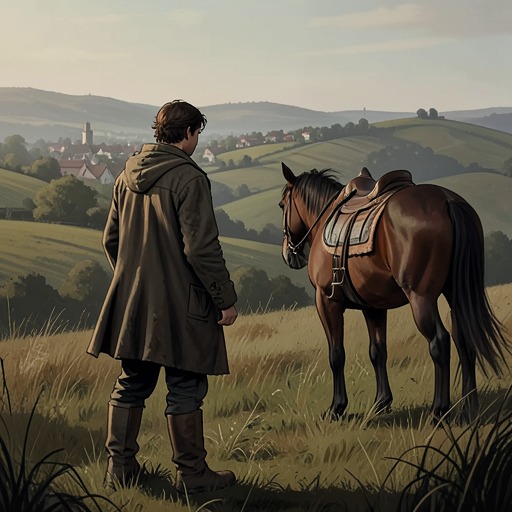
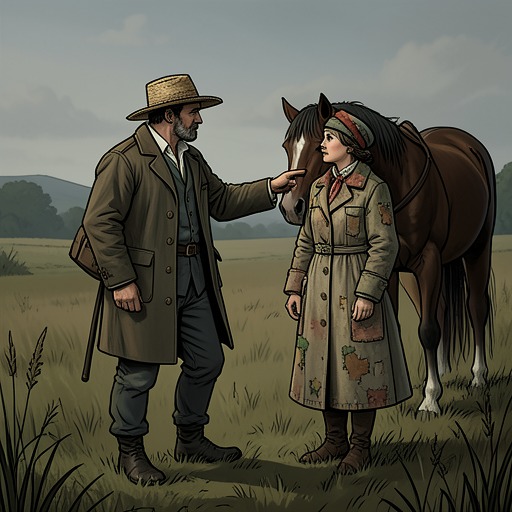
Black BeautyGood places make good horses is Merrylegs’s concise explanation of why a horse treated with kindness can answer people with patience and trust. The maxim becomes a thread through Black Beauty: the narrative repeatedly sets humane, attentive care against neglect and overwork, showing that a horse’s conduct and condition are shaped by the people and practices around it.
Meaning and Original Context
Merrylegs states the maxim while discussing boys who had treated him roughly when they were supposed to be riding under his care. He says he would not retaliate by becoming vicious: the children had been entrusted to him, and he remembers five years of kind treatment and the confidence placed in him. His choice makes the saying more than a claim about training. It describes a relationship in which a horse’s restraint and reliability are answered by human trust and care.
Merrylegs also contrasts his secure position with the fate he fears if he were to kick and be sold. As he imagines it, he might be worked under a butcher’s boy, driven hard at a seaside resort, or flogged in a cart. These are possible outcomes he invokes, not events that happen to him in the passage. Their place in his argument makes the maxim’s opposite clear: a bad situation can put a horse’s safety and well-being at risk.
Birtwick Park as an Example
The setting of Merrylegs’s argument gives it practical weight. At Birtwick Park, Squire Gordon and his household are described as kind not only to people but to animals, while their servants follow the same example. Children known to mistreat animals are corrected. The maxim thus belongs to a wider pattern of conduct, rather than to an isolated act of affection toward one favored horse.
That pattern includes efforts to change the treatment of working horses. Squire Gordon and Farmer Grey had worked for more than twenty years to do away with check-reins on cart horses. When Squire Gordon’s wife encountered a heavily laden horse with its head strained upward, she might stop and try to persuade its driver that the practice was cruel and foolish. The maxim’s idea of a good place therefore includes attention to ordinary working conditions and attempts to challenge harmful practices.
Black Beauty’s early handling supplies another example of patient care. His master waits until he is four before beginning his training, explaining that colts should not be made to work like grown horses before they are ready. The training itself introduces unfamiliar equipment, but the master uses oats, pats, kind words, and gentle handling to help Black Beauty accept the bit and bridle. In this episode, a good place is expressed through both restraint in when work begins and consideration in how it is taught.
Neglect and the Costs of Poor Care
Other episodes show why the maxim matters beyond temperament. While Black Beauty is working for Mr. Barry, he is rarely exercised despite being fed as if he were doing hard work. His keeper fails to adjust his food or provide cooling green food or bran mash, and instead gives him horseballs and draughts. When Black Beauty stumbles on fresh stones, a farrier diagnoses severe thrush and identifies dirty stable litter as a condition associated with the problem. After his feet are cleaned, his stable kept clean, and his feed changed, Black Beauty regains his spirits; Mr. Barry, having lost confidence in his grooms, decides to stop keeping a horse.
The episode distinguishes care from mere good intention. Black Beauty’s discomfort follows from inadequate exercise, unsuitable feeding, and poor stable management; improvement comes after the farrier identifies the problem and prescribes specific changes. The horse’s condition is not presented as a fixed quality of his nature, but as something that can worsen or improve with the care he receives.
The contrast becomes stark when Black Beauty collapses on Ludgate Hill after heavy work and continued urging. A farrier says that overwork, rather than disease, has left him without strength and that six months of rest might allow him to work again. Nicholas Skinner rejects the recovery period because it does not suit his business, saying he will work horses as long as they can go and then sell them. Here the bad place is also an economic arrangement: the prospect of recovery is set against an owner’s decision to prioritize immediate use and sale.
Care, Recovery, and Consequence
The book repeatedly makes care legible through its effects on the horse’s body and working life. After Black Beauty is seriously exhausted on a ride, he returns home trembling and in pain. Joe Green tries to help but does not know that the hot, wet horse needs warm coverings; John Manly later recognizes his distress, covers him, and prepares warm gruel. Black Beauty develops a serious lung inflammation and requires continued nursing. The episode qualifies any simple equation of kindness with good care: concern matters, but knowledge and attention to a horse’s needs matter too.
In another case, Black Beauty’s wounds take a long time to heal. Proud flesh is treated, and a blistering fluid is applied to his knees; the account notes that he is left with a blemish. Such outcomes give the maxim a material dimension. A horse’s experience of a place is recorded not only in its treatment at a particular moment but also in the lasting effects that care or injury may leave.
At the end of the narrative, Black Beauty finds a secure home where his work is easy and pleasant and his strength and spirits return. Joe Green is described as a kind groom, Willie treats Black Beauty as a special friend, and the family promises that he will never be sold. Black Beauty’s memory often returns to the orchard at Birtwick Park, where he imagines himself among old friends under the apple trees. The ending brings the maxim’s claim into focus: safety, humane work, and trusted relationships make possible a settled life after hardship.
Narrative Significance
The maxim is voiced by a pony reflecting on his own treatment, while Black Beauty’s autobiography gives the wider argument the form of a horse’s testimony. Episodes of training, illness, neglect, and recovery are presented through what the horse undergoes and what follows. That point of view makes human decisions about work, food, shelter, and handling visible as forces in an animal’s life.
The book does not reduce every difference between a good and bad outcome to the character of an individual keeper. Merrylegs speaks from the security he knows at Birtwick Park; the later examples expose inadequate knowledge, poor management, and commercial pressure as distinct sources of harm. Read across those contrasts, Good places make good horses is both an observation about trust and a demand that human responsibility be judged by the conditions people create for animals.