Harry Barker
Black BeautyHarry Barker is Jerry Barker and Polly Barker’s son, and a resourceful young member of the household whose work is woven into the daily life of the family cab. He is shown first through useful, cheerful labor, then through a protective but forceful response to an insult against his sister, and finally through the steady responsibilities he assumes when Jerry becomes dangerously ill. His practical skill helps the family manage both the horses and the uncertainty of its livelihood, while his plans for his own future point toward a life beyond the cab.
Identity and Work in the Family Stable
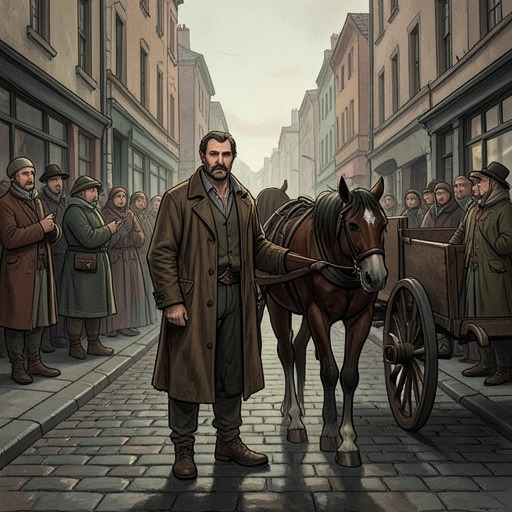
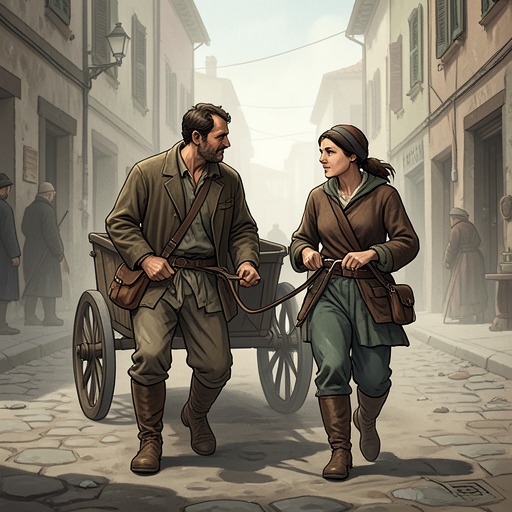
Harry takes an active part in the morning stable routine. While Jerry cleans Black Beauty in the yard, Harry rubs down the harness; Polly Barker and Dolly Barker come in to brush and beat the cushions and clean the cab’s glass. Harry is described as especially capable at stable work for a boy of his age, and as someone eager to contribute. The work is shared rather than kept apart from family life: the routine includes laughter and conversation, which improve the spirits of Black Beauty and Captain as well as making the chores more pleasant.
This early picture establishes Harry through competence and participation, not through a separate ambition or adventure. He knows how to care for equipment and help prepare the cab, and he is accustomed to acting as part of a family team. That practical grounding matters later, when Jerry’s illness leaves the household’s work and care to others. Harry’s familiarity with the stable allows him to keep the horses fed and the stalls in order even as the family’s attention shifts to his father.
Defending Dolly
Harry’s protective streak becomes visible when Dolly returns upset after boys throw dirt over her and insult her. Harry arrives angry and says that he has dealt with them so they will not insult her again. His response is forceful rather than restrained: he uses physical punishment against the boys. The episode therefore presents both his loyalty to his sister and the impulsive form that loyalty takes. He does not remain a bystander while she is humiliated, but his intervention answers an insult with violence of its own.
Jerry comforts Dolly and tells her to go to her mother, suggesting that she stay home and help Polly that day. He then turns gravely to Harry. The account records the change in Jerry’s manner but does not give the substance of what he says to his son, so it does not establish how Harry reacts or whether the incident changes his conduct. Its place in Harry’s portrayal is nevertheless clear: his courage and protectiveness are real, but so is the need for adult guidance about how to use them.
Caretaking During Jerry’s Illness
When Jerry becomes dangerously ill, Harry takes on much of the immediate stable work. He cleans and feeds the horses, sweeps the stalls, and puts the straw back carefully. The usually lively boy is notably quiet: he neither whistles nor sings. At noon he returns with Dolly to give the horses food and water. The repeated visits mark the passage of two difficult days, while the children’s changed behavior reflects how completely the family’s attention is fixed on their father’s condition. Polly remains with Jerry, and Harry keeps the ordinary duties going around that absence.
Governor Grant comes to ask after Jerry and considers the horses’ needs alongside the family’s. Jack should rest in a warm stable, he says, while the younger, energetic Hotspur needs work; without it, managing the horse may become difficult. Harry has already limited Hotspur’s corn but admits that he does not know what else to do. That detail shows both his attempts to respond and the limits of his experience: he is responsible for the animal but does not pretend to have the knowledge to solve the problem alone.
Grant offers to take Hotspur out each day and give Polly half of whatever the horse earns, helping meet the cost of feeding the horses while Jerry recovers. Harry accepts the practical help, and Grant and Harry harness Hotspur and take him out. Grant continues for more than a week, brushing aside Harry’s thanks by presenting the arrangement as convenient for his own horses, which also need rest. Harry’s part is modest but important: he helps make the arrangement possible and receives assistance without the text turning the family’s hardship into a solitary test of endurance.
Plans Beyond Cab Work
As Jerry recovers, Dolly brings Harry news that Mrs. Fowler has offered the family the prospect of a move to the country. An empty cottage nearby has a garden, a henhouse, and apple trees; Mrs. Fowler’s coachman is expected to leave in the spring, and local families may have work for Jerry and the children. Harry welcomes the plan as a good fit for his parents, but he is definite about his own preference: he does not want to become a page-boy in tight clothes and rows of buttons. He would rather work as a groom or gardener.
The family decides to move once Jerry is well enough and to sell the cab and horses as soon as possible. Harry’s preference gives the proposed change a personal dimension: he is not merely being carried along by his parents’ decision, but can imagine the kind of work he wants to do. The move also marks a turning point for the household. The cab routine that has organized the family’s days is to end, while Harry’s stable experience may remain useful in the groom’s work he hopes to pursue.
Character and Narrative Role
Harry is defined by concrete service: preparing the cab, caring for the horses when his father cannot, and helping his family respond to an uncertain period. His defense of Dolly shows a more volatile side, complicating the image of the dutiful helper without displacing it. During Jerry’s illness he is quiet and dependable, yet he recognizes when Hotspur’s needs exceed his knowledge and accepts Governor Grant’s assistance. His stated wish to become a groom or gardener extends this practical identity into the family’s possible future.
Through Harry, the domestic consequences of Jerry’s illness become visible in the stable as well as in the house. The horses still need food, cleaning, exercise, and suitable arrangements even while the family is focused on Jerry. Harry’s work connects those responsibilities, and his willingness to take them on helps the household through the interval before its planned move. His contribution is not a dramatic rescue; it is the accumulated labor and judgment of a boy who is learning to care for both his family and its animals.