Horses
Black BeautyHorses in Black Beauty are not merely the means by which people travel or work: their first-person accounts make their comfort, fatigue, illness, and need for considerate handling central to the story. From a foal’s sheltered early life to the exhausting conditions imposed on hired and cab horses, the book contrasts humane care with ignorance and economic exploitation, showing how human choices become consequences in animal bodies and lives.
Early Life and Training
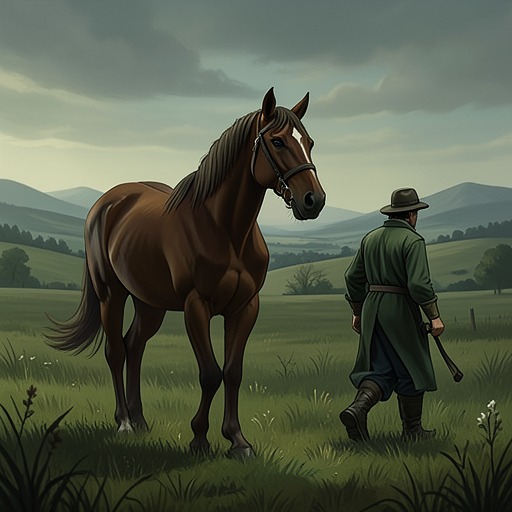
Black Beauty’s earliest remembered home is a meadow with a clear pond, shady trees, water-lilies, a grove of fir trees, and a brook below a steep bank. As a foal, Black Beauty lives on the mare’s milk, stays beside her by day, and lies close to her at night. The pair shelter in the trees in hot weather and in a warm shed when it is cold. Once Black Beauty can eat grass, the mare goes out to work during the day and returns in the evening. This beginning establishes both the horse’s dependence on maternal care and the place of work in a horse’s life.
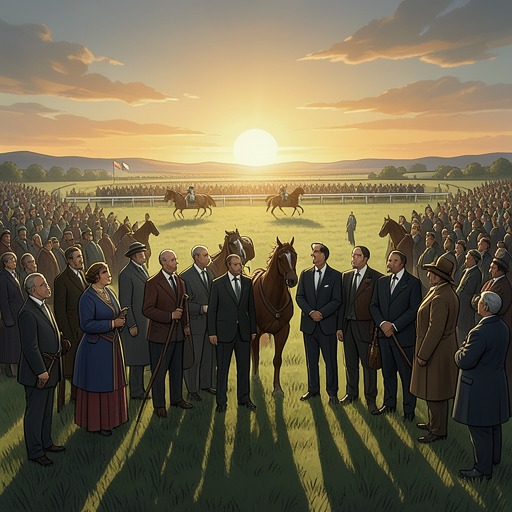
At four, Black Beauty is examined by Squire Gordon, who watches the horse walk, trot, and gallop before judging that the young horse should be broken in. The term describes a broad education in human use: wearing saddle and bridle, carrying riders, learning harness, pulling a vehicle, and responding to a driver’s pace. It also demands stillness and obedience, even when a horse is tired or hungry. Black Beauty initially finds the bit uncomfortable, but the owner’s oats, pats, kind words, and gentle handling help the horse accept the bridle. The episode distinguishes necessary training from the manner in which it is carried out: instruction can impose control, but patience affects how that control is experienced.
Care, Work, and Humane Handling
The treatment of horses at Birtwick offers a sustained contrast to harsher practices. The household’s concern extends to animals as well as people, and village children who mistreat creatures are corrected. Squire Gordon and Farmer Grey have worked for years to end the use of check-reins on cart horses. When the mistress encounters a heavily laden horse with its head strained upward, she may stop and explain to the driver why the practice is cruel and foolish. Humane treatment appears here not just as private kindness but as an effort to change customary handling.
Elsewhere, the difference between knowledge and neglect is measured in practical care. After Black Beauty develops tender feet, a farrier diagnoses thrush and associates the condition with foul, uncleared litter. The recommended care includes cleaning and treating the feet, keeping the stall floor clean, reducing corn, and providing bran mashes and green food. Black Beauty’s spirits return, and Mr. Barry, having lost confidence in his grooms, decides to hire horses rather than keep one. The episode links an animal’s health to stable conditions and competent observation, while showing that a change in human arrangements can follow from failures of care.
The book also depicts care as responsive attention to an individual horse’s condition. After a hard journey, Black Beauty is exhausted and later becomes seriously ill; John Manly nurses the horse through the illness, while Squire Gordon visits. In a separate recovery from wounds, the horse is led home slowly, given corn, and treated with wet cloths and a bran poultice before a farrier assesses the damage. These episodes make the work of tending visible: recovery depends on noticing distress, providing rest and warmth, and seeking appropriate care, rather than treating a horse as ready for work simply because it can still stand.
Hiring, Cab Work, and Economic Pressure
As a job horse, Black Beauty is hired to people with different levels of driving skill. Because the horse is gentle and dependable, the horse is frequently entrusted to inexperienced drivers. Some hold the reins constantly tight, mistaking restraint for good control; the narrative stresses that this can torment a horse with a tender mouth and sound legs. The hired horse’s experience therefore depends not only on the owner’s stable but also on the conduct of each person who takes the reins.
The cab trade reveals how financial arrangements can transmit pressure from owners to drivers and then to horses. Black Beauty is comparatively fortunate because the driver is also the owner and has a direct interest in avoiding overwork. Seedy Sam describes a different arrangement: drivers may have to pay eighteen shillings a day for a cab and two horses before earning for their own households, while each horse must bring in nine shillings toward that cost. He reports working fourteen or sixteen hours a day, going without a Sunday for ten or twelve weeks, and having to pledge his clock to meet what he owes. His account does not excuse overwork; it shows the structure that makes it difficult for a driver to spare a tired horse when his family’s livelihood is also at stake.
The fare system compounds that pressure. Within the four-mile radius, the charge after the first mile is capped at sixpence. Sam gives the example of a six-mile journey for three shillings with no return fare, followed by another journey carrying luggage, and calculates that the horse may cover eighteen miles while the driver earns six shillings, still short of the amount needed to meet the day’s costs. He describes how the need to keep working can lead to reliance on the whip once a horse is tired. In contrast, Jerry Barker refuses a regular Sunday fare because his six-day cab license does not permit Sunday work. The comparison places one driver’s observance of a limit beside the chronic absence of rest described by Sam.
Decline, Recovery, and the Horse’s Testimony
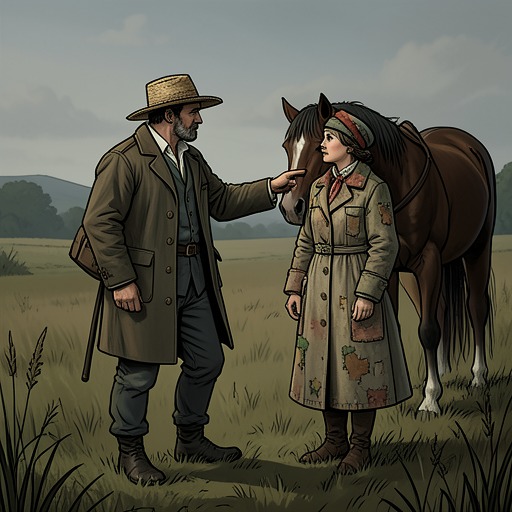
When Black Beauty meets Ginger again, she is an old, worn-out chestnut cab horse, markedly changed from the spirited, glossy-necked horse remembered from earlier life. Her visible decline and frequent cough prompt Black Beauty to recognize her and approach for a quiet conversation. The reunion gives a personal face to the effects of a working life: the condition of a horse once known as a distinct individual can be altered by the demands placed upon her.
Black Beauty’s own working life also includes periods of illness and weakness. After a collapse under a heavy load, a farrier judges the condition to be overwork rather than disease and says that six months away from work might allow a return to strength. Nicholas Skinner rejects that possibility as unsuitable to his business and intends to sell horses once they can no longer work. The contrast between the farrier’s assessment and Skinner’s decision exposes a conflict between the time a horse needs to recover and a business that values continued labor.
The ending offers a different prospect. After a year in a happy place, Black Beauty describes the work as easy and pleasant and the return of strength and spirits. Joe Green is a kind groom, Willie treats Black Beauty as a special friend, and the owners promise that the horse will never be sold. The horse’s final memory returns to the orchard at Birtwick, among old friends beneath the apple trees. This return in memory gives the narrative a measure of closure: security is not simply freedom from work, but a home where care, companionship, and the horse’s continuing life matter.
Narrative Significance
The book presents horses through a first-person animal autobiography, grounding its moral claims in what a horse can observe and endure. Its scenes repeatedly join outward conduct to animal experience: a bridle is a tool of training that can be introduced gently or painfully; a stall’s cleanliness bears on health; and a driver’s financial arrangements can determine whether a horse receives rest. The animals are not only illustrations of human virtue or vice. Black Beauty remembers, recognizes Ginger, distinguishes good handling from bad, and describes changing conditions from the position of the creature subject to them.
That perspective also connects individual care to broader working practices. The contrast between Birtwick’s efforts against check-reins, the inexperienced drivers of hired horses, Sam’s account of cab economics, and Skinner’s refusal to nurse an exhausted horse shows that kindness alone cannot account for every horse’s fate. Knowledge, stable conditions, rest, and the organization of work all matter. By letting horses’ lives supply the evidence, Black Beauty turns their labor and welfare into matters readers are asked to see and judge.